Ayahuasca Podcast
Explore Transformative Experiences

and ancestral Plant Medicine

WhatsApp-Image-2023-12-10-at-4.00.42 AM

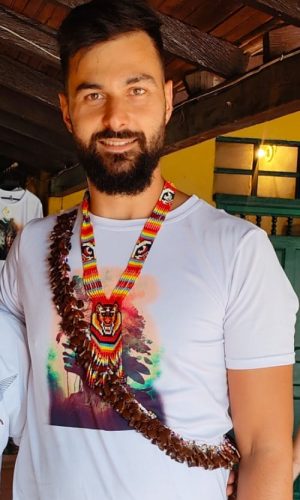
Founder & Host

Sam Believ

Sam had a life-changing experience with Ayahuasca with the medicine taking away his depression and helping him find his purpose. Now Sam is on a mission to spread the word about Ayahuasca with AyahuascaPodcast.com as well as provide affordable and accessible Ayahuasca experience at his retreat – LaWayra.

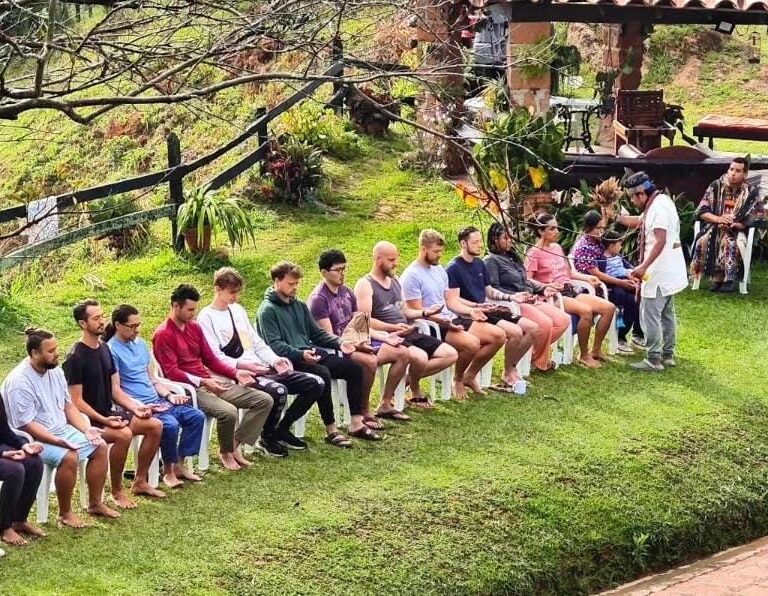
LaWayra has become the most reviewed Ayahuasca retreat in South America in 3 years of its existence and has changed lives of 1000s of people.

Enjoy New Shows

Latest episodes

We often hear about trauma as something psychological — a memory, an emotional scar, a story we tell ourselves. But what if trauma is also a physical imprint, embedded in the body’s systems, shaping inflammation, immunity, and overall health? In a thoughtful and wide-ranging conversation, host Sam Believ speaks with holistic health expert Lauren Sambataro about how unresolved trauma can manifest as chronic inflammation — and how psychedelics may play a role in opening pathways toward deeper healing.

This isn’t simplistic mind-body dualism. It’s about understanding how biology, psychology, nervous systems, and lived experience converge — and how healing emerges from that intersection.

Trauma Isn’t Just in the Mind — It’s in the Body

Lauren explains that trauma lives first in the body’s nervous system and immune system, not merely in conscious memory. When someone experiences stress, fear, loss, abuse, or emotional injury, the body adapts. The nervous system shifts into survival mode. The immune system kicks into high alert. Chemical pathways are activated to protect and to endure.

Over time, if these survival responses don’t resolve, the body can remain in a chronic state of activation. That sustained tension fuels inflammation, hormonal imbalance, and immune dysregulation — often without the person realizing what’s happening or why.

This is why so many people show up with chronic pain, autoimmune symptoms, gut problems, or unexplained fatigue — even though standard medical tests don’t find clear “disease.” The body, in essence, is still carrying the unresolved echoes of past stress.

The Hidden Cost of Survival Mode

From an evolutionary perspective, short-term stress responses are life-saving. But when survival mode becomes chronic, the body pays a price. The inflammatory pathways that once protected you in a short-lived threat end up operating long after the threat has passed. This can contribute to:

  • persistent inflammation
  • mood dysregulation
  • anxiety and hypervigilance
  • compromised digestion and gut-brain communication
  • immune system overreactions
  • chronic pain syndromes
  • poor sleep patterns

Lauren points out that western medicine often treats the symptoms — inflammation, pain, digestion issues — without addressing the underlying driver: the nervous system’s unresolved survival response.

Psychedelics: Opening the Door to the Unresolved

So where do psychedelics come in? Lauren doesn’t describe them as miraculous “cures” — but she does see them as catalysts. Psychedelics — especially in guided, safe and integrative contexts — can help people access deep layers of memory, emotional imprinting, and psychological defense structures that the conscious mind can’t reach with talk therapy alone.

In a psychedelic state, the nervous system can temporarily loosen its rigid survival structures — opening a window into the unconscious. For many people, memories, fear patterns, relational wounds, and buried emotions show up vividly or somatically. When these emerge into awareness, they can finally be felt, witnessed, and processed — instead of remaining locked in the body.

This is significant because unresolved emotional patterns often fuel sustained inflammation. When the nervous system finally feels what it has been avoiding, it can begin to reframe and regulate — not through cognitive insight alone, but through somatic release.

The Gut, Trauma & Body-Mind Communication

Lauren emphasizes the role of the gut in this dialogue between experience and biology. The gut-brain axis — the bidirectional communication system between the digestive tract and the nervous system — plays a central role in emotional and physical regulation. Trauma-induced inflammation in the gut can influence mood, sleep, immune function, and energy levels.

She suggests that psychedelics can help reset not just the nervous system, but the gut-brain communication by allowing old emotional material to move out of suppression and into awareness. This doesn’t happen automatically, but in therapeutic contexts where people are prepared, supported, and integrated afterward.

Why Integration Matters

Integration is a word that comes up repeatedly in the conversation — and with good reason. Psychedelic experiences can be intense, emotional, somatic, or revelatory. Without proper integration, the insights may not translate into meaningful change, and the nervous system may simply revert to old patterns.

Lauren explains that integration work includes:

  • somatic awareness practices
  • emotional processing
  • somatic therapy or body-oriented therapy
  • lifestyle adjustments (sleep, diet, movement)
  • community support
  • honest reflection and journaling

Integration helps the body learn what the psyche has glimpsed. Without this learning, the nervous system can remain stuck in its survival mode even after a psychedelic experience.

Safety and Context Are Essential

One of the strengths of Lauren’s approach is that she frames psychedelics as tools — not solutions detached from the rest of one’s life context. For trauma survivors, entering a psychedelic experience without preparation, support, or follow-up can be destabilizing rather than healing. Proper context — emotional maturity, supportive environment, skilled facilitators — is essential.

She also notes that psychedelics aren’t suited for everyone — especially if someone is in the midst of acute instability or lacks relational support. Medicine without container, intention, or integration can become confusing or retraumatizing.

Supporting Physical Health Beyond Psychedelics

Psychedelics can open doors — but long-term physical healing requires sustained care of the nervous system and the body. Lauren highlights practices that support physical health and nervous system regulation:

  • movement practices (yoga, walking, stretching)
  • breathwork and mindfulness
  • sleep optimization
  • nutrient-dense, anti-inflammatory diet
  • meaningful social connection
  • emotional expression and creative outlets
  • body-oriented therapies

These practices help the body recalibrate after the nervous system has been opened through experience. Healing isn’t only emotional or cognitive — it’s embodied.

A New Relationship to the Body and Self

One of the most poignant realizations Lauren shares is that healing is not about erasing trauma — trauma becomes part of the body’s story, not a villain to be vanquished. Psychedelics can help people rediscover their bodies as living, responsive, meaningful systems, instead of battlegrounds of pain and defense.

When someone can finally feel what they have long suppressed, and then respond with presence rather than avoidance, inflammation decreases, stress responses calm, and the nervous system learns new patterns of regulation.

Final Reflection: Healing as Emergence, Not Annihilation

The conversation reframes healing not as erasing pain or forgetting trauma, but as integrating what was once unconscious. The body remembers. The nervous system stores. The immune system reacts. And the psyche protects.

Psychedelics — when used with intention, preparation, safety, and integration — can help bring those unconscious drivers into conscious awareness, offering a chance for the nervous system to reframe. But that is just the beginning.

True healing — reduction of inflammation, regulation of nervous systems, embodied presence — comes through ongoing care of body, mind, and relational context. It’s a lifelong journey, not a quick fix.

What emerges through this work is not a rejection of pain, but a reconciliation with it — an ability to feel, process, and move through sensation rather than be driven by it. And in that reconciliation lies the possibility of lasting health — physical, emotional, and soulful.


Based on the Ayahuasca Podcast episode “Psychedelic and physical health” with Sam Believ and Lauren Sambataro.

Addiction is one of the most challenging and misunderstood experiences in human life. It’s more than habit or craving — it’s a pattern of coping, escape, avoidance, and unconscious avoidance of pain. In a heartfelt and candid conversation, host Sam Believ speaks with Danielle Nova, a woman whose life was once shaped by addiction, and who found unexpected healing through an ayahuasca retreat. Her experience doesn’t depict a miracle cure — but an honest process of confrontation, integration, and transformation.

The Weight of Addiction: Not Just a Behavior

Danielle opens by describing the often lonely world of addiction — the cycle of desire, relief, guilt, shame and repetition. For her, addiction wasn’t just about substances; it was about escape and self-medication. Alcohol, drugs, distractions — these weren’t just physical habits, they were responses to emotional pain and unresolved internal life. The pattern felt familiar but suffocating. She knew intellectually that the cycle was hurting her, but logically knowing wasn’t enough to shift the pattern.

Many people in addiction recovery can relate: you know what you don’t want, but dismantling the pattern is a completely different challenge.

Why Ayahuasca? Not Curiosity — Need

Danielle didn’t arrive at the retreat out of recreational curiosity. She arrived out of a sense that her old avenues of healing — therapy, support groups, medications — had helped, but hadn’t freed her. She wanted depth, honesty, and confrontation with her inner world. She wanted to stop running — but she didn’t know how.

That desire wasn’t light. It was a deep internal ache: the sense that routine coping mechanisms weren’t truly solving anything, just delaying the pain. In that space of openness, she decided to sit with the medicine — not for escape, but for clarity.

Ceremony as Mirror: Seeing What Hides

Under ayahuasca, Danielle didn’t find fantasy or colorful visions at first. She found truth — emotional, relational, psychological truth that previously had lived in shadow. The medicine didn’t “fix” anything for her in a single night, but it revealed the internal structures that had been driving her addiction: fear, self-judgment, pain, old relational wounds, and unconscious patterns she had never fully examined.

In her first ceremonies, she felt an emotional peeling: layers of avoidance, layers of defensive numbness, layers of old trauma. It was not easy or gentle — it was confrontation. But it was honest.

For many seekers, this is a turning point: the medicine acts not as anesthetic, but as spotlight. You don’t just feel high or expanded — you feel your life, as it really is. And for someone wrestling with addiction, that’s both terrifying and liberating.

From Relief to Release

Danielle describes the shift not as immediate freedom, but as a process of release. The medicine didn’t instantly stop her cravings, but it softened the emotional charge behind them. She began to see how much of her addiction was tied to wanting relief from herself: from sadness, from memory, from fear. When those internal drivers were finally seen, the compulsion began to lose its power.

She makes an important distinction: ayahuasca didn’t take away her discomfort — it helped her feel it, without needing an external substance to soften it. Once she could sit with her feelings, the old pattern of self-medication began to break.

Integration: Doing the Inner Work

After the ceremonies ended, Danielle didn’t emerge into a perfect life. What she got was awareness — ongoing work. Integration became the real challenge and opportunity. She began journaling, reflecting, strengthening her emotional vocabulary, engaging therapy with new clarity, and building healthier routines. Instead of suppressing pain, she learned to acknowledge it and then choose consciously how to move through it.

For someone with addiction history, that skill — conscious choice — is profound. It’s the difference between reactive behavior and responsive life.

She also developed practices like meditation, community support, and somatic awareness, helping her stay embodied instead of dissociated. The medicine gave her access — the integration gave her agency.

Relationship Healing: Self, Others, and Forgiveness

Danielle also highlights how healing from addiction isn’t just about stopping substance use. It’s about repairing relationships — with self, with others, and with life’s emotional complexity. In ceremonies, unresolved guilt, self-hatred, and unprocessed relational pain often surface. For her, this was a humbling and essential part of the journey.

She began facing old relational traumas that had fueled her drinking and avoidance. She learned — slowly, imperfectly — to treat herself with compassion instead of judgment. This emotional reorientation didn’t happen overnight, but the medicine cracked the door open.

The Role of Community and Support

Danielle stresses that healing isn’t done alone. Ayahuasca can ignite insight, but insight without support can feel isolating. She leaned into communities, therapy, trusted friendships, and supportive environments that would help hold her transformation rather than swallow it back into the old pattern.

It’s one thing to have a profound experience in a controlled ceremonial space. It’s another to bring that experience into daily life — work, relationships, responsibilities, and emotional demands. Integration happens in relationship more than in isolation.

A Balanced Perspective on Healing

Danielle is careful not to present her story as a universal prescription. She doesn’t claim ayahuasca “cured” her addiction in a single night. Rather, she frames the medicine as a powerful tool — one that helped her see beneath the surface, confront inner patterns, and choose a different way of living.

She acknowledges that not everyone’s path will look like hers. Psychedelic work can be destabilizing without support, preparation, and integration. It is not a replacement for therapy, community, or self-work. But for her, it was a catalyst — a doorway into deeper honesty.

From Survival to Presence

Her story shifts the narrative from addiction as failure to addiction as adaptive survival strategy turned outdated. That distinction matters. When addiction is understood as a response to pain — and then that pain is finally seen, felt, and integrated — the trajectory of recovery changes.

Rather than clinging to external relief, Danielle learned how to stay in her body and her life — even when it hurts. In doing so, her cravings softened, not because they were erased, but because the internal driver behind them was no longer hidden.

Final Reflection: Healing as a Continuous Path

Danielle’s experience with ayahuasca isn’t a single dramatic turnaround — it’s a chapter in a longer story of healing. It’s about courageous self-interrogation, emotional release, community support, integration, and ongoing growth. The medicine sparked awareness; the work of living with that awareness deepened her recovery.

For anyone grappling with addiction — or patterns that feel beyond conscious change — her journey suggests that healing isn’t about suppression, avoidance, or magical fixes. It’s about seeing, feeling, and choosing — and sometimes, it requires tools that help us access parts of ourselves we’ve long buried.

Her story isn’t just about addiction recovery. It’s about reclaiming presence, one honest moment at a time — a lifelong practice of choosing life over escape.


Based on the Ayahuasca Podcast episode “Addiction Recovery and Ayahuasca” with Sam Believ and Danielle Nova.

When most people hear the word psychedelic, they imagine ceremonial ayahuasca in the jungle, or psychedelic research conducted in labs and clinics. But there’s another current — less public, less institutional, and sometimes controversial: the psychedelic underground. In a fascinating conversation, host Sam Believ speaks with Rachel Harris, a psychologist, author, and longtime explorer of non-ordinary states of consciousness, about what lies beneath the more visible world of plant medicine and clinical research.

The episode doesn’t sensationalize underground use, nor does it dismiss it. Instead, it offers a nuanced, honest look at why it exists, what people seek there, and what it reveals about human yearning for healing, meaning, and altered states.

What Is the Psychedelic Underground?

Rachel describes the psychedelic underground not as a chaotic free-for-all, but as a broad constellation of people, practices, and communities operating outside mainstream legality, research institutions, and sanitized retreats. This includes DIY psilocybin microdosing circles, experiential groups, underground guides, secret gatherings, and informal networks that share knowledge, support, and experience.

For many participants, the underground isn’t a counterculture fad — it’s a lifeline. People who don’t fit into clinical categories, who feel static in traditional therapy, or who live far from legal retreats often seek experiences wherever they can find safe, compassionate contexts. The underground grows not just from prohibition, but from human need.

Why People Turn There: Limits of the Mainstream

In Rachel’s view, the psychedelic underground reflects two truths:

  • Official paths aren’t accessible to everyone. Clinical trials, retreats, therapists, and legal practitioners are often expensive, regulatory, or restricted by geography. Not everyone can afford them, or even get access to them.
  • Human suffering doesn’t wait. Anxiety, trauma, depression, existential distress — these conditions don’t pause while policy catches up. Many people seeking transformation find institutional timelines too slow.

The underground emerges where demand and human urgency meet curiosity and willingness. But Rachel is clear: urgency doesn’t mean recklessness. The question becomes: how do people navigate deep medicine when formal containers aren’t available to them?

Safety, Intention & Informal Containers

One of the most important points Rachel emphasizes is that safety is not guaranteed simply because a medicine is ancient or powerful. Safety is about context, preparation, integration, support, and intention — whether underground or mainstream.

She notes that some underground scenes do develop serious care practices: sitters, harm-reduction protocols, integration circles, peer supervision, sober support, and attentive frameworks. What makes these approaches safer isn’t secrecy — it’s responsibility.

But she also acknowledges the real risk: in underground spaces where experience outstrips oversight, people can feel overwhelmed, disoriented, or isolated. Without skilled guidance or integration support, powerful psychedelic encounters can be destabilizing rather than healing.

In that sense, the psychedelic underground is a mixed terrain — a field of possibility and risk, thriving creativity and genuine danger. Rachel doesn’t romanticize it, but she also refuses to dismiss it.

Psychedelics Beyond Medicine — A Cultural Mirror

Rachel sees the underground not merely as a response to prohibition, but as a cultural signal. It reflects a hunger — for meaning, for connection, for states of mind beyond ordinary consciousness, for experiences that touch the sacred or the emotional core. For many, psychedelics aren’t just medicine — they’re a mirror showing what mainstream culture lacks: ritual, community, embodied emotional work, depth.

In some underground gatherings, people share stories, songs, breathwork, dance, eye contact practices, collective integration circles — elements that resemble ancient ritual more than sanitized clinical sessions. These spaces honor emotional release, play, interconnectedness, and nonverbal communication. In that way, the underground bridges the modern world and older human traditions.

Research vs. Underground: Complementary, Not Opposed

Rachel doesn’t see mainstream research and the underground as enemies. Instead, she suggests they are two parts of a larger conversation: one formal, structured, controlled; the other spontaneous, adaptive, relational.

Research provides safety data, protocols, reproducibility, and pathways toward legalization. But the underground tells us why people want these experiences — what they seek that hospitals and studies might not capture: relational connection, spiritual meaning, communal grieving, cultural belonging, mystery, and subjective insight.

Both spheres inform each other. Research can learn from underground resilience and relational practices; the underground can benefit from evidence-based safety and integration methods.

Challenges — Legality, Ethics, and Accessibility

Rachel doesn’t shy away from the complexities. The psychedelic underground exists because of legal restrictions, social stigma, and institutional inertia. People with fewer resources or less stability may turn to underground contexts out of necessity, not choice. That raises ethical questions: How do we ensure safety when medicine is illegal? Who gets access to healing? Who benefits from commercialization of psychedelics? Who is excluded?

She also warns that when psychedelics move too fast into commercial wellness — surfacing in retreats, clinics, and corporate environments — they risk reproducing inequities: wealthier, urban, privileged individuals get access, while those in need of healing remain outside formal containers.

The underground, in that sense, becomes a place of both possibility and justice — a parallel ecology of care built by people for people.

Preparation, Support & Integration — The Real Keys

Throughout the conversation, Rachel returns to a central theme: no matter where the experience happens — in a clinic, a retreat center, or an underground circle — the real keys are preparation, support, and integration.

Preparation includes emotional grounding, intention setting, understanding of one’s psychological landscape, and honest self-reflection. Support means skilled guidance, safe companions, harm-reduction awareness. Integration means not just sitting with the experience afterward, but translating insight into daily life, relationships, movement, reflection and emotional honesty.

Without these elements, even the most profound encounter can become confusing, destabilizing, or lost in memory without meaning.

A Compassionate Perspective on a Growing Movement

Rachel’s view of the psychedelic underground is neither alarmist nor naïvely celebratory. She sees it as a human landscape shaped by desire for transformation, cultural shortage of emotional tools, regulatory limits, and the enduring human instinct toward states of depth and connectivity.

For some people, underground psychedelic work is a bridge — a way to meet inner truth in the absence of formal containers. For others, it’s a temporary step on a longer journey toward structured healing. And for many, it raises important questions about how society supports emotional resilience and spiritual growth.

Final Reflection: The Underground as Mirror, Not Escape

The conversation invites listeners to reframe the psychedelic underground not as a fringe curiosity, but as a reflection of human longing — a signal that people are searching for connection, meaning, emotional depth, and embodied healing in ways that existing systems don’t always provide.

The underground shows us where craving for experience converges with lack of access to formal structures. It challenges us to think beyond legality, toward safety, community, and human care.

In the end, the psychedelic journey — whether in a controlled research environment, a traditional ceremony, or an underground circle — points us back to the same fundamental work: presence, vulnerability, emotional awareness, relational depth, and the courage to meet our inner world honestly.


Based on the Ayahuasca Podcast episode “Exploring psychedelic underground” with Sam Believ and Rachel Harris.

Join our

Podcast

Learn everything about Ayahuasca

In each episode of Ayahuasca podcast we explore the history, cultural meaning, and personal journeys related to this special plant medicine. We talk with shamans, researchers, and people who share their own

Title
.