
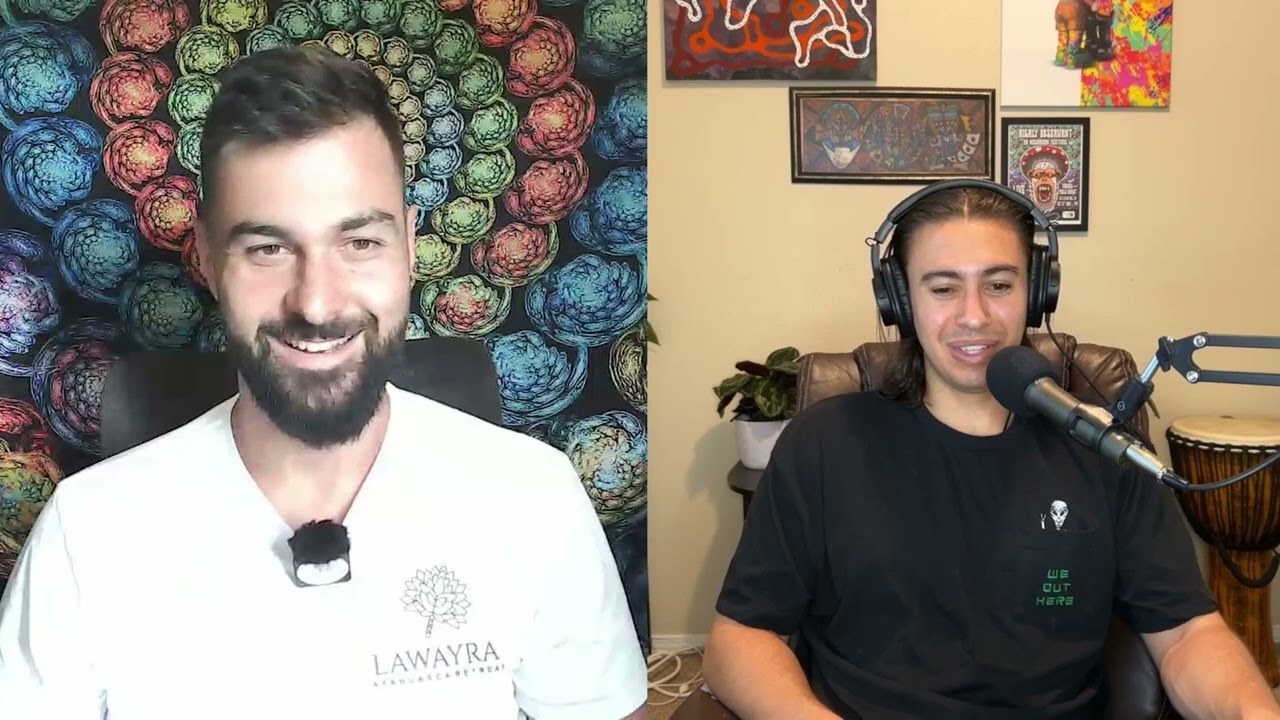
Building an Ayahuasca Retreat in Colombia: Sam Believ on Calling, Chaos, and Healing
Running an ayahuasca retreat center is often imagined as peaceful, spiritual work — ceremonies in nature, deep conversations, and transformative healing. But behind every ceremony lies a complex operation that resembles far more than a spiritual project. In this candid conversation, Sam Believ, founder of LaWayra Ayahuasca Retreat Center in Colombia, shares how retreat work combines logistics, family life, business pressure, and a deep sense of calling into one constantly evolving path.
A Retreat Center Is More Than Ceremony
For Sam, running a retreat is not just about serving medicine. It means managing a hotel, a restaurant, transportation systems, psychological support, marketing, construction, and even farming — all at once. He describes overseeing a team of more than twenty people, sometimes thirty when construction workers are included, while also maintaining a large physical property in the Colombian countryside.
Unexpected challenges are part of daily life. At one point, a powerful natural event caused rocks to roll down a nearby river, damaging vegetation and forcing immediate repairs. These moments remind him that retreat work is deeply rooted in physical reality, not only spiritual ideals.
The people attending ceremonies often see only the peaceful final result, while the hidden effort behind the scenes remains invisible. According to Sam, that invisibility is a sign that the system is working well — but it also means most people underestimate how demanding this kind of work truly is.
Starting Without a Business Plan
LaWayra did not begin as a carefully designed retreat business. It began through a sequence of coincidences during a difficult personal period. At the time, Sam was living in a countryside property and renting rooms when someone approached him about using the space for an ayahuasca ceremony.
What initially seemed like a simple rental arrangement gradually became something much bigger. Instead of merely renting the space, Sam found himself organizing logistics while another person provided the medicine. That unexpected shift gave him responsibility — and eventually direction.
Together with his wife, he slowly built the retreat through constant work and adaptation. The first year involved only occasional ceremonies, perhaps one week each month. Over time, demand grew until retreats expanded into most of the month, leaving little time for rest between programs.
Leaving Financial Success Behind
Before Colombia, Sam lived a very different life. He worked offshore in oil and gas, earning extremely well and achieving many conventional markers of success: stable income, property, career progression, and relationships. Yet internally, he felt deeply unhappy.
This contradiction forced him to question what success actually meant. If he had everything society said should create happiness, why did life still feel empty?
Eventually he took a sabbatical and traveled to South America, planning a long journey across several countries. But Colombia stood out immediately. Even after visiting neighboring countries, he found himself drawn back to Medellín, feeling increasingly certain that this place held something important for him.
Over time, what began as temporary travel became permanent relocation. He settled, built a family, and slowly rooted himself in a new life far removed from the one he had originally imagined.
First Encounters with Ayahuasca
His first ayahuasca experience came during a period of emotional vulnerability after a miscarriage in his family. He attended a large Colombian ceremony with minimal preparation, unsure of what to expect and still viewing ayahuasca largely through a skeptical lens.
The experience was immediately powerful and deeply visual. At first, he saw it as an unusual one-time event — something meaningful but not life-changing.
Only later did he notice how much had shifted afterward. His confidence increased, self-doubt softened, and long-standing goals suddenly felt achievable. Looking back, he realized that the ceremony had quietly changed the way he related to himself and his future.
The Jungle and a New Direction
As he continued drinking medicine, especially during a period of depression and uncertainty, a strong internal urge emerged: he felt called to go deeper into the jungle.
That call led to another sequence of synchronicities, eventually placing him in ceremonies with indigenous healers in Colombia. During one especially profound experience, he describes receiving what felt like unmistakable direction: if he did not work with medicine, he would never feel fulfilled.
This was deeply unexpected. At that time, he still identified primarily as an engineer — practical, skeptical, non-spiritual. Yet the experience left such a strong imprint that he could not ignore it.
Soon after, retreat work began to take shape in earnest.
Why Participants Are Called Patients
One distinctive aspect of Sam’s retreat philosophy is language. Participants are referred to as patients, not guests.
For him, this reflects a core principle: ayahuasca is approached as medicine, not entertainment. He emphasizes that many people arrive expecting visions or extraordinary experiences, but the deeper work often begins elsewhere — in patience, emotional release, discomfort, and gradual healing.
Not everyone connects strongly in the first ceremony. Some need several nights before deeper layers begin to open. By calling people patients, he reminds them that healing takes time and cannot be rushed.
The retreat’s guiding philosophy is built around three stages: connect, heal, grow.
First comes connection — with the medicine, with oneself, with the group, with nature. Then healing, which often includes purging, confronting emotions, and facing internal resistance. Only afterward does growth become possible.
Colombia’s Potential Beyond Old Narratives
Sam also speaks passionately about Colombia’s broader role in psychedelic healing. He believes the country has a unique opportunity to shift its global identity — from being associated with cocaine to becoming known for authentic healing traditions rooted in plants like ayahuasca, coca, and tobacco.
For him, this is not just tourism. It is cultural restoration.
He often reflects on how sacred plants become distorted when stripped from tradition and reduced to commercial products. His hope is that Colombia can grow more carefully, preserving indigenous respect while offering healing to people who genuinely need it.
A Life Built Through Constant Adjustment
Even now, after years of retreat work, Sam describes himself as constantly rethinking direction. Every year brings new questions, new pressures, and new lessons.
The retreat is growing, his family is growing, responsibilities are growing — yet so is the sense that this path, despite its chaos, is exactly where he is meant to be.
For him, retreat life is not glamorous. It is unpredictable, exhausting, meaningful, and deeply human.
And perhaps that is why it continues to work: because behind the ceremonies and philosophy stands a life built not on perfection, but on continual adaptation, patience, and trust in where the next step may lead.
Listen to the whole podcast episode here: https://www.youtube.com/watch?v=3aoNYSLcTqI