
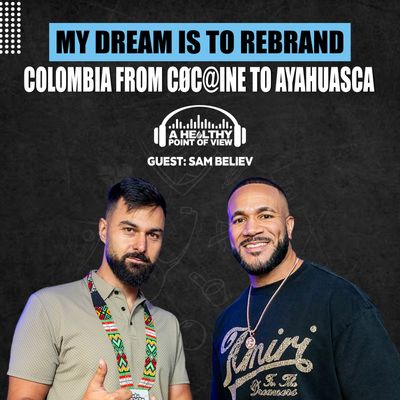
For many people, ayahuasca remains surrounded by mystery. Some see it as a psychedelic experience, others view it as a spiritual practice, and many are unsure what to believe. In a conversation with entrepreneur and podcast host Sam Tejada, Sam Believ, founder of LaWayra Ayahuasca Retreat in Colombia, shared his perspective on what ayahuasca really is, who it can help, and why he believes it has the potential to transform not only individual lives but also the way the world sees Colombia.
His message was clear: ayahuasca is neither a miracle cure nor a recreational drug. It is a powerful tool that must be approached with respect, preparation, and proper guidance.
From Depression to Plant Medicine
Sam’s own journey with ayahuasca began through what he describes as a combination of curiosity and quiet desperation.
Although he had a successful career and appeared to be doing well from the outside, he often felt less happy than the people around him. At the same time, he kept encountering references to ayahuasca everywhere he looked. Friends talked about it, podcasts discussed it, and stories about it seemed impossible to avoid.
Eventually, curiosity won.
His first ceremonies helped lift a long-standing depression, and over time he felt increasingly drawn toward the medicine. That journey eventually led him deep into the Colombian jungle, where a series of experiences convinced him to dedicate part of his life to helping others heal through plant medicine.
What Ayahuasca Actually Is
Ayahuasca is a traditional Amazonian brew made from two plants: the ayahuasca vine and a DMT-containing shrub.
The preparation itself is considered ceremonial. Indigenous communities spend days cooking the medicine over wood fires while incorporating prayer, intention, and traditional practices throughout the process.
Different tribes use different recipes and proportions. Some add additional plants, while others work with only the vine and leaves.
At LaWayra, the medicine comes from the Inga tradition and is prepared using only the two core ingredients.
Why Preparation Matters
One of the strongest points Sam makes is that ayahuasca should never be treated casually.
People often focus on the ceremony itself while overlooking the preparation process that comes beforehand.
Physical preparation includes dietary adjustments and avoiding substances that may interact negatively with the medicine. Alcohol, recreational drugs, certain medications, and many processed foods are typically removed before a retreat.
Mental preparation is equally important.
Participants are encouraged to reduce exposure to stressful media, avoid unnecessary negativity, and begin reflecting on what they hope to heal or understand.
According to Sam, many people report positive changes beginning before they even arrive at the retreat, simply because they have already committed themselves to the healing process.
More Than a Physical Experience
Although ayahuasca affects the body, Sam believes its impact extends far beyond physical sensations.
He describes the process as operating on three levels simultaneously: physical, mental, and spiritual.
Physically, people often experience cleansing and purging.
Mentally, they may gain insight into patterns, traumas, and emotions that have been influencing their lives.
Spiritually, many participants report feeling more connected to themselves, nature, or their understanding of a higher power.
Importantly, Sam does not view ayahuasca as a religion.
People from Christian, Jewish, Muslim, Buddhist, and many other backgrounds have attended ceremonies and often report feeling more connected to their own faith afterward.
In his view, ayahuasca is not a belief system but a tool that helps people deepen their relationship with whatever spiritual framework they already hold.
Why Purging Is Not a Side Effect
One of the biggest fears newcomers have is the possibility of vomiting.
Sam understands the concern because he once felt the same way.
However, he argues that purging is not an unfortunate side effect but one of the most important aspects of the healing process.
People frequently describe releasing old emotions, traumas, fears, and psychological burdens through physical purging.
Many participants report feeling dramatically lighter afterward, both emotionally and physically.
While vomiting receives most of the attention, purging can take many forms. Crying, shaking, laughing, sweating, or releasing deeply suppressed emotions are all considered part of the same process.
Who Comes to Ayahuasca Retreats?
Contrary to popular stereotypes, Sam says retreat participants come from every imaginable background.
Veterans, first responders, business owners, lawyers, doctors, tradespeople, parents, and retirees all attend ceremonies.
Many arrive during difficult periods in their lives.
Some struggle with depression, anxiety, trauma, addiction, or relationship problems. Others feel lost, disconnected, or emotionally exhausted despite outward success.
He often sees people arrive after exhausting every conventional option available to them.
For some, ayahuasca feels like a last resort.
Ayahuasca and Personal Transformation
One concern often raised by entrepreneurs and ambitious professionals is whether ayahuasca will remove their drive or ambition.
Sam believes the answer depends on what motivates that drive in the first place.
If success is being pursued to compensate for deep insecurity, trauma, or the need for external validation, ayahuasca may reveal those patterns and reduce the emotional force behind them.
But if someone’s work is aligned with purpose and genuine passion, he believes the medicine often strengthens their motivation rather than diminishing it.
Ayahuasca does not necessarily remove ambition. It tends to clarify where that ambition is coming from.
Safety and Responsible Use
Although Sam strongly believes in the healing potential of ayahuasca, he is equally clear that it carries risks.
People with schizophrenia, bipolar disorder, certain cardiovascular conditions, or those taking antidepressants may not be suitable candidates.
This is why proper screening, preparation, and experienced leadership are essential.
He compares drinking ayahuasca without proper guidance to attempting a complex medical procedure without a doctor.
The medicine itself is powerful, but the environment and expertise surrounding it are what help keep people safe.
Rebranding Colombia Through Healing
Beyond individual transformation, Sam has a larger vision.
For decades, Colombia has been associated internationally with cocaine, cartels, and violence.
Yet the same country is home to some of the world’s richest traditions of plant medicine and indigenous healing.
His dream is simple: to help shift Colombia’s reputation from cocaine to ayahuasca.
Not because ayahuasca is perfect or magical, but because it represents a very different story — one focused on healing rather than harm.
For Sam, that transformation is already beginning, one ceremony and one person at a time.
Listen to the whole podcast episode here: https://open.spotify.com/episode/4SiVgNXKVvXvxOZbdGUnUK