
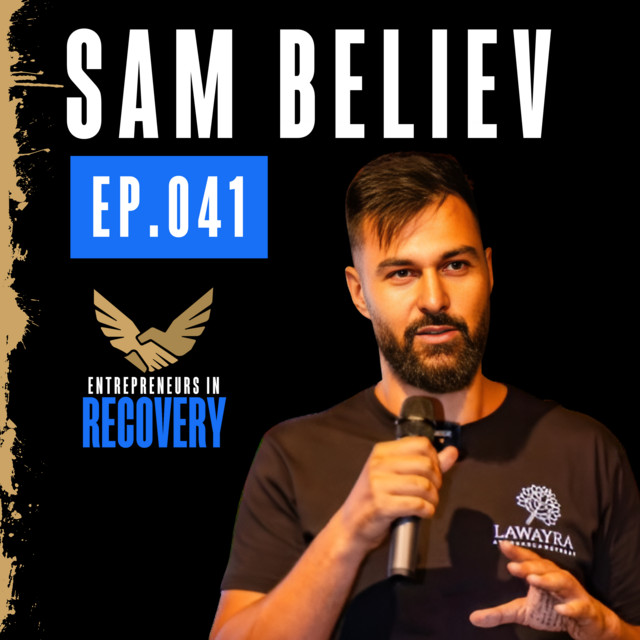
Success does not always lead to happiness.
Many people spend years pursuing financial security, professional achievement, and material comfort, only to discover that something important is still missing. For Sam Believ, founder of LaWayra Ayahuasca Retreat in Colombia and host of the Ayahuasca Podcast, that realization became the starting point of a journey that would completely transform his life.
In a conversation on the Entrepreneurs in Recovery podcast, Sam shared how ayahuasca helped him overcome depression, discover a sense of purpose, and understand addiction in a completely different way.
When Success Isn’t Enough
Before entering the world of plant medicine, Sam worked as an engineer in the offshore oil and gas industry.
By conventional standards, he was successful.
The job paid extremely well. He had financial stability and many of the things people are taught to pursue. Yet despite those achievements, he felt deeply unhappy.
Looking back, he describes himself as rich but miserable.
The disconnect between external success and internal fulfillment became impossible to ignore.
Eventually, a series of life changes led him to Colombia, where he encountered ayahuasca for the first time.
At that point, he was neither spiritual nor religious. In fact, he approached everything with the mindset of an engineer—logical, analytical, and skeptical.
Yet something about the medicine spoke to him.
The Role of Synchronicity
One theme that appears repeatedly throughout Sam’s story is synchronicity.
Rather than carefully planning every step of his future, he found himself following a series of unexpected opportunities and meaningful coincidences.
Moving to Colombia.
Meeting his wife.
Discovering ayahuasca.
Opening a retreat center.
Each step seemed to emerge naturally from the previous one.
Over time, he began paying closer attention to these moments and viewing them as guidance rather than random events.
Instead of forcing life in a particular direction, he learned to recognize when life seemed to be inviting him somewhere new.
Ayahuasca and Depression
Sam credits ayahuasca with helping him overcome a long period of depression.
Importantly, he does not describe the process as magical or instantaneous.
The medicine did not simply erase his problems.
Instead, it gave him clarity.
It lifted the emotional fog enough for him to start taking meaningful action. It helped him identify the deeper issues contributing to his unhappiness and encouraged him to move toward a more authentic path.
According to Sam, this is how healing often works.
Ayahuasca opens a door, but people still have to walk through it.
The medicine provides insight, direction, and awareness, but real transformation comes from acting on those insights afterward.
Understanding Addiction Differently
As the conversation shifted toward addiction recovery, Sam offered a perspective that closely aligns with modern trauma-informed approaches.
Rather than viewing addiction as the primary problem, he sees it as a solution to an underlying problem.
Substances and compulsive behaviors often serve as coping mechanisms.
They help people manage emotional pain, trauma, stress, loneliness, or unresolved experiences that feel overwhelming.
In this sense, addiction becomes a survival strategy.
The goal is not to shame the behavior but to understand what purpose it is serving.
Once the underlying pain is addressed, the addiction frequently begins losing its power.
Ayahuasca as a Tool for Recovery
Over the years, Sam has witnessed many participants experience significant changes in their relationship with addictive behaviors.
Some arrive specifically seeking help for alcohol dependency, cannabis use, or other addictions.
Others come for entirely different reasons and later discover that their desire to drink, smoke, or engage in other compulsive behaviors has dramatically decreased.
Interestingly, these changes are often unexpected.
Participants do not necessarily arrive intending to quit.
Instead, they address deeper emotional issues, and the addiction naturally becomes less necessary.
This aligns with the idea that addiction is often a symptom rather than the root cause.
The Importance of Shadow Work
One concept Sam frequently discusses is shadow work.
In simple terms, the shadow consists of aspects of ourselves that we have rejected, suppressed, ignored, or hidden.
These can include painful memories, fears, insecurities, unresolved trauma, or personality traits we struggle to accept.
Ayahuasca has a remarkable ability to bring these hidden aspects into awareness.
This is not always comfortable.
Many ceremonies involve confronting difficult emotions, painful memories, or uncomfortable truths.
However, Sam believes these experiences are often where the deepest healing occurs.
When people stop avoiding their shadow and begin engaging with it consciously, genuine transformation becomes possible.
Why Integration Matters
A recurring theme throughout the conversation was the importance of integration.
Many people focus intensely on the ceremony itself while overlooking what happens afterward.
For Sam, integration is where the real work begins.
Insights gained during ceremony must be translated into action.
That may involve changing habits, improving relationships, pursuing therapy, developing healthier routines, or making major life decisions.
Without integration, even profound experiences can gradually fade.
With integration, however, those experiences can create lasting change.
To support this process, LaWayra provides integration journals, sharing circles, and ongoing guidance designed to help participants apply what they learn.
The Challenge of Running a Retreat
From the outside, owning an ayahuasca retreat may sound like a dream job.
The reality is far more complex.
Sam describes it as simultaneously running a hotel, a restaurant, and a mental health center.
Every retreat involves managing logistics, supporting participants, coordinating staff, working with traditional shamans, and holding space for people experiencing intense emotional processes.
Some participants arrive in crisis.
Others arrive carrying profound trauma.
The responsibility can be enormous.
Yet despite the challenges, Sam continues because of the fulfillment it provides.
Helping people heal offers a sense of purpose that financial success alone never could.
What Wealth Cannot Buy
One of the most striking observations from Sam’s years of retreat work is how many wealthy people arrive feeling deeply unfulfilled.
Many have achieved everything they once believed would make them happy.
They have money, status, successful careers, and material comfort.
Yet something still feels missing.
For some, ayahuasca helps reveal what that missing piece is.
Often, it is connection.
Connection to themselves.
Connection to others.
Connection to meaning and purpose.
Connection to something larger than individual achievement.
A Vision for the Future
Today, Sam’s mission extends beyond his retreat center.
He hopes to help more people understand ayahuasca and reduce the stigma surrounding plant medicine.
He also wants to help reshape the world’s perception of Colombia, highlighting its rich healing traditions rather than the stereotypes that have defined it for decades.
Perhaps most ambitiously, he dreams of creating an International Ayahuasca Day—a global celebration of healing, connection, and human unity.
Whether or not that vision becomes reality, the motivation behind it remains clear.
For Sam, the ultimate lesson of ayahuasca is simple.
Healing becomes possible when people stop running from themselves, face their pain honestly, and begin reconnecting with what truly matters.
Listen to the whole podcast episode here: https://open.spotify.com/episode/6iNLCmilvsPmW5TOmp4VuV