Ayahuasca Podcast
Explore Transformative Experiences

and ancestral Plant Medicine

WhatsApp-Image-2023-12-10-at-4.00.42 AM

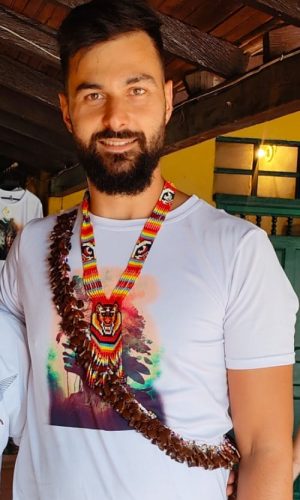
Founder & Host

Sam Believ

Sam had a life-changing experience with Ayahuasca with the medicine taking away his depression and helping him find his purpose. Now Sam is on a mission to spread the word about Ayahuasca with AyahuascaPodcast.com as well as provide affordable and accessible Ayahuasca experience at his retreat – LaWayra.

LaWayra has become the most reviewed Ayahuasca retreat in South America in 3 years of its existence and has changed lives of 1000s of people.

Enjoy New Shows

Latest episodes

The worlds of biohacking and plant medicine may seem very different at first glance.

Biohackers often focus on data, optimization, wearables, supplements, sleep scores, and performance metrics. Ayahuasca, on the other hand, is rooted in ancient indigenous traditions, spirituality, ceremony, and personal transformation.

Yet according to Sam Believ, founder of LaWayra Ayahuasca Retreat in Colombia, the two worlds have far more in common than most people realize.

In a conversation with biohacker and podcast host Tony Wrighton, Sam shared why many health-conscious individuals eventually become interested in ayahuasca, how the medicine helped him overcome depression, and why some of the most important forms of optimization cannot be measured by a smartwatch.

From Engineering to Plant Medicine

Sam’s path into ayahuasca was anything but predictable.

Before moving to Colombia, he worked as a marine mechanical engineer in the offshore oil and gas industry. Financially, life looked successful. He earned a strong income, owned property, and had many of the achievements people spend years chasing.

Yet despite the success, he felt deeply unhappy.

Eventually, he left his career and began traveling. During that journey, he repeatedly encountered stories about ayahuasca.

At first, curiosity brought him toward the medicine.

Later, something deeper emerged.

As he began working with ayahuasca, he noticed improvements in his depression, his sense of purpose, and his overall relationship with life.

Those experiences eventually led him to create LaWayra, one of Colombia’s most highly reviewed ayahuasca retreats.

Why Biohackers Are Drawn to Ayahuasca

Many biohackers spend years trying to improve physical health.

They optimize sleep.

They track heart rate variability.

They experiment with supplements.

They improve diet and exercise.

All of these practices can create meaningful improvements.

But Sam believes that many people eventually discover another layer beneath physical health: emotional and spiritual wellbeing.

You can have excellent biomarkers and still feel disconnected, anxious, depressed, or directionless.

Ayahuasca often attracts people who have already optimized many external factors but still feel something important is missing.

The Missing Piece: Meaning

One of the recurring themes in Sam’s work is that many people arrive at retreats after realizing that achievement alone does not create fulfillment.

Career success.

Money.

Status.

Material possessions.

None of these automatically create purpose.

This realization is surprisingly common among entrepreneurs, executives, and high performers.

They achieve goals that were supposed to make them happy, only to discover that happiness remains elusive.

According to Sam, ayahuasca often helps people explore questions that cannot be answered through productivity systems or performance metrics alone.

Why Set and Setting Matter

One of the biggest misconceptions about ayahuasca is that the medicine itself is all that matters.

Sam strongly disagrees.

He emphasizes three essential elements:

Set, setting, and skill.

Set refers to mindset, intentions, and emotional preparation.

Setting refers to the environment, facilitators, ceremony space, and overall feeling of safety.

Skill refers to learning how to work with the medicine over time.

Just as meditation becomes easier with practice, navigating ayahuasca also becomes easier with experience.

This is one reason why structured retreats often produce better outcomes than casual or unprepared use.

The Fear of Letting Go

Many people interested in ayahuasca share the same concern.

They’re afraid.

Not necessarily afraid of the medicine itself, but afraid of losing control.

For high-achieving individuals, control often becomes part of their identity.

They solve problems.

They make decisions.

They manage outcomes.

Ayahuasca asks for something very different.

It asks for surrender.

According to Sam, much of the challenge comes from allowing the experience to unfold rather than trying to direct it.

The more a person resists, the more difficult the journey often becomes.

Difficult Trips vs. Bad Trips

One distinction Sam frequently makes is between a difficult experience and a bad experience.

A difficult ceremony may involve grief, fear, old memories, trauma, or emotional pain.

Yet those challenging moments are often where the deepest healing occurs.

A truly bad experience usually arises when someone fights the process instead of working with it.

The medicine attempts to bring something forward, while the person tries to push it away.

That internal conflict creates suffering.

Learning to trust the process dramatically reduces the likelihood of these situations.

What Makes Ayahuasca Different from Mushrooms?

Although Sam appreciates psilocybin mushrooms and believes they have tremendous value, he sees one major difference between mushrooms and ayahuasca.

Purging.

Ayahuasca often creates a powerful sense of release through vomiting, crying, shaking, sweating, or other forms of emotional and physical expression.

For many participants, this release feels like a tangible removal of emotional weight.

With mushrooms, people may process difficult material, but the sensation of expelling it physically is often absent.

This is one reason many experienced ayahuasca drinkers describe purging as one of the most healing parts of the ceremony.

Ancient Medicine in a Modern World

One reason Sam prefers traditional plant medicines is their long history.

Ayahuasca, San Pedro, psilocybin mushrooms, and other indigenous medicines have been used for centuries or even millennia.

That historical continuity provides a unique form of confidence.

Countless generations have worked with these medicines before modern science began studying them.

For Sam, this does not replace scientific investigation.

Instead, it complements it.

Ancient wisdom and modern research can work together.

What Biohackers Might Learn

One of the more interesting insights from the conversation is that biohacking itself can sometimes become another form of control.

Tracking every metric.

Optimizing every variable.

Monitoring every biological signal.

These practices can be useful, but they can also create stress.

At one point, Sam stopped using his Oura Ring because he realized that worrying about sleep metrics was negatively affecting his sleep.

The lesson was simple:

optimization is valuable, but balance matters more.

A Different Kind of Upgrade

Biohackers often seek better energy, improved cognition, enhanced recovery, and greater resilience.

Ayahuasca offers a different type of upgrade.

Instead of optimizing performance, it often focuses on healing what is underneath the performance.

Old traumas.

Unresolved emotions.

Limiting beliefs.

Patterns of self-sabotage.

Relationship wounds.

These are not problems that can always be solved with supplements or technology.

More Than a Tool

Despite his enthusiasm, Sam is careful not to portray ayahuasca as a miracle solution.

It is not something to consume constantly.

It is not a shortcut.

And it is certainly not a replacement for doing the work afterward.

Instead, he sees it as one powerful tool among many.

A tool that can help people reconnect with themselves, gain perspective, and accelerate healing when used responsibly.

For biohackers, entrepreneurs, and health enthusiasts alike, that may be one of the most valuable upgrades available—not because it improves performance, but because it helps clarify what performance is ultimately for.


Listen to the whole podcast episode here: https://open.spotify.com/episode/1ER2s9i2P3ICrEpSZlgJIx

In this episode of the Ayahuasca Podcast, host Sam Believ connects with Mark Wolynn, a leading international expert in the field of inherited family trauma. Mark is the director of the Family Constellation Institute in the US and the author of the international bestseller It Didn’t Start With You, which has sold over three million copies worldwide and been translated into 42 languages. Bridging the worlds of epigenetics, neuroscience, and somatic healing, Mark dedicates his career to showing how the unresolved traumas of our parents, grandparents, and ancestors can live on in our bodies as unexplained depression, anxiety, and chronic health conditions.

Mark opens up about his own dramatic healing journey—how a sudden, unexplained loss of vision in his 30s forced him to travel the globe to uncover the root of his illness, ultimately leading him back to healing his broken maternal relationship and unlocking the secrets of generational trauma. He breaks down how trauma alters gene expression, the deep mechanics of collective family loyalties, and how mapping our core language can finally liberate us from repeating ancestral burdens.

Key Discussion Points

  • 01:22 – The Blind Spot of Ancestral Trauma: Mark shares his personal story of losing his eyesight to a chronic, incurable eye condition in his early 30s, which catalyzed a global spiritual search that ultimately revealed his physical illness was rooted in severe, inherited family anxiety.

  • 05:26 – Shaking the Family Tree: Understanding why individuals who seemingly have perfect lives still struggle with unexplained morning depression or panic attacks, and how the chemical or stress response of a parent’s or grandparent’s trauma can pass forward downstream.

  • 07:41 – Epigenetic Tagging and Survival Skills: How extreme trauma prints chemical “tags” onto our DNA that act like dimmer switches, adjusting our fight-or-flight dials to a “10” so that grandchildren inherit hypervigilant survival reflexes for a war that never arrives.

  • 11:07 – Trapped in the Contraction: A look at the psychological pattern where traumatized individuals find peace or expansion terrifying, constantly waiting for the “next shoe to drop” because their baseline was flooded with maternal cortisol while in utero.

  • 13:56 – Unconscious Loyalties and Hidden Secrets: Exploring how family systems carry an unspoken, invisible loyalty to repeat the misfortunes, financial failures, relationship downfalls, or coping mechanisms of ancestors until the trauma is openly looked at and healed.

  • 21:34 – The Power of the Knowing Field: Demystifying the “paranormal” or quantum biology aspect of family constellations, explaining how complete strangers can step into a room and precisely channel the exact feelings, words, and unsaid motivations of a client’s relatives.

  • 31:15 – Attachment vs. Generational Trauma: Why Mark chooses to clinically treat early attachment trauma first—which impacts 85% of his clients—to establish a safe, grounded somatic core before diving into deeper generational history.

  • 37:41 – The 3-Year Memoryless Window: How the crucial period from utero to age two wires the developing human brain for safety or threat, and the exact three questions regarding feeling “seen, known, and soothed” that uncover early developmental wounds.

  • 45:59 – Somatic Pathways to Healing: Shifting the brain’s overactive amygdala out of the limbic system and into the prefrontal cortex by cultivating deep compassion, implementing a somatic gratitude practice, and learning to sit through uncomfortable bodily sensations.

  • 53:24 – Human Studies & The Core Sentence: Mark details the major updates in his 2025 revised edition, highlighting new global human data showing trauma transferring up to five generations, and how identifying your “worst fear” instantly diagnoses whether your wound is rooted in attachment or ancestry.

  • 01:00:00 – Replicating the Mother in Romance: Why humans unconsciously choose romantic partners who mirror the exact unresolved, unhealed, or distant traits of their mothers, attempting to re-enact the childhood attachment loop until it is made conscious.

Connect with Mark Wolynn:

  • Website: markwolynn.com

  • Books: Look for the fully revised and updated 2025 edition of It Didn’t Start With You and the official It Didn’t Start With You Workbook on Amazon or major retailers.

Experience Safe, Guided Consciousness Work:

To explore heart-opening, traditional plant medicine retreats in a deeply restorative setting designed for integration and profound clarity, explore our programs at: ayahuascaincolombia.com

For many people, ayahuasca remains mysterious. Stories range from profound healing and spiritual awakening to emotional breakthroughs and intense physical purging. Yet one of the most common questions remains surprisingly simple:

What actually happens at an ayahuasca retreat?

In a conversation on the Psychedelic Therapy Frontiers podcast, Sam Believ, founder of LaWayra Ayahuasca Retreat in Colombia, shared an inside look at how retreats are structured, why preparation matters, and what participants can realistically expect from the experience.

Ayahuasca Is Not Just About the Ceremony

Many first-time participants focus almost entirely on the moment they drink the medicine.

According to Sam, this is a mistake.

The ceremony itself is only one part of a much larger process. Preparation, community, integration, and emotional safety all play essential roles in determining whether the experience becomes meaningful and transformative.

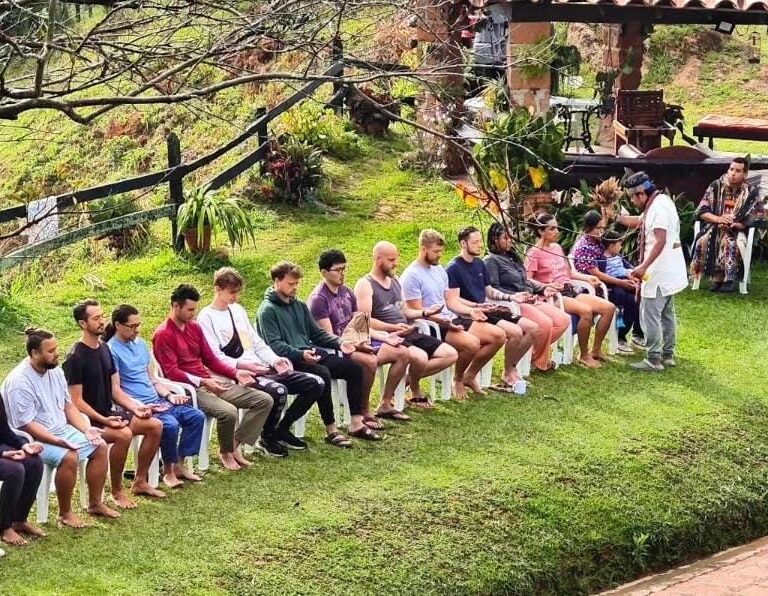
At LaWayra, participants spend more than a full day preparing before they ever drink ayahuasca. During that time, they meet the facilitators, get to know the group, participate in workshops, and learn what to expect during the ceremonies.

This preparation helps reduce fear and creates a sense of trust that allows people to surrender more fully to the process.

Why Trust Matters

One of the biggest challenges for newcomers is uncertainty.

Many people arrive carrying fears about losing control, having a difficult experience, or confronting painful emotions.

Building trust helps address these concerns.

Participants take part in sharing circles where they discuss their lives, challenges, and intentions. As people become more open, they often discover that many others are struggling with similar issues.

This creates an environment of understanding and support.

Rather than entering the ceremony surrounded by strangers, participants begin to feel like they are entering the experience with a community.

The Ceremony Begins

When ceremony night arrives, participants gather in the ceremonial space, often called a maloca.

The evening begins quietly.

Breathing exercises and guided meditation help participants relax and settle into the experience. The shaman then prepares the medicine and serves each person individually.

Unlike some retreat models where participants choose their own dose, the amount is typically determined by the shaman based on experience, observation, and tradition.

Once participants drink the medicine, they return to their mattresses or seating areas and wait.

For some, effects begin within twenty minutes.

For others, it may take much longer.

The experience unfolds differently for everyone.

Why People Purge

Perhaps the most misunderstood aspect of ayahuasca is purging.

Many newcomers focus on vomiting as something to avoid.

Sam views it differently.

In traditional ayahuasca work, purging is often considered a central part of the healing process rather than an unfortunate side effect.

People may release emotions, memories, fears, or psychological burdens through physical purging. Crying, shaking, sweating, yawning, and other forms of emotional release can also be part of the process.

Not everyone purges in the same way, but many participants eventually come to see it as an important part of the journey.

Every Experience Is Unique

One reason ayahuasca is difficult to describe is that no two experiences are exactly alike.

Some people encounter vivid visions.

Others receive emotional insights.

Some feel deeply connected to nature, family, or spirituality.

Others spend most of the ceremony quietly reflecting on their lives.

Many participants arrive expecting dramatic visual experiences and are surprised when the medicine works in subtler ways.

According to Sam, healing does not always look the way people expect.

Sometimes the most important changes happen beneath conscious awareness.

The Role of the Group

A common concern among first-time participants is the group setting.

Many worry that being surrounded by strangers will make it harder to relax.

In practice, the opposite often happens.

As participants share stories and experiences throughout the retreat, strong connections begin to form.

People realize they are not alone in their struggles.

The support of the group frequently becomes one of the most meaningful aspects of the retreat experience.

Many participants leave with friendships that continue long after they return home.

For some, simply being seen, heard, and understood becomes a powerful form of healing.

Healing Takes Many Forms

People come to ayahuasca retreats for a wide variety of reasons.

Some struggle with depression, anxiety, addiction, trauma, or emotional pain.

Others feel disconnected from themselves or uncertain about their direction in life.

Many arrive seeking clarity, purpose, or spiritual exploration.

While ayahuasca can provide profound insights, Sam emphasizes that it is not a magical solution.

The medicine can open a door, but participants still need to walk through it.

Lasting transformation requires action after the retreat ends.

The Importance of Integration

One of the most important parts of any retreat happens after participants return home.

Insights gained during ceremony need to be integrated into everyday life.

This may involve journaling, therapy, meditation, exercise, healthier relationships, or significant lifestyle changes.

Without integration, even the most profound experiences can gradually fade.

With integration, however, temporary insights can become permanent changes.

According to Sam, the retreat may end when participants leave Colombia, but the real healing journey is often just beginning.

Is Ayahuasca for Everyone?

Sam is careful not to present ayahuasca as a universal solution.

He believes it is not for everyone.

At the same time, he also believes that more people could potentially benefit from the experience than they realize.

When approached responsibly, with proper preparation, skilled facilitation, and realistic expectations, ayahuasca can become a powerful catalyst for healing, growth, and self-discovery.

For many participants, the most surprising realization is that the experience is not ultimately about visions, mystical encounters, or extraordinary stories.

It is about developing a deeper relationship with themselves and discovering new possibilities for how they want to live their lives.


Listen to the whole podcast episode here: https://open.spotify.com/episode/4at8OxogcYXW3Yt8WwGWVk

Join our

Podcast

Learn everything about Ayahuasca

In each episode of Ayahuasca podcast we explore the history, cultural meaning, and personal journeys related to this special plant medicine. We talk with shamans, researchers, and people who share their own

Title
.