
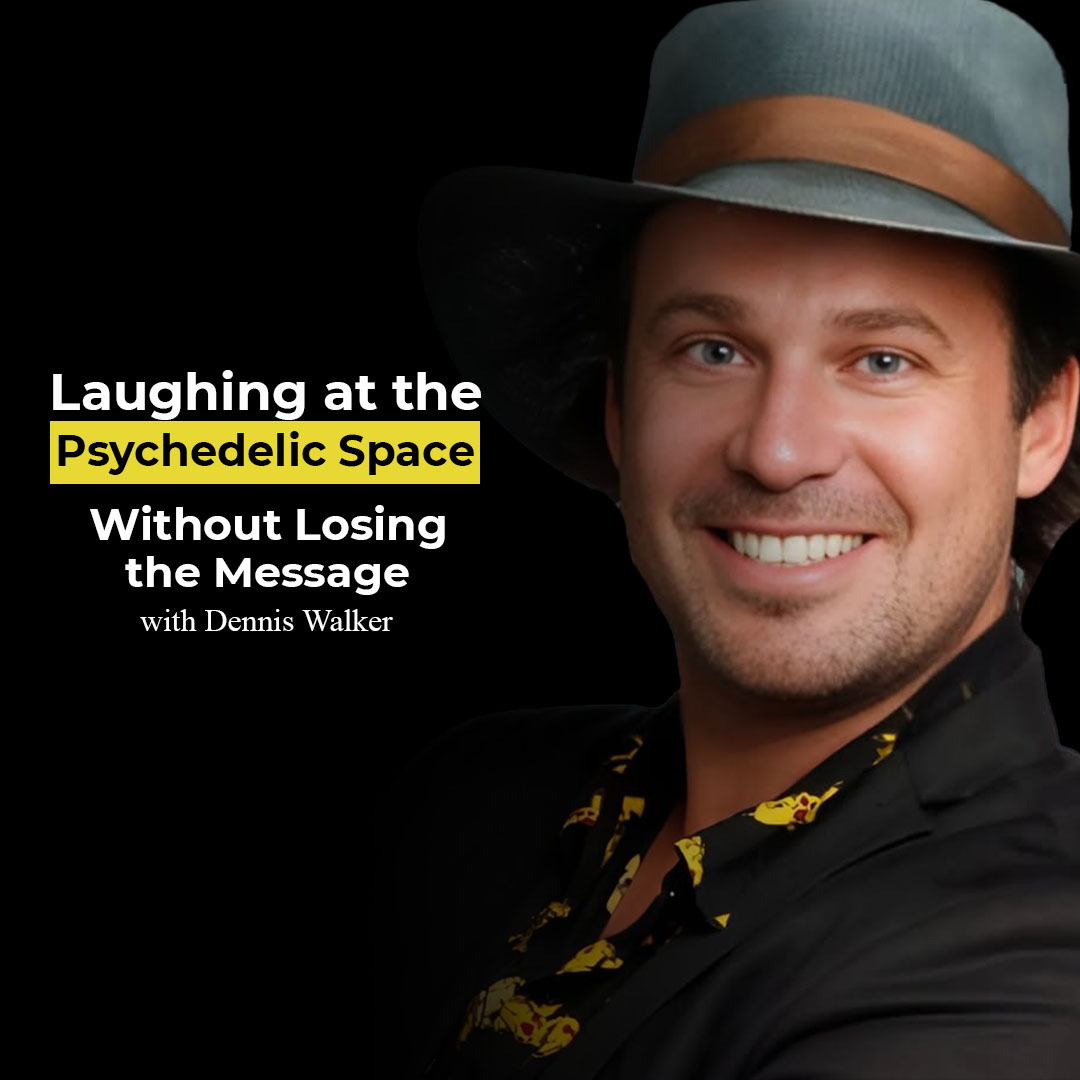
In this episode of Ayahuasca Podcast, host Sam Believ (founder of http://www.lawayra.com) has a conversation with , also known as Mycopreneur. Dennis is the creator of Mycopreneur, often called the “Onion of the psychedelic space,” a leading media platform exploring the business, culture, and future of mushrooms through sharp satire, journalism, and long-form interviews with founders, scientists, and visionaries.
We touch upon topics of:
- Dennis’ early fascination with mushrooms and altered states (01:30–04:30)
- Humor and satire as tools for integration and cultural critique (05:00–10:00)
- Trustafarians, influencer culture, and spiritual ego (07:20–12:00)
- Ethical concerns, wild-west dynamics, and retreat culture (12:20–16:30)
- Visionary exploration vs healing journeys over time (16:30–20:30)
- The role of the jester archetype in psychedelic culture (22:00–24:30)
- Meme culture, media, and modern communication (51:00–55:30)
If you would like to attend one of our Ayahuasca retreats go to http://www.lawayra.com
Find more about Dennis Walker at mycopreneur.com, on Instagram @mycopreneur, and through the Mycopreneur newsletter and podcast.
Transcript
Sam Believ: You’re listening to ayahuasca podcast.com.
Dennis: You ate a mushroom and it made you hear colors. What does that even mean? You could see music. So I started going down these rabbit holes. I started seeking out literature, going to the library and checking out books like Tales of a Shaman’s Apprentice. That was about someone, mark Plotkin, who apprenticed with some indigenous tribes in the Amazon.
And then eventually I discovered Terrence McKenna. And it was something that put everything in perspective for me at the time as someone who was very interested in these compounds. Didn’t really a COA, they fit into my life. So fast forward to 17, 18. I decided to try them, and I did my homework, my due diligence.
I didn’t just jump into it blindly, and I had a really comforting, grounding, inspiring, beautiful experience. Like so many people will tell you about their experiences with mushrooms. This one was the first one, and it blew the roof off my imagination. I wanted to learn more. I wanted to know why I never heard about these things, or the things I did here were very negative.
Of course, it did not reflect my experience at all. I had a very, I would call it uplifting, beautiful, eye-opening sort of experience. So I feel very fortunate. I was in a good frame of mind. I was in a good place in my life, and that really just set me off on this path of inquiry, trying to learn more about these substances, about the cultures that have traditionally used them, about why they’re so threatening and so restricted from.
Our modern Western culture, and ultimately at that point there was no quote space, right? It was like a very niche underground psycho not bubble of people who were interested in drugs and altered states, and that grew over decades at this point, 20 plus years into now there’s a formal ish psychedelic space and emerging industry research clinics working with them, et cetera.
So I think it was really just a lifelong curiosity that turned into almost a calling to use sort of a humorous word about it. But yeah, that’s essentially how I ended up here is it’s been me pulling on a thread for many years and then ultimately arriving at satire and humor as being my contribution and my way of giving back.
I’m not a clinician, I’m not a guide or a therapist or anything like that, but. I do have a lot of experience and I found a way to integrate that experience into my life over many years, which we can talk about, and I find humor to be a really beautiful way to make sense of this often tumultuous and chaotic world we live in.
Sam Believ: Hi guys, and welcome to Ayahuasca podcast. As always, we are the host, Sam, today having a conversation with Dennis Walker, also known as Micropreneur. So Dennis is a creator of Micropreneur, known as onion of the Psychedelic Space. It’s a leading platform, exploring the business culture and future of mushrooms known for his sharp mix of insight and satire.
He interviews founder scientists and visionaries shaping the global micro industry. Dennis brings humor, clarity, and depth to conversations about functional fungi policy and the modern psychedelic landscape. If you’re hearing it on audio you’ll probably, it’ll be harder for you to recognize, but if you’ve, if you’d see it on a video, you’d immediately recognize his face.
He is a very well known face in this psychedelic space because he makes fun of people like me, and it’s very funny to watch. This episode is sponsored by Laira Ayahuasca Retreat at Laira, we combine affordability, accessibility, and authenticity. Ra, connect, heal, grow. Guys, I’m looking forward to hosting you,
Dennis: Dennis.
Welcome to the show. Thanks very much for the invitation, Sam and I also make fun of people like me, so it’s a pleasure to be here. Hello, everybody.
Sam Believ: I think humor is is a lovely space. Te tell us about let’s start with your story. What, how did you go from, how did you go from No.
How did you get into psychedelic space and making fun of the space and into the mushrooms and all of that. What was your, what’s your journey?
Dennis: Ever since I was 16, 17-year-old, I became fascinated with plant medicines. The idea of altered states. It’s so alien to someone coming from California growing up in the suburbs and public schools to all of a sudden start hearing stories and reading on the internet about taking a plant or a mushroom and having these incredible visionary experiences, these spiritual experiences.
So I never heard anything about this growing up. I was in a very sheltered middle class suburban bubble. And then in that same bubble and high school, you start hearing stories about cannabis. You have some anti-drug education classes, essentially dare things like that about. Psychedelic mushrooms. And then when I started hearing stories from people in my extended network, my peers, my friend’s cousin it can’t help but get you interested.
You ate a mushroom and it made you hear colors. What does that even mean? You could see music. So I started going down these arrowwood rabbit holes. I started seeking out literature, going to the library and checking out books like Tales of a Shaman’s Apprentice. That was about someone, mark Plotkin, who apprenticed with some indigenous tribes in the Amazon.
And then eventually I discovered Terrance McKenna. And it was something that put everything in perspective for me at the time. As someone who was very interested in these compounds, didn’t really a COA, they fit into my life. So fast forward to 17, 18. I decided to try them and I did my homework, my due diligence.
I didn’t just jump into it blindly, and I had a really comforting, grounding, inspiring, beautiful experience. Like so many people will tell you about their experiences with mushrooms. This one was the first one, and it blew the roof off my imagination. I wanted to learn more. I wanted to know why I never heard about these things, or the things I did hear were very negative.
Of course, it did not reflect my experience at all. I had a very. I would call it uplifting, beautiful eye-opening sort of experience. So I feel very fortunate. I was in a good frame of mind. I was in a good place in my life, and that really just set me off on this path of inquiry, trying to learn more about these substances, about the cultures that have traditionally used them, about why they’re so threatening and so restricted.
Restricted from our modern Western culture. And ultimately at that point, there was no quote space, right? It was like a very niche underground psycho not bubble of people who were interested in drugs and altered states. And that grew over decades at this point, 20 plus years into now there’s a formal ish psychedelic space and emerging industry research clinics working with them, et cetera.
So I think it was really just a lifelong curiosity that turned into. Almost a calling to use sort of a humorous word about it. But yeah, that’s essentially how I ended up here is it’s been me pulling on a thread for many years and then ultimately arriving at satire and humor as being my contribution and my way of giving back.
I’m not a clinician, I’m not a guide or a therapist or anything like that, but I do have a lot of experience and I found a way to integrate that experience into my life over many years, which we can talk about, and I find humor to be a really beautiful way to make sense of this often tumultuous and chaotic world we live in.
Sam Believ: Thank you for sharing your story. I think that’s we all get to this line of work in so many different ways. So there’s two sides of you, right? There’s this serious side of you. That interviews people about mushrooms and their very various uses, not just psychedelic.
And then there’s this funny side of you, the comedic side, the side that I guess most people know. Yeah talk to us about that. How is that balancing act and like what, which which version of you. Are we talking to today?
Dennis: Great question. It’s something that I wrestle with a little bit.
It’s having the inspiration whenever it strikes and being able to pursue something. If I want to do a really serious subject or a really serious story, like for example, I’m interested in these ethnographic types of experiences. As I mentioned, I’m in Tunisia right now in the capital of Tuni and before this I was in Uganda and I met some Bota Pygmy a community there, which is an indigenous community in Uganda and they use cannabis.
And so I really wanted to explore that when I learned that this was part of their cultural fabric. Because there’s not a lot of documentation or research or anything like that into cannabis use in Sub-Saharan Africa, specifically among the pygmies. And I just stumbled into it because I was at a mushroom festival.
You meet a person, they tell you about a place. Next thing you know. The Pygmies are offering me cannabis, and there’s very little outside sort of exposure to this that I’m aware of, and I was doing my proper due diligence. Didn’t find a lot about it. So that’s a story that would be tough to tell through satire, or the same thing with the Uganda Mushroom Festival.
That’s a story where I don’t know that it really speaks to satire, where you have Sub-Saharan communities that are abjectly impoverished, who are really facing critical urgencies in terms of their limitations. No access to clean water food. Energy issues, things like that. Where, how do you satirize something like that.
How do you tell that story through satire? It’s very easy to tell the story of middle class and upper middle class and rich white people who drink ayahuasca one time and they discover that they too are a shaman. And this is like a very easy low hanging fruit trust. Yeah. The trust afar.
Anyone who spent time in Tulum or Ibiza and I really think it’s an important thing to recognize and to look at because. People tend to romanticize their suffering and their healing. And it’s the, to me, very humorous to be like, you can endlessly fetishize and romanticize this process of healing.
Anything can be heavy and dark and traumatic. But there’s something about being able to reframe some of those experiences and look at ’em with a little bit of skepticism, humor lightheartedness. That to me, in my experience, actually gives you agency over a lot of these experiences and qualities because if you keep trying to heal over and over, you can do hundreds of ceremonies and some people do, maybe that’s their path.
And I think that, I have more stories of how I arrived at these insights and why I’ve arrived at them, but as far as balancing, seriousness and lightheartedness, I think it’s nice when they can dance in between each other. And I think really good satire and humor for me has a really dark, heavy element to it.
It’s almost like you can’t talk about these things. Really effectively and communicate them without being able to put a sense of humor on them. And I tested that theory extensively when I first really started pushing how far I could go with Micropreneur. And I started examining things like geopolitics, like I was making satire on the Israeli Palestine border and going into refugee camps.
Talking about things that are hard to saturate and speak to the, these kinds of experiences I found at the time you could. Examine them through satire, but other times it’s today that would be very hard to do that same kind of satire. This was like four years ago. So I think that it really just depends on the subject matter.
The story and the last bit I’ll say here is satire, usually to me involves punching up. You don’t want to satirize like a vulnerable single mother in a refugee camp. That’s not really satirical material. But satirical material might be the white Arian with the dreadlocks who’s gonna go save the world by starting an ayahuasca center and the Amazon, and it turns into a pyramid scheme and they create a influencer culture around it.
That’s to me, what you would satirize, and it’s being able to judge or distinguish which one deserves which treatment.
Sam Believ: Yeah, and I watched a few of your videos. There is always a part there where they build an Amazon warehouse next to the retreat for some reason. It is. It is funny. So I totally agree with you and I agree with the importance of humor in space, and especially in such serious matters as healing and as psychedelics.
And I think you I’d like to invite you to my retreat. I think you’d appreciate the amount of humor. We have those jokes that we recycle over and over again because there’s this there’s a lot of under the belt humor that comes with ayahuasca because of the purging and things like this.
So there’s this couple jokes that I would love to, to share with you. So yeah you are officially invited, but you, the things you do is basically psychedelic infotainment, right? You, if you were just a person that would hate on all of those, all the psychedelic space, I probably wouldn’t be interviewing you.
So I kinda understand that it’s. It’s like a wrapping. The humor is a wrapping, but deep inside you don’t understand the importance and the use of this space. So it’s like Trojan Horse, right? You lure people in with with funny criticism and then you kinda keep them you educate ’em through a podcast.
Is that a fair assessment of your, of your idea?
Dennis: I think so. I think it’s all about continuing to learn and being open-minded, and that’s what led me to the humor in the first place. I used to be the first one to defend the seriousness of psychedelics. I mentioned I’m a psycho knot. Some people maybe if they’re new to the work I’m putting out, they haven’t been following.
Sometimes it can come off as a little bit like this person’s making fun of healing culture. But I think that is something I arrived at after years of taking it very seriously and also. There are potential pitfalls or challenges and these get recognized sometimes about people who maybe are not in a good position to be serving ayahuasca or serving mushrooms, and they are, because a lot of people don’t know where to get this stuff.
And I’ve seen that play out. I can share some of the stories about going down to Peru. I went down in 2010, 11 and 12 on retreats to ayahuasca centers. And to me it was very new. It didn’t seem to be as culturally in vogue as it is now. I was among the first people in my peer circle, certainly that I knew in my entire community who went and had a ayahuasca retreat in the Amazon.
And I both got wonderful insights and experiences and I also saw. A lot of really unhinged sort of behavior, this idea of you don’t really know who’s serving it. They didn’t necessarily have a lot of safeguards, things like that. So it, it always has been, in my eyes, a wild west frontier for better or worse.
And it’s still like that I don’t think that the answer necessarily is to strictly regulate it and that there’s pushes to do that. But then when you have that wild west frontier, it means that you’re also gonna potentially have some chaos that happens and chaos magic. So yeah, I think being able to.
Have these experiences and then use humor as a form of integration has been a great tool for me and it’s something that I want to teach that to people too. And just one brief story I love to share. I was at Maria Sabina’s house, right? She’s like the patron saint of mushrooms from the mtech culture.
And I’ve been to her family homestead twice. And the second time was a few years ago. It was 2022. And I took a big dose of mushrooms. I was there by myself with her family. They did a vlada, which is the ritual with the copal and incense and prayers and all that. And then they left me there and I was thinking I was gonna have this breakthrough dose experience because the first time I was there in 2010, I had a breakthrough dose and a completely visionary.
Cosmic level experience? This time very little was happening. Like I felt clearly I had the mushrooms in my body, but I really wasn’t breaking through to where I wanted to go. And I felt entitled at a point where I was like, I came all the way down here to Waka and I did the whole ceremony and I ate a double dose of mushrooms and nothing’s happening.
And then I started maybe three hours in just thinking of plot lines for skits, just thinking of, I was just bored. I started thinking of plot lines and then that’s when the mushrooms really kicked in and it felt like there was a sort of collaboration there. And at that point I realized I’d been doing it for a while, that maybe mushrooms also have a sense of humor if we’re willing to assign agency and intelligence to these substances and say that they are, they do have a spirit and they do have an intelligence.
I think they also have a wonderful sense of humor, and why not explore that avenue? In my experience, they’re, they’ve been kicking me plot line saying, Ooh, here’s a good idea. And then all of a sudden it becomes like you’re a you’re, you have a co-pilot instead of just you trying to figure it out.
And then by turn, that becomes very therapeutic as well.
Sam Believ: Yeah. Ayahuasca also has a very keen sense of humor and a lot of people report to it. It can tease you, it can make fun of you. It can also be strict. It’s interesting with those plant or fungal medicines that sort of have that very pronounced spirit, they do seem to also have a personality.
So you mentioned the, in the end, like the therapeutic effects of it. So let’s talk about your own healing journey. A lot of the there, there’s this cultural notion that a lot of the comedians become funny because it’s the way to navigate the world and run away from some pains and process things. I’m assuming what brought you to psychedelics at the first place was healing. And I don’t believe you share about it much. Can you share to us your own healing journey?
Dennis: Yeah, thanks for asking. So truthfully, when I first came into psychedelics, and I mentioned I had a mushroom experience when I was 17, and then that opened the door to higher doses and further exploration open the door to whatever was available within the next few years.
It was DMT salvia, different molecules, right? And truthfully, it wasn’t about healing when I started. It was about visionary purposes. I was so infatuated with this idea that you could close your eyes and see other worlds. And again, that’s the writing of Terence McKenna. It’s the writing of Mark Plotkin, it’s the Arrowwood trip reports, and in particular, as fascinated.
With the writing of McKenna because he is a brilliant writer. I don’t necessarily agree with all of his ideas. I think he had a very humorous element. People take, this is a great example. I think people take Terrence McKenna as like gospel, what he said. But if you read a lot of McKenna, he says don’t believe me.
Have your own experiences, right? I think. I in, in my eyes, like if he were to see how he gets deified and put up on this huge pedestal, he would probably find that very ironic and perhaps distasteful in some ways. I think that it’s all about you have your own experiences and you make up your own mind, but it was in particular how adept he was at being able to describe these experiences.
And it was at a point in my life where I knew there was something there. I had low dose experiences, but I had never heard anybody talk about them in such a eloquent way. So that opened my eyes to, there’s something really here. This person in my eyes as a brilliant writer, he’s really making a lot of sense to me, at least at this point in my life.
I’m gonna explore this further, and it was a high dose visionary experience. When I was 18 years old, I did a seven gram solo. In the dark experience that really delivered on the money, talking about these close eyed visuals, open-eyed visuals, very complex landscapes and insights, and a feeling of this connectedness with something broader.
Very difficult to find the words for it still for a lot of people, much more so when you’re 18 living in the suburbs and there’s not really that level of culture or familiarity in your immediate community. I remember having that really high dose experience and not being able to really talk to anyone about it.
It wasn’t like today, and even now I, I am thinking like, oh, seven grams, there’s so many different variations of potency and different mushrooms and things like that. Not then, not in my community. You pretty much had access to golden teachers. Sometimes they had penis envy, but that was about it.
It wasn’t at all like today where there’s psychedelic cups and people have 150 mushrooms in their culture bank. So yeah, I feel like. It’s been a rollercoaster of a ride still, and I think it’s really important to put time around these experiences too. I feel like a lot of people, myself included, you start to get this sort of honeymoon phase with psychedelics.
You romanticize them, you become an evangelist for them, or everybody needs to do them, everyone needs to try them. But the older I get, the more I put distance between that version of myself. And today I’ve been married for eight, nine years. I have a 1-year-old son, or he is turning one next month.
I’ve been really committed to my work projects. Like it’s different than, 15 years ago where I thought that we needed to get rid of money and, form this new, I still have that level of utopian thinking sometimes, but I just feel like. What I see in psychedelics now is people being very infatuated with them and leaning into them all the time.
And I also strongly believe in cognitive liberty. So I think people should decide what’s right for them. You’re not hurting anyone. You wanna, macro dose for days on end, that’s your decision. But in my own life, I’ve found a lot of value and being a little bit more intentional and then also maybe putting a little bit more space between some of the trips.
Sam Believ: Yeah, definitely. The integration is important. So that’s not the topic I was planning to discuss with you ’cause it’s not the funniest one. It’s actually one of the, one of the boring topics. But I don’t know, maybe you have some wisdom you wanna share.
Dennis: Let’s get into the funny stuff. So how I got into the satire is I was interviewing mushroom entrepreneurs, and that’s what I still do.
Every Friday I put out a new podcast, and that’s actually become quite lucrative because over five years of this 240 something episodes lots of other short interviews, I’ve just built this really cool network of people all over the world who leverage the potential of mushrooms. It’s not just psychedelics, right?
There’s people making materials, there’s people building houses outta mushrooms. Someone just built a surfboard that is commercially available in France. They’ve got a skateboard. So like I’m doing all these interviews and after about a year, especially the psychedelic ones, I was just like. Just everyone’s treating this just like a business, like they’re shipping units of apple juice, right?
This is mushrooms. This is like one of the weirdest, strangest, furthest out thing. And we’ve got all these like CEOs now who are trying to turn it into this commercial interest where they’re treating it like it belongs on the NASDAQ Stock Exchange. So it just created this really wonderful set and setting for humor.
And I in particular found a lot of humor around these kind of, like I mentioned I’m white, obviously I’ve encountered this a lot where god bless the confidence of a white man. A white man goes in, has a psychedelic experience, and then the next thing you know, like they wanna launch a company, they want to, be on featured on Forbes and Rolling Stone and stuff like that.
As a thought leader, and to me there’s just something really beautiful about trying to take the ego down a little bit. That’s what psychedelics for a lot of people are intended to do, or what, it often gets promoted. Like they, you have ego death. But I would challenge that. I think a lot of people, it shows maybe it’s the opposite.
You have ego amplification. There’s a sense of I am great, I am the best. I am gonna dominate. And to me satire is a great way of taking people down a pig in a beneficial way. And then I started to learn that this is something historically that various cultures have seen the value in. So like with the archetypal role of the jester, right?
And the actual renaissance, not the psychedelic renaissance, but like Renaissance Europe, there was usually a jester in the king’s court. And the express role of the jester is to bring the king down a notch a little bit. It’s to make fun of him. It’s because nobody else could do it. If some, if one of the peasants makes fun of the king, they would get their head chopped off.
But it was the Jester’s job to make the king laugh and to lampoon the king. And again, this kind of archetypal figure has shown up in different cultures. And the idea, as far as I understand it, is that they don’t want the king to get too full of himself. There has to be some element of humanness.
And part of humanness is having a sense of humility and having, being able to. Look at yourself and being like, you know what? I am being a little bit of a jerk right now. I don’t know if it always works, but that’s my understanding of the gesture’s role is that there’s like a, an archetypal role, just the way that like there’s different figures and a culture.
Like you have your king and you have your soldier, and you have your damsel in distress. You also have the gesture in that this is a super important role. Yeah, I have fun with it. And the litmus test I use for if something’s worth doing is if it is funny for me. I think, humor is very authentic.
It’s very complicated. What is humor? Where does it come from? What makes something funny? There’s so many different cultural tropes that are tied to that about, if I tell you a joke. And it gets translated from Latin Ian to English. It might not be funny, right? I used to host exchange students sometimes, like the Russians would tell me a joke.
It’s not funny but it’s hilarious and Russian. ’cause you have to be able to understand the culture and the context and why it’s funny and that’s a lot of humor. So to me, what makes it really cool to do psychedelic humor and mushroom humor is it means that the culture has evolved to a point where people have these shared ideas about why something is funny.
If you were to tell mushroom jokes or DMT jokes a few years ago, they’d have to be pretty surface level. But now you could talk about DMT entities and the joke and people know what you’re talking about. Or you could talk about like ego death with the mushrooms. People know what you’re talking about.
This just means that the culture has grown. So we have a shared language. So I think that’s another interesting point with the satire. I,
Sam Believ: yeah, it’s interesting you mentioned language because, with knowledge of language, when you get real proficiency in the language is when you can start making jokes in the language.
And also humor does tend to be a sign of a high intelligence as well. There, there’s definitely something there. But I had the good, I had the good follow up for that and I’m blanking on it right now. Gimme one second.
I also, I’ll just switch the topic.
Dennis: Yeah, sure. I’m happy to, yeah,
Sam Believ: no, carry on. You wanna say something?
Dennis: I wanna point out the difference between humor or, it’s like comedy and satire. I think that’s important and I think satire has a moral component to it too. It’s like a sort of a morality tale or like a moral compass for a culture and for me.
Standup comedy and humor. You could tell poop jokes and they could be funny, and I’ve laughed at them like Eddie Murphy, great comedian, standup comedian. Also great satirist, but mainly known as a comedian. He talks about when he first started standup, like he could just tell poop jokes and part jokes ’cause he was 16 and that’s all he knew how to tell jokes about.
And I think you, you could do that with satire, but satire usually has an element where there maybe is a teachable moment. And it’s this idea of like in a culture, when you want to embed certain social norms or like a way of thinking about something, you can do it satirically and there’s a moral component to it.
So I think that’s important. And and also I just wanna mention, yeah, doing like. Dark stuff. Like even right now I’m working on a bit, which I’ll probably drop today, that’s a collab post for one of the sponsors that I work with. And it has to do with like proprietary mushroom blends because there’s all these themes and elements and it’s very niche and nuance right now, but essentially, most people listen to this are probably familiar with this, but there’s a lot of these quote mushroom chocolates or mushroom gummies that are for sale online.
Like TikTok has a trending product right now. I don’t even want to use their name, but it’s you have people who are unfamiliar with psychedelics. They’re not going down or drinking ayahuasca or doing integration. It’s the sort of consumer culture, right? Where it’s like on TikTok shop and it gets marketed as wink, nudge, nudge.
They don’t use the real words, but like magic mushrooms essentially. But they’re research chemicals, right? They’re manufactured in the lab. It’s not magic mushrooms, it’s a lab drive chemical. There’s a lot of nuances and debate about how this gets in, but the point is that it’s marketed as being this like psychedelic mushroom, and it’s not.
So I’m like creating a meme right now that leans into these tropes about who uses these products, who sells them? And sometimes you look at ’em, you’re like. Oh, this is like potentially very offensive to some people and I think that’s important too. I think it’s okay, like to, you don’t wanna walk on eggshells.
Like we went through a period culturally where like comedians were afraid to say things. It’s even happened recently, right? Where it’s like people could get in big trouble if they make the wrong joke. And I think that’s a sign of a weak dying culture, like comedy satire. This should be the most protected form of speech and it has historically.
And once you start telling people like you need to be really careful who you make fun of and how you make fun of them, then I think everybody loses. And South Park’s been a great example of that. South Park has said if you can make fun of one group or one type of person. You have to make fun of every type of person, and I think there’s a lot of value in that sort of ideology right now.
Sam Believ: This episode is sponsored by Lara ias retreat. Most of Lara, if you’ve been listening to this podcast for a while, some of you might have already been. To Lare before, for those who don’t know us yet, we started Lara four years ago at Lara. We combined authenticity, accessibility, and affordability.
Lara is currently highest rated Iowas retreat in South America with more than 705 star views and an average rating of five stars. If you come to LA Wire, you’ll experience powerful, authentic ceremonies led by our indigenous shaman, Fernando, in a very beautiful venue. Just one hour south of Meine Columbia, we’re surrounded by nature and have comforts like hot water wifi at LA Wire.
Our team has guided more than 2,500 people through this life-changing transformation of Ayahuasca experience. At the same time, we keep it very affordable. So whether you’re coming for healing, clarity, or a deeper connection to yourself. LA Wire is the best choice. If it is your first time drinking Ayahuasca, you’ll love our three and a half hour preparation course and integration support.
All of that is included in price as well as pick up from Metagene Accommodation in Ayahuasca. Visit la wire.com to book your retreat or learn more. La Wire Connect. Heal. Grow L-A-W-A-Y-R a.com. No, definitely. I think taking things too seriously is not always good. So let’s talk about the value of humor in this psychedelic wave specifically.
So we’re, I think they call it third wave Renaissance. I believe the previous one was with the hippies, and I think part of the reason it, it fell apart was the seriousness. Like they, everyone wanted to change the world. And as you say, utopian thinking, I think humor can help there. What are your thoughts on that?
Dennis: Oh man, I would love to go back to 1969 to the sit-in the loving and just put whoopy cushions under the hippies, have fun with it. Yeah. There’s a real potential right now for humor to really bring healing that people are looking for, that maybe they are not getting, like ironically, psychedelics, mushrooms, ayahuasca, probably a lot of people can attest to if they’re not respected, if they’re not shown a certain level of respect and integrity like.
They can just as easily cause harm for people. Th this is like a blind spot a lot of people don’t always wanna talk about, but if you abuse something, it can definitely hit you right back. If you think about things being like a amplifier of internal states, right?
So humor I think can get to the bottom of a lot of that very quickly. And I heard it framed in a way I liked where someone I respect a lot I got to connect with in Austin at South by Southwest. And they mentioned like, when, you’re purging with ayahuasca, you think about throwing up right as a purge for a lot of people.
Like humor. If you get a belly laugh, you’re like, you’re moving the energy down in your belly and it’s like a breath that comes out. You think about breath work of people like breathing deeply, getting to the root of their trauma. If you really hit the bullseye and you have a deep laugh, you’re releasing something very deep, it’s in your gut, it’s coming out in a very kind of like breath work.
It’s going way beyond your normal breathing patterns and thinking, and it’s touching something very deep. It’s touching a nerve. I deal with a lot too as many of us do. I just mentioned just having my son and. The birth process is pretty challenging. It was pretty traumatic.
We’re so blessed and so grateful. But as any new parent will attest to you, like it’s tough when you get your sleep interrupted, your schedule’s topsy-turvy you still have work to do. You have commitments, you have family, but it’s like you’re taking on so much new energy. I can’t like just focus on work like I used to, right?
It’s if I take my eyes off this kid, he might fall down and hurt himself or, put his fingers in the plug or whatever. Point being that I’m now finding like I have to deal with a lot of stuff too. And so when I have a chance to find humor in something or make something humorous, it’s really beautiful.
And I also see this when I travel. I mentioned I’ve been very fortunate to travel a lot, host exchange students, and I found people in very challenging situations who have wonderful senses of humor. It’s if you can find humor and laughter and joy and these challenging circumstances. What’s really gonna get to you after that?
Like you say, oh yeah, that already happened. I was a soldier. I’ve been involved in lots of things and I choose to find joy. You can let. Your circumstances define you, and it’s really easy to tell yourself the story that you’re the victim. This thing happened to you, that thing happened to you, this person did something wrong.
It’s just as easy, or at least if you think about it this way, to make yourself have a different story, like change your story, find a sense of humor. And just briefly I’ll share, that was one of my early exposures to kind of plant medicine healing was with cannabis. It was before I’d taken mushrooms and I had a close eyed visual experience where someone who was tormenting me a lot at that point in my life, I was having, troubles at school and I didn’t know how to feel about this person.
And I saw them just like dancing like a clown. Like while, they were like, it completely reframed my perspective of them and I was laughing at them. I remember so that after that, when I’d see this person, I’d just be like, I’ve seen you just acting like a total fool, and you’re no longer threatening or scary to me.
I’ve heard ERO tell me that, but in the Amazon with Ayahuasca telling me that if you know these something’s very dark and heavy and they, it’s trying to scare you in your vision, just laughing. Its face, just, I’m not scared of you. Like you look ridiculous right now.
You’re stuck in this five D matrix and I get to go drink my mint tea and drink beer tomorrow if I want. And you’re stuck here by reframing things. It gives you a lot of power over the situation.
Sam Believ: Yeah. Humor is very important. It’s it’s a very powerful tool and especially if you have kids and you have business and it’s busy.
I I attest to that. I have three kids myself, and I dunno if you can see my under eye bags, but I was woken up by one of them today at 2:00 AM because he. His diaper leaked and he pe he peed himself. And then I had to go take him to my bed. And so it is challenging. Yes. Stressful humor helps.
That’s why we would definitely joke a lot. Like I, I joke a lot. I call myself a sit down comedian because we sit in the word circles and we share, there’s a presentation and I and I make a lot of dad jokes, and some people find them funny, some don’t. But humor really helps sometimes.
For me, the problem is not to make a joke, in a serious situation. Somebody sharing something and I find something funny and I’m like I can’t really make fun there. And I’ve a couple times I’ve made an appropriate joke. So that’s another that’s another level there.
So are you ever worried about offending people or, getting an enemy or something like that through your humor?
Dennis: There was a point where I was, but at this point, I’m truly worried about not offending enough people. There’s I don’t go outta my way to do it, maybe I should, but something that happened with Micropreneur and is in the process, is like, when I first started I’ve always been an outsider, right?
Like I’ve always I discovered mushrooms and my own way and was doing doses, and then I was never really connected to a strong sense of psychedelic community or things like that. And I always felt before that, even before psychedelics, just like on the edge of the cool group, like I wasn’t, I was part of the cool group, but I was on the edge and humor was a way for me to fit in, right?
So I was class clown in high school. And just like you say, like I have problems not making jokes. Like I wanna make a joke at a funeral, and I want people to make a joke at my funeral and tell jokes and things like that. And. Like when my entrepreneur became popular, I think it was because it, I was like really pushing the boundaries as far as I could.
Like I mentioned, I went over to Baghdad, Iraq. I was at like Saddam Hussein’s, abandoned palace above Babylon and then Babylon just wanting to be as weird as I could. It was this sense like psychedelics just were really starting to become an industry. There were these conferences happening. I got looped into through the podcast some of these circles where it’s all of a sudden it’s like professional and we’re trying to be serious and.
There’s a part there, there’s definitely room for that, but not at the expense of the weirdness. So I just said, I’m just gonna be as weird as I can be and make a lot of jokes that are over the top. And I pushed it and then I ended up, this was 2022 doing satire about Davos. They did the psychedelic industry meetup in Jabos who was getting mainstream coverage and like The Guardian and BBC.
And it was all these stakeholders from like ketamine companies and MDMA aspiring companies and things like that, who met at the World Economic Forum. And while this was happening, I was in Palestine, I was in Jerusalem, and I went to Hebron and learning about that whole story, which of course now is much harder to talk publicly about than it was then.
It was still very culturally sensitive, but not nearly the same as it has been in the last, like two years. So I was like making these absurd videos. But also educating people about the situation, like showing them on the ground how things were in places like Baghdad and Palestine. I was in Israel and then in Egypt, so like this part of the world.
A lot of people have only read about. And I found that satire became this wonderful vehicle for educating as I was learning. But it started to get popular and I think it’s because people saw, like I was being earnest. I wasn’t trying to tell a biased narrative. I was trying to like, make sense of what I was seeing and also have a sense of humor about it.
And then, that earned me more invitations. All of a sudden I was starting to publish with different platforms and I got, let’s say, taken seriously. So why I mention all this is because at that point when I was creating a lot of this type of content, the point was to see how far I could push it, right?
Fast forward two years, it wasn’t that long after I started, all of a sudden I started getting like all of these opportunities, right? I got invited out to Miami to mc, a big conference with Paul Stams and Rick Doblin. They gave me the influencer of the year award. I started getting paid, I got invited out to England to give a keynote at breaking convention, which is a huge academic psychedelic, like biggest European psychedelic conference.
Next thing you know is like India first mushroom conference, and then I was in Geneva a month ago, but it was it’s been like that for the last three years. When you start getting like these bigger opportunities and you start getting money, sponsorships and things like that, it changed the game a little bit.
Like when I was just having fun and seeing how far I could push it, I really didn’t have anything to lose. And then you get to a point where it’s like all of a sudden a lot more people were paying attention and I would actually hear about it if somebody didn’t like something I said, or they didn’t like a video, I get a text, and it felt like people were watching me from all over and all this. And I didn’t have any issues with this. And at this point, frankly, I could care less most of the time. But like I started having to think oh, if I offend the wrong person, whatever, I could get a sponsorship pulled.
And then you have to make that choice. You’re like, do I want to be making money and getting stage time and, getting published and getting quoted and yada. Or do I wanna push it a little bit. And that was the cultural moment at the time too. Like I mentioned, there have been comedians who get their gigs canceled or they say the wrong thing and they get a sponsorship pulled.
So yeah. But I come out the other side of that and realize if that’s the way you wanna approach things, then you you might as well just coast into the sunset because your work has lost its punch. If you’re letting other people dictate what you’re saying and how you’re saying it.
I don’t think that’s what good comedy or good satire is. I think you could be tasteful. So yeah, at this point I’m gonna see if I can get back to offending people. I think that’s the right move.
Sam Believ: Yeah. Sounds good. I remember first one of my we call people that come to my retreat patients and one, one of them, Martin, he’s also a Latin guy.
He sent me a video and I was a little bit offended. I remember. I was like, so it can definitely, he can definitely. Trigger sometimes. But my question to you is, obviously you make fun of white retreat owners and I’m just having to be a white retreat owners, white retreat owner.
So there’s definitely a lot of funniness and I’ve met a lot of crazy people. I would love to believe that I’m different, right? I’m still probably funny because LA guy in, in the Colombian jungle working with the medicine it is a funny concept, but have you met retreat owners that you’re like, yeah, they’re legit, they’re doing good work, they’re working with tradition, they’re helping people, they’re not overcharging or is it always or is it always bad?
Dennis: I think people are not easily camped into like good or bad. And I think that’s something we tend to do a lot is like there’s this sort of ideological purity people have when they look at another person about like how they should act. I think there’s certain things that really shouldn’t be tolerated and I ran into that unknowingly when I first went out to these Amazonian retreats I mentioned like that was really a wild West situation and there were really quite a few accusations after the fact.
None that I was aware of at the time, but they started coming out later of things like sexual assault or like this retreat owner pulling a gun and like one of my. People that I knew who was part of the retreat down there, told me later that this retreat owner pulled a gun on him and fired bullets at his feet because he offended him and then told him he had to leave.
And if he ever saw him again, he was gonna kill him. That’s pretty extreme. And I think especially before today’s culture, like back then, I didn’t know this was a thing, but apparently you could, they could just pay, ’cause I heard this from a lawyer who was working directly with this person. They could pay to get bad reviews removed from sites or suppressed, so they have now Treat Guru, and I don’t think that was around back then.
I was unaware if it was, but for things like TripAdvisor or whatever, where there were reviews of these centers, they could actually pay to have a bad review removed. Or they could threaten with litigation, things like that so that if somebody leaves that review or says on a forum like this. Retreat owner has done this and X, Y, and Z, they could just get that removed so that when you do the Googling, and again, this was like 2010, 11 or back then all is great reviews and it’s oh, so they’ve had 200 reviews and they’re all five stars or four stars or whatever.
So you know that, but at the same time, I know that a lot of people are conflicted about that kind of stuff. ’cause they say I had a great experience. I don’t think we should be okay at all with having someone like that allowed or able to do things. But again, just trying to paint things into either this is good or this is bad.
Most people fall into both camps, so I would like to think that there are ethical operators. I haven’t really been to too many retreats since then. I will say the handful of retreats I’ve been on, I went to one in 2021. I think that was a mushroom retreat somewhere by invitation. And I also had a really weird experience there and I’m not.
In the business right now of trying to like name names and shame people and those people are no longer operating that retreat. But there, there’s just been like, in my experience, a lot of strangeness, a lot of cult dynamics. I would love to go maybe experience a retreat today. ’cause I do think the culture has learned a lot.
I think more people who have been called to, to serve, let’s say more or less selflessly or like really called to help people, hopefully they’re in those positions, but also. Like I spent a lot of time in Mexico and it is a way to turn a quick buck for a lot of people because there’s almost no regulation, right?
If I wanted to set up a Iboga retreat in Mexico, it would not be very hard. Like you have to have a few connections. And I’ve been born on the border, I’ve been going to Mexico since 1990 and have lived there on and off for over a decade, right? Or for many years at this point. Point being that I’ve never opted to do that, but I’ve seen like backpackers or people come in.
And they set up overnight shops where they wanna run retreats and things like that. And I’ve never really been motivated to participate in those. And there have been quite a few stories of how those kinds of things can go awry, where, people aren’t doing intake, they’re not interviewing, they just like whoever can pay you arrive and then, it can just come off the street basically.
Some areas they’ll have like signs on the street being like, Bufo ceremony tonight you can just go smoke five M-E-O-D-M-T with no prior relationship or knowledge. So I do think it’s an interesting dynamic to think about, like gatekeeping verse access and I vacillate or go back and forth about it’s, is it one or the other?
Or it’s somewhere in the middle. Because I do think that there’s a lot of potential for not. Ideal experiences and maybe even flat out harmful experiences, like I’ve heard about and heard direct stories from people of but at the same time, does that mean you wanna make it like super restrictive and like very hard and you have to get this level of license and this level of clinical training so I think the community quote unquote at large is navigating those boundaries.
And that’s truly a lot of that stuff is what drove me back to mushrooms because I saw, wait a minute, do I personally need to go fly down to the Amazon or fly to Gabon? I’ve been invited to West Africa to do iboga or could I have a breakthrough healing therapeutic plant medicine or fungi medicine experience was something that’s grown in my neighborhood.
And mushrooms spoke to me in that way. Wait, I and I do think one other hot take I have is there’s a lot of comparing and subjectivity right now of like people saying iboga is the strongest plant medicine. There’s nothing even close. But then the five M-E-O-D-M-T facilitators will say five MEO is by far the strongest, weirdest, psychedelic.
And then people are being like have you ever hit a K hole? Have you ever done like a big ketamine dose? And I personally think these are all different ways to access these altered states. And have you ever done a ultra macro dose of mushrooms? Because I don’t hear many people talking about that.
But if you do. What, whatever the psilocin equivalent would be of like a 20 gram dose, a huge heroic dose. There’s absolutely states that you can access that have a lot of overlap. So that’s my take on it, is like they’re different tools for different people and I think if someone’s called to go work with something, they should probably do that.
They should be aware of what they’re getting into. And but one other thing I’ll mention is there’s this trend. Now maybe you’ve seen it, I don’t know, but I’ve heard about these centers that will serve like IBOGA and five M-E-O-D-M-T, and peyote and they’ll be giving people like multiple things. Again, I think if that’s what somebody wants to do, they should have the right to do that.
But you really need to know that maybe that’s not a great idea. Like it could just as easily destabilize you if not done intelligently. And some people don’t care at all. And if that’s you, just be careful and don’t hurt anyone else and hopefully don’t serve it to anyone else.
Sam Believ: I have an idea.
So I’m so convinced that what I’ve created here is the most reasonable way to run a retreat. I really want you to come over and if you find something that’s bad or humorous, make a video about it. I give you an open invitation to criticize me. And also I think there’s a, there is an opportunity for some good fun content playing on Columbia’s history, cocaine.
And I get, there’s a lot of humorous content and comments I get on my post. It’s oh, you’re just a glorified drug dealer. We could make a sketch about that. I think it would be really funny that of some tourists that went to Columbia to to do some cocaine and somehow ended up at the Naas retreat.
I think that could be a good piece of content. And because I understand what you say, it’s I see I feel the same criticism, the fakeness, the. The white shamans that drank ayahuasca a couple times and now they’re shaman or mixing different medicines and combo one day fu the other day, or just weirdness and the fakeness.
’cause I kinda I avoided, I also don’t understand the fact that you need to like, look a certain way or have dreads or copper cups or crystals and, there’s definitely spiritual layers to it that I’m only still accessing, but there’s a lot of fakeness in this space, so I try to avoid this.
So yeah I really hope you take this invitation and, we can make something funny. Even if you make fun of us, like I’m open. Oh,
Dennis: I would love to. And I’m not above being made fun of I would hope that people could make fun of me and do it well. And I think to really make fun of someone in a way that’s funny requires you to know that person, or at least to have respect for them.
I think. When I, so go back to South Park, which has been a shining light for a lot of people in their satirical lives, or just in far in terms of pop culture, a lot of the celebrities that South Park really destroys. It’s a badge of honor. They’ll say I made it, like they, they fun of me.
But like I, it’s an honor in that way. And again, I think when you show that you’re not bothered by it, it shows that you are. Confident and secure in yourself. There’s something about satire and it happens with all of us. We’re like, if I get criticized sometimes I take it really personally, right?
That happens and then you say, wait a minute. Why did I take that personally? Like why did that hurt? And then I think there’s something there and then think, focus on that and be like, if somebody criticizes you for something that you are stronger than you, it doesn’t bother you.
But if there’s some, for some reason it bothers you, I think that’s more a comment on yourself. So yeah, I’m interested definitely. And I’ve been to Columbia several times. Love it there. And hope to come back. So I think we can stay in touch after this and as schedules allow, it would be really interesting to, to explore this.
Sam Believ: Yeah. What you just touched on, I think is very deep because it’s basically shadow. If something’s making fun, if someone’s making fun of you and you get offended, it’s because your shadow gets triggered. It’s the same way. The easiest way to discover your shadow is when you look at someone and they really annoy you and you don’t know why.
It means you see something in them you don’t like in yourself. It’s your shadow and you have to do, you have to do the shadow work. So that’s another good reason for humor to exist. In, in, in our modern day, the attention spans are very low. People are distracted. It’s so hard to educate people.
So I think what you’re doing with grabbing their attention with humor and then educating them is actually very smart and very useful. What is your opinion in general and on the way communication is done these days? Social media and like meme culture anything you wanna share in that direction?
Dennis: I think it’s so important look at the fact that, like the president, I think both presidents in the US in the last two administrations have leaned into meme culture and like it’s, Elon Musk and these, very internationally. Prestigious influential people leaning into meme culture, and I think that kind of shows how powerful it can be.
I’ve also become interested in meme advertising. Like I, I mentioned, I like to do all the funny, silly stuff and I also wanna not worry about money, but for all of us. You kinda have to figure out how to put two and two together. You got kids, you got bills, stuff like that. Like it’s turned out that meme advertising can be really great.
Like it’s fun, it’s engaging. Spirit Airlines. No Ryan Air does it really well. They make fun of themselves. It’s a cheap airline. They lean into that. They lead into the shadow instead of being like, don’t make fun of us for being cheap. That’s their whole advertising strategy. It’s yeah, we’re cheap, but you’re gonna fly with us because we’re cheap, so we can make fun of it.
And we’ll make fun of you too. So I think as far as communicating the idea of a meme, as far as I understand it, is, it’s something that’s a replicable unit of culture and that’s what makes things go viral, is like you create an idea, a piece of culture and then it resonates with people and they wanna share it.
So that’s also what let me know. I was onto something with the satire because it was organic. I didn’t convince anyone to share this. People saw it and they’re like, so many times people have said. I swear you made this about me, or I swear you made this video about my friend and I think, no, I didn’t actually.
But you saw that because it’s again, this archetype, it’s this person that exists of it could be the white shaman. That’s a easy one. And then as far as like how things get communicated and social media, that’s what my background is like. I have a degree in media studies from University of San Francisco, and it was on the first wave of social media.
So I arrived at university, a psycho knot already, and like full blown, high dose, fascinated wild eyes. And this was 2007. So like Facebook, I think launched in 2007 or oh six. Twitter launched in 2006. YouTube had just launched. So I really got to ride this first wave of social media and. See where it’s gone from there.
So I’ve been tracking, studying, building, trying different things. I also feel a sense of pride in that. It’s taken a long time to have some success in this space, right? Like back in film school, back when I was an undergrad, I didn’t get the breakthroughs I was hoping for, and a lot of people don’t, it doesn’t happen overnight.
But then the fact that I got to continue working towards something, chipping away, working on different projects, playing in bands, teaching multimedia, working on independent films, things like that. And then eventually it’s satire and humor that broke through. And I never planned to do humor or satire, just.
Was a sort of hidden talent, let’s say. Like I knew I could be funny, but I never thought about putting out explicitly satirical skits and content. So it’s the virality the meme culture that paved the way for all of that. And I started seeing oh, if I make this certain type of content that I think is funny and people think it’s funny, then it actually affords me more opportunities to do cool things.
And so really the last few years it’s been about like finding ways to leverage that. To ironically grow the business. It’s but it started out me just like criticizing, rallying against this psychedelic industrial complex. And then I’ve been co-opted to a degree where now, people hit me up to Hey, I’ve got this brand of this, that, or the other, this conscious brand.
I want you to promote us great $2,000. And it’s wonderful because if people don’t like it, I’m like, I’m having fun. I think the most important thing for a lot of people is avoid burnout. And it’s tough to do that. And the way you avoid burnout is by having fun and enjoying things and means satire, humor.
Leans really well into that. And then the other side of that is we talk about like the kind of fake plastic shamans, which I think definitely exist, but there’s a lot of this like social media glorification of psychedelics, right? Like the psychedelic influencer as such rich subject matter to me.
Live streaming a mushroom ceremony. I think that’s like a wonderful topic for satire, live streaming, an ayahuasca ceremony, this idea of something very sacred and beautiful, but like I did a skit that I thought was funny about get ready with me for an ayahuasca ceremony.
People do on TikTok get ready with me for a night out. So just talking about what I’m gonna wear to the ceremony because they think there’s an element of that where like you, you get these people who do a ceremony and then almost immediately after they’re updating their Twitter about what they learned in the ceremony.
Or they’re like taking a picture with them. And I just think there’s a lot of room for satire and comedy there. ’cause can you imagine like the traditional lineages, which obviously we’ve evolved from that to a degree, but once upon a time, as far as I understood it, like if you wanna learn about some of these plants or these entheogen.
You go in solitude, you diet, you’re very intentional about it. And now we’ve created this fast food culture around it where like you fly in, you do the ceremony, you take selfies, you update it, and then you’re back in the office on Monday and you make a LinkedIn post about what the spirit’s taught you about ROI and Q4 and how you really need to finish strong in Q4.
This is what my vision was. And I’m not saying it’s my place to judge or say like a person’s right or wrong, but I do say it’s my person, it’s my place to make fun of that. It’s my place to be like, I think this is silly and I think we can make fun of it. If your whole thing you got out of your ayahuasca trip was how you’re gonna be like a slightly better employee that’s you.
But I think that is, is a silly way to approach it personally. I think these experiences. Probably take longer to figure out what happened than to like force this night. Sometimes people have the narrative written before they finish the experience. There’s a, I’m gonna go down and I’m gonna figure this out.
And then they already have it written their idea. So when they finish with everything, it’s like they already, they told the ayahuasca what they wanted, they didn’t open themselves up to see, they told ’em, oh, I want this and this is what I’m gonna manifest. So I digress. But I think, yeah, there’s a lot of room for skepticism, humor and the, this idea of the fast food, ayahuasca ification or fast food psychedelic experience.
Sam Believ: No, I as you talk about it, I understand there’s just so many things that are finding in this space and I appreciate the work you do. I think the gesture is necessary and I definitely. Had a lot of fun watching your video thank you so much for coming on and talking.
This is a very unique topic in this space, so I was glad to have you and yeah, just tell people that haven’t seen you, which they must be living under the rock because I think everyone have seen you. But tell them where to find you and any asks from the audience.
Dennis: Awesome. Thanks Sam for having me on.
I really appreciate it, and I do hope to go to Latvia one of these days. I’ve always wanted to go to Riga. I mentioned I work with a chocolate maker there of all things. So yeah, micropreneur is the name of the platform. I’m very active online. I try to have at least one post per day, a satirical reel lately with traveling.
I was in Uganda, as I mentioned, for Mushroom Festival last couple weeks. I’ve fallen behind a bit, but I do a lot of online content on my Instagram and on LinkedIn. TikTok, I got kicked off a Twitter. That’s an amazing story, but I’ll save it for another time. So I’ve been de platformed from a few, because I talk about psychedelics a lot.
Anybody who’s in this space knows that’s a potential thing. I do the newsletter, which covers. The mushroom innovation space globally, that comes out every Thursday in the morning, and then on Thursday afternoons I host an incubator. So if anyone’s interested in connecting with other mushroom entrepreneurs, and a lot of mushroom entrepreneurs also have a lot of skin in the game, or connections with other things like.
Ayahuasca, tryptamine, so on and so forth. Come join us at the incubator. It’s free. The invite goes out Thursday morning in the newsletter, and we have really solid presentations. Like we just had one from a group in Colorado that breed exotic psilocybin mushrooms and olis mushrooms. So like things way beyond Ensis Zappo decorum and T-T-B-V-I, which is the strongest psilocybin containing mushroom in the world, or at least that’s been tested.
And they did a whole presentation about the future of psilocybin mushrooms and beyond Cuban. We do this every week. So this week it’s gonna be someone from Silo Safe is the organization, which is a third party labeling system, which makes sure that products on the underground market have inside of the product what the labels say, and they match up.
And it’s a great way to get your finger on the pulse of what’s happening, to meet people who are deeply invested in the space and established already especially in the mushroom innovation space. So that’s every Thursday. The podcast still comes out once a week. We always have interesting guests.
Primarily focused on mushroom innovation across the board. We get into a lot of subjects like we did here. I do a lot of public appearances at these different conferences, festivals. Essentially what I tell people is it’s a media platform. And wherever you find media, that’s where the platform is.
So between the podcast, the newsletter, the online skits, the serious journalism stories, sometimes I’m writing stories for High Times or doubleblind, different magazines, things like that. I would love for all of you to connect with me, whoever feels called to. And I just wanna thank you again for the platform and the time.
And let’s keep in touch about my next visit to Columbia. I’ve been two or three times, I’m sure I’ll be back.
Sam Believ: Thank you, Dennis. Guys, definitely check out the videos. They’re very funny. So guys, you’ve been listening to Ayahuasca podcast. As always, we do the whole assembly and I’ll see you in the next episode.
I hope you enjoyed this episode. If you’d like to support us and psychedelic renaissance at large. Please follow us and leave us a like wherever it is you’re listening. Share this episode with someone who will benefit from this information. Nothing in this podcast is intended as medical advice, and it is for educational and entertainment purposes only.
This episode is sponsored by Lara Ayahuasca, retreat. At Lara, we combine affordability, accessibility, and authenticity, laira connect, heal, grow. Guys, I’m looking forward to hosting you.