
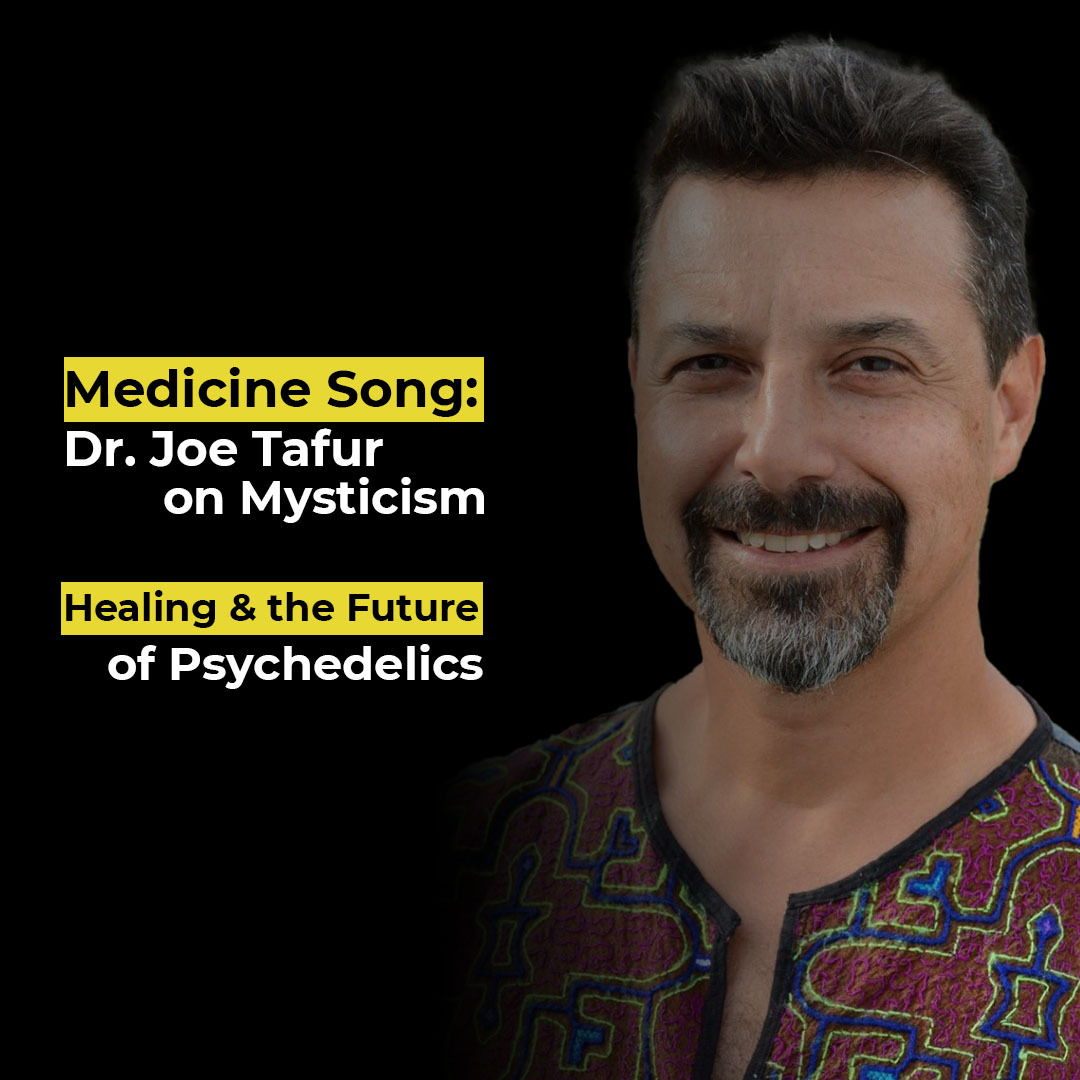
In this episode of Ayahuasca Podcast, host Sam Believ (founder of http://www.lawayra.com) has a conversation with , a Colombian-American family physician, curandero, and author who bridges Western medicine with Amazonian spiritual healing. Trained at UCLA and UCSD, Joe spent six years in the Peruvian Amazon studying Shipibo curanderismo and is the author of .
We touch upon topics of:
- Joe’s journey as a doctor and curandero (01:16–02:22)
- Why he wrote Medicine Song and what it adds beyond his first book (03:39–05:14)
- Mystical experiences as a core part of healing (05:14–06:40)
- The Eagle and the Condor prophecy: science and spirit uniting (06:40–08:32)
- Measuring spiritual wellbeing and connectedness in research (09:03–11:42)
- Nature connection as a foundation for healing (13:54–17:56)
- The state of the psychedelic renaissance today (21:14–25:31)
- Traditional plant medicine and modern clinical therapies learning from each other (26:27–30:35)
- The limits of scaling retreats and ethical growth (31:20–44:25)
- Building a spiritual community and legal recognition in the U.S. (45:08–51:49)
If you would like to attend one of our Ayahuasca retreats go to http://www.lawayra.com
Find more about Joe Tafur at http://www.drjoetafur.com and his work at http://www.modernspirit.org.
Transcript
Sam Believ: You’re listening to ayahuasca podcast.com.
Dr. Joe Tafur: The idea that this psychedelic medicine and psychedelic therapy is rooted in these ancestral traditions with the plant medicines and mushrooms, et cetera, is opening the door to allowing mystical experiences. Into the healthcare system, and ultimately it’s showing this relevance of the spiritual healing to modern health and wellbeing.
So the book is about weaving those things together, showing that, hey, we’re in this timeframe when some ancestral people prophesize that we need to address the mind and the heart, the science and the spirit would need to come together. They would need to bridge, they would need to soar together for us to move forward.
That if they don’t, we’re gonna have more problems than we already have. And so that’s one movement. And then the psychedelic research world has been, for the last 30 years, creating stronger and stronger arguments of how spiritual wellbeing, how relevant it is to people’s healthcare, their mental health, and even to their physical health.
So the book is about ex exploring that, but it’s through stories. Through stories from my own life and journeys, and trying to draw upon ancestral wisdom from indigenous traditions, and also weave that into science and bridge it, and then tell the story of somebody who’s just following their spiritual path, and trying to understand the kind of.
Multidimensional Mystery of life.
Sam Believ: Hi guys, and welcome to Ayahuasca podcast. As always, we do the whole assembly of. Today I’m having a conversation with Joe Ur. Dr. Joe Ur is a Colombian American family physician, ero and author who bridges western medicine with Amazonian plans, spirit healing after training in family medicine at UCLA and doing MINDBODY research at UCSD.
He spent six years in the Peruvian Amazon at Rao Cent Spiritu studying bu. He is the author of Fellowship of the River and his new book, medicine Song, spiritual Healing and Psychedelic Renaissance, where he explores how spiritual healing psychedelics and modern science can come back into harmony.
This episode is sponsored by Lara Ayahuasca Retreat. At Lara, we combine affordability, accessibility, and authenticity. Laira connect. Heal, grow guys, I’m looking forward to hosting you. Joe, welcome back to the show.
Dr. Joe Tafur: Thank you, Sam. Nice to be back. Nice to be back on the show. Thanks for having me.
Sam Believ: So yeah, that’s that second time I’m having Joe on the last time.
It was about two years ago. It’s he can watch it in episode number 34. So back then he was still writing the book about which we’re gonna talk today. Joe, welcome back, back on and tell us how what’s changed since the last time we spoke in your life.
Dr. Joe Tafur: Yeah, I think the main thing that’s changed is, probably little things have changed, but is the book, yeah, I released the book.
That’s what I was focused on, was releasing medicine song. And so it came out this year in July. So now I’m in the process of slowly promoting the book and. And meanwhile the otherwise, just digging in on my projects here in, in Phoenix, Arizona, and also there are other projects still going to Columbia a little bit.
It’s assignment and some trips to Peru. So all that’s the same, but now bringing this book and that kind of message out. And then slowly making my way here in Arizona towards more probably more integrative medicine doctor work as well and some psychedelic work with ketamine.
Sam Believ: Yeah. That’s actually was something I wanted to ask you. Given your history and everything you’ve done, do you see yourself more as a doctor or more as a ero or if you were to assign percentages, where would you put that?
Dr. Joe Tafur: I don’t know. I don’t know. I think that here in the, like in the states, and I would say it’s a, it’s.
I don’t know, maybe like half and half,
Sam Believ: 50 50.
Dr. Joe Tafur: Yeah. But I don’t know if that’s that accurate with the time, but in my heart, I would say something like that. Yeah.
Sam Believ: That’s that’s very good to hear. You’re a busy man. You have projects all over the place in different parts. So I’ve interestingly enough, when I was interviewing you last time, I didn’t read your book yet, but after that I’ve read the book, the Fellowship of the River, and it’s it’s a really great book.
So I highly recommend listeners to check it out, that it’s like relatable has some stories and you question many things. And I really enjoyed listening. I’m an audio book kind of person and I believe it. It’s you reading it as well, right?
Dr. Joe Tafur: Yeah, no, I read it. And then we have the new audio book of medicine song, and I read it as well.
Sam Believ: Yeah. So I’m looking forward to check out your new book. So I will basically be the, that’s the questions I’m gonna ask, so tell us about your new book. What is yeah, why did you need to write it? What, what was missing in the first book and why should people check it out?
Dr. Joe Tafur: The new book is about so the old book was about my journey as a doctor getting involved with plant medicine and making the case. I think trying to connect the dots medically to, to what I was observing there as a doctor in Peru and seeing the plant medicine work, how it was helping people and coming up with some theories, trying to relate spiritual healing to, to healing that could affect mental health or physical health.
And so that was the focus. And then this book is about tracking three decades in a way. Like it’s stories. This book is mostly about stories. So people, they want stories, they like stories. And so trying to catch, get people’s attention through stories, but also to teach something. And and so then I picked stories that are covering from my own personal life.
The first book, a lot of people were, sorry, I’m gonna clear my throat. The first book was a lot of people wanted to hear more stories, more, more the mystical side of things. And so then I wanted to do something that was addressing that and speaking more about the kind of, the relevance of the mystical side of healing work.
And so I track over these 30 years of stories in my own life. When mystical things or mystical experiences happen to me, not necessarily because of planned medicine or psychedelics, but just from life. And then also some experiences that happened in ceremony or even in psychedelic therapy. So tracking those stories and how it shaped the course of my journey all the way to, the church of the Eagle in the condor and our work here in Arizona and the legal battle and all that kind of a journey, but also tracking this prophecy of the eagle in the condor and aversion from Peru that said that this last 30 years would be this big kind of change period, the nineties into the 2000 twenties.
And that’s a very interesting timeframe when a lot, so much has changed and the internet came, and the cell phone came, and so many other advances in science and technology and quantum physics and artificial intelligence. It’s very interesting shifting period that was in a way anticipated by indigenous astrology, at least in Peru and by other groups suggesting this would be this big time and it would be a very trying time and a difficult time where there would be so much disequilibrium and the ecosystem in the world, but also in the mental health of the human society.
And that it would be some time when this eagle in the condor and in this version, there are many other versions in this version. The eagle is in a way, you could say like the path of the mind and the other one, the condor, and this version is path of the heart that they would have to come together.
And so it’s about science and spirit coming together. So during this same 30 years of the psychedelic renaissance is this overlaps, maps in the research? You were just at the maps conference. So in the 1990s, the first psychedelic research started. 2010 started publishing 2010 to 2020 to now the psychedelic twenties, that they announced at maps.
And within medicine, the idea that this psychedelic medicine and psychedelic therapies rooted in these ancestral traditions with plant medicines and mushrooms, et cetera, is opening the door to allowing mystical experiences into the healthcare system. And ultimately it’s showing this relevance of the spiritual healing to modern health and wellbeing.
So the book is about weaving those things together, showing that, hey, we’re in this timeframe when some ancestral people prophesize that we need to address the mind and the heart, the science and the spirit would need to come together. They would need to bridge, they would need to soar together for us to move forward.
That if they don’t, we’re gonna have more problems than we already have. And so that’s one movement. And then the psychedelic research world has been for the last 30 years, creating stronger and stronger arguments of how spiritual wellbeing, how relevant it is to people’s healthcare, their mental health, and even to their physical health.
So the book is about ex exploring that, but it’s through stories from my own life and journeys, and trying to draw upon ancestral wisdom from indigenous traditions and also weave that into science and bridge it and then tell the story of somebody who’s just following their spiritual path, and trying to understand the kind of multidimensional mystery of life.
Sam Believ: So you mentioned the spiritual wellbeing, with in the scientific world, you’d need to. You need to have numbers. So how does one measure someone’s spiritual wellbeing or how does one
Dr. Joe Tafur: Yeah.
Sam Believ: So the spiritual
Dr. Joe Tafur: yeah it’s been, there are a number of measures that psych, so psychological questionnaires that have been validated.
And so they’ve been building their way up in medicine and medical research and psychological research to become established measures of spiritual wellbeing that have been some cases been correlated clinically to, to the way your body works. So they’re starting to bridge that, you have gratitude and psychological gratitude measures that have been correlated to inflammation in the blood.
So you have spiritual wellbeing measures of different kinds. There’s like a big questionnaire where they try to see. People’s kind of shift and their sense of meaning and purpose in their life and their, and then there’s a further one that I think is a little broader. It’s called the connectedness scale that’s come out of psychedelic research.
And the connectedness scale is assessment of through questions and questionnaire, but it’s been linked to healthcare outcomes. So it’s not just an idea, it’s not like somebody’s dogma. It’s actually stuff that’s tied to, to a reality, to a measurable reality. So maybe it’s not so perfect, but it does trend in that way.
So people’s idea of their sense of connectedness with themselves, with their bodies, with their emotions, with their loved ones, with their community, with their society, with their ecosystem, and with the universe is, is a measurable number that it’s a scale, the connectedness scale that’s been validated and published and, shown that if you can shift connectedness in individuals, so let’s say an ayahuasca ceremony or an ayahuasca retreat or in some kind of intervention that it’s a good prognosticator, that it would probably, you can probably show that may lead to long-term benefit.
And so they follow those people out to say, is that in fact true? So that’s using the research machine to assess this. So then all of a sudden it’s connected in scale. Maybe it’s abstract, maybe it’s just a psychological measure, but it does have some value, some measurable value that’s related to healthcare outcomes.
So that’s an example of what has come out of the psychedelic research world that has been trying to understand what is it that these people are getting out of these experiences. That is leading to this big change for them. So some of the research is showing you could probably say something more simple that they’re shifting their emotional processing.
They’re able to process emotional experiences from their past in a different kind of way. That it’s a, and that has a connection to their biology, to the physical function of their body and also to their psychology and how they’re triggered or they’re not triggered. And so what is it that’s driving that?
And what role does a bigger spiritual context, or at least a mystical context or a transcendent context play in facilitating that kind of shift in somebody’s being and. So that’s, again, that’s looks like the shifts in spiritual wellbeing from other studies. Again, there’s a separate questionnaire. I could pull out the name.
It’s a complicated acronym, but it’s a form of questionnaire that again, it’s like, it’s just mounting evidence. Say, okay, this is the one we’re using. This is, and that’s, as the research is published, you show everybody, this is the questionnaire, here’s the questions, here’s the scale, here’s the history of the publication of this particular scale, and how, what the evidence has been accumulating around this scale.
So that’s how you assess it. Yeah. But it’s more rooted in, like I said, a sense of connectedness, a sense of feeling, like I said, meaning and purpose. So how do we, what are the more universal concepts around spirituality? So it’s not about it’s a very, it’s very much about the personal relationship, with the universe, with the transcendent, the mystical side of life.
Sam Believ: Yeah. Speaking of connection, one of the things you can talk about is the importance of connection to nature to in the process of healing. I dunno if you wanna talk about this a little bit.
Dr. Joe Tafur: Yeah. I think that nature, so nature, nature connectedness is one of the connectedness scales.
That was before there was the more broad connectedness scale, or maybe at the same time, but parallel. Some people had just focused on nature connectedness. So in the psychedelic therapy world, if you could, they, there was some research that had demonstrated that if you could promote more nature connectedness in the individual, that they would be more likely to heal.
And so there’s something there about this connection to nature. And so then there’s a step further. There’s different perspective. You could just be psychological measure, oh, I feel more connected to nature. But we would go a step further and say that connectedness to nature, that’s, it’s a resource, that there’s a resource, that there’s a metaphysical resource, that there’s a spiritual relationship with the earth and with nature that provides guidance, that provides information, that provides peace.
That is an example of how harmony could exist, within the ecosystem. How there could be a stable, sustainable equilibrium formed here on this earth. So nature is our example to understand that, the people that think that the world is an empty chaos, that nothing matters.
Everything’s meaningless. There’s no point to anything. And it’s the forest, is somehow functioning on its own in some kind of rhythm and consciousness that many people across the world would, they acknowledge the, in some cultures, the divinity of that. That is, there is a sacredness to the existence of that.
And so then that becomes, the nature becomes an example of what a loving community looks like in the sense that it can support, without judgment. So I think that the nature and our connectedness to nature. It is something that most of the ancestral cultures around the world acknowledge that’s very important, our spiritual relationship with nature.
That all the, I would say, I would argue that all the sustainable cultures that we were aware of, so the meaning that they were able to coexist with intact ecosystems for maybe thousands of years. The only examples that we have of cultures that have done that are ones that somehow acknowledge their spiritual relationship with nature.
That’s integral. So a lot of ancestral culture in Columbia, for example, are very focused on that, that they don’t believe that you can achieve sustainability, that you will not come to a place where you clean, where the rivers are clean, where you live, until you acknowledge that you actually, there is an a mystical side of life.
There is a transcendent aspect to our existence, that the quantum physics and all the other physics and just being alive and being honest, that there is a mystery that exists. So then addressing this and trying to find some kind of right relationship, how they call it, some kind of way to come into peace and, there’s a lot of room for skepticism and questioning, but still moving in that direction that, that’s important.
That, that’s a value of yours that’s, that’s necessary for the long-term health and outcome. Here I am in United States, like the amount we’re really dealing with some heavy duty stuff here of the disrespect. They just have something that’s been going on for a long time.
They just published something last week that, colorectal cancer, like high rates in young people, 30 year olds, from, they said they’ve been feeding around the bush so long. What is it? Why? What could it be? And it’s the ultra processed foods, and the lack of the, poisoning the environment constantly.
And then the damage that it’s causing, here on the development of the youth, there’s, it’s a big issue here that’s a big mystery, like what’s going on with, whether it’s autism or these other things like so much environmental contamination and kind of disrespect over what it means to, to be in relationship with where you live.
And there’s immense suffering that is like bubbling up right now. It’s very intense, that the healthcare system, it’s like we probably cannot just deal with it, it’s gonna overwhelm the system and we’re just seeing it coming up now. So the concern is this, is this ignorance of these things?
Is it sustainable? And as far as we know, no, there’s no reason to think that it would be. Like, we have no argument that it would be. So then we’re on the edge of that cliff, and here in this culture, I think we’re really overlooking over the edge and seeing the way that’s bleeding over into other parts of the world.
And so it’s just okay, how do we relate to nature here in North America? The tribes, the indigenous tribes had a much different attitude towards. Like we say, the creation, within the, let’s say the monotheistic religions, the Judaism, Christianity, for example, that the creation would be considered sacred.
That it’s not a piece of garbage for you to use up and throw away, and that is, it’s impractical, but there’s some kind of deeper metaphysical consideration as well, in the mix there.
Sam Believ: Yeah, U US is a very unhealthy place. The world is getting unhealthy, but US is extra unhealthy.
When I went to maps and I’ve been there for a week, I felt terrible. Like just the food and something there, I physically, I felt were very ill. So you talk about, last 30 years from nineties the psychedelic renaissance. How far along are we? Like how’s that urinalysis, how is that looking?
How much is left for us still, hopefully better times are coming or maybe people embrace psychedelics more and other spiritual practices.
Dr. Joe Tafur: Yeah, it’s further than ever number one like that we know of. And in America, there was the, you were at the MAPS conference and the MDMA research that got, in America that got denied.
Like you said, this what you know, for your, as a tourist is this felt like a very unhealthy culture. That you comment and this culture that’s dominated the, the industry is dominating the government. And so there’s big questions around why was MDMA assisted therapy denied here when Australia said yes and Canada said yes.
So they’re moving forward. So thanks to the MAPS research conducted largely in the United States, Canada’s moving forward with MDMA, Canada’s also moving forward with some degree of psilocybin therapy. Australia’s moving forward with MDMA with some degree of psilocybin therapy as well within the United States.
There’s this MDMA research and the battle with the FDA continues. To try to find approval of these treatments. Psilocybin has breakthrough therapy status is in clinical research trials that are supposed to culminate in, I don’t know, a couple years. And while they do that, it’s been sup lending support to a lot of decriminalization movements that have allowed for mushrooms and other plant medicines to become decriminalized in a number of states with even tracks towards therapeutic use within Colorado, in New Mexico, in Washington, in Oregon, for example.
So that’s growing. It’s not going backwards even with the, the changing politics, it’s not going backwards as far as we can tell. They just secured $50 million for ibogaine research in in Texas, very conservative part of the country. At least here in the United States, we’re seeing that because of this unhealthiness that you observe.
That the suffering in the disease is so intense that they have to look for these kind of options. So I believe that it’s, we just keep moving forward towards making more psychedelic therapies and trauma-informed care available, including, more legal support for the Sacred Plant medicines.
Since we brought our case across last year there’s been two other, after 15 years of no legal kind of permission for communities working with Ayahuasca now since we got past, there’s two more, and then there’s a few more that are coming. And so there’s a lot more open-mindedness that’s happening towards these things.
And so I’m not sure how far we are. I guess I just see it keep growing and growing in the United States. Psychedelic research is happening at all the top universities. I don’t know of one that’s like against doing this research. I’m not aware, and so it just, how could it not grow? There’s a resistance to it, but the growth continues, so it seems to continue growing.
I don’t know, ketamine is legal. And so trying to find the ketamine assisted therapy and create good examples within that practice and to also confront the, the abuses that happen in that world. So that’s happening. And so then meanwhile I was in Brazil and they have the cannabis medical conference and then there they went psychedelic research and plant medicine support at that conference.
And that was there, that was this year in Columbia. I don’t know. There’s movements that are trying to encourage more psychedelic therapies. In Mexico, there’s, there’s iboga treatments, facilities where people are going. People go to Jamaica to do mushroom ceremonies. It’s just, they’re just more and more opportunities and more and more open-mindedness, I think again and again.
I think it’s going as fast as it can go.
Sam Believ: This episode is sponsored by Lara ias Retreat. Most of Lara, if you’ve been listening to this podcast for a while, some of you might have already been to Lara before. For those who don’t know us yet, we started Lara four years ago at Lara. We authenticity, accessibility, and affordability.
Lore is currently highest rated Iowas retreat in South America with more than 705 star views and an average rating of five stars. If you come to lure, you’ll experience powerful, authentic ceremonies led by our indigenous shaman. Fernando, in a. Very beautiful venue. Just one hour south of Meine Columbia.
We’re surrounded by nature and have comforts like hot water wifi at La Wire. Our team has guided more than 2,500 people through this life-changing transformation of Ayahuasca experience. At the same time, we keep it very affordable. So whether you’re coming for healing, clarity, or a deeper connection to yourself, LA Wire is the best choice.
If it is your first time drinking Ayahuasca, you’ll love our three and a half hour preparation course and integration support. All of that is included in price as well as pick up from Metagene accommodation and Ayahuasca. Visit la wire.com to book your retreat or learn more. Lara Connect. Heal Grow L-A-W-A-Y-R a.com.
Yeah, that’s very promising. To see. And you mentioned MDMA and ketamine and new kind of psychedelics. I know you’re grounded in the world of ayahuascan old, traditional psychedelics. So how do you see those both worlds coexisting? And what can both of those modalities learn from each other?
Dr. Joe Tafur: Yeah I think first of all, not everyone is gonna to drink ayahuasca, nor should they, so it’s like, how many people do you see at your center? I guess you see a lot of people, but turns out there’s way more people on the planet Earth. And as far as meeting the demand of the amount of suffering that exists is, it’s really formidable.
And so you’re gonna have to have multiple strategies. That’s just a reality. And so within the United States, as I said, while, there’s a few, sacred plant medicine, spiritual communities, including communities that work with ayahuasca. A few, there’s underground use, and there’s all this other stuff going on.
But the MDMA psychotherapy is illegal. Psilocybin clinical work is very limited. Psilocybin, spiritual ceremonial work is very limited. So ketamine, is the legal option that can grow freely to address the problem here, as an example within the healthcare system, even potentially be paid for by the healthcare system one day.
Who’s gonna pay for all this? So it’s so important to me that the options that are actually available to the society are there because if the society doesn’t change at a larger scale. The problem is devastating. So that’s the first thing. As far as what they can learn from each other, I think they can learn a lot from each other.
And I think they are learning a lot from each other. And so I am really interested in, I and I am involved in teaching and bringing people to Columbia, to Peru to take psychedelic therapists who want to learn about ceremony in the spiritual context. Those people who are guiding people in clinical settings, even with ketamine or with psilocybin or with MDMA, like many times they encounter like spiritual phenomenon that happen, when you open up those portals and those spaces and they’re not getting a lot of guidance around how to address, this other mystical side of what we’ve been talking about.
So you have the ancestral traditions that have a lot of experience to draw from. And so we are trying to connect those two. Areas so they can learn from that and learn from the guidance and draw upon that. And eventually we see people here with Ketamine, for example, including myself okay, bringing live ceremonial singing to those settings that there are people who train and have experience and gifts in those areas.
And like why won’t it eventually turn into that the way it is traditionally, not just recorded music, but also, shamanic or energetically conscious exchange. So that’s beginning. It’s very, it’s in its early stages, but we’re involved in that and in trying to connect those two kind of ways.
And then on the other side, from the science side there’s so much to be gained, that some of the ancestral traditions and the beauty and the magic of focusing maybe on the energetic side of things so much. But there’s a lot of psychological knowledge to draw from, that’s beneficial to the tribal people as well and the kind of healing work they’re working on with their own families.
And so just drawing upon the experience of Western psychotherapy and western science and that there’s just so much to learn about, how these things are interacting with the brain and the mind, and the body. And it’s useful, to, to recognize also people that might be more at risk that, hey, this is something that’s maybe not so safe to do.
This isn’t, maybe we should be more careful, like the medical screening side of people going to an ayahuasca, a retreat or a retreat center that works with ayahuasca, for example, like the Western Diagnostics is huge in helping avoid problems in those settings. So there’s a lot of knowledge to draw from.
Sam Believ: Yeah, it’s really cool to see that. Synergy, so to speak in collaboration if it happens this way and the both sides take the best from each other while growing simultaneously. But yeah what you’re saying is correct. I’ve calculated that in order to give 8 billion people Ayahuasca, you’d need to give 1 million people.
You’d need to have a 1 million people ceremony every day for 30 years, which is obviously not possible and would not be enough at all, because as people would need to do it over and over again. So it is, I think it forever is gonna stay limited in let’s say it’s for the very special people or very interested people in it because there’s just.
It’s just hard. And you yourself working at Nivera and seeing that format of of retreat, you probably know how difficult it is also to, to organize and to make it happen and how non-scalable it is. From a strictly business point of view, you can’t really scale that. Let’s say we have a retreat Lara and we host, we do three retreats a month and we host anywhere from 60 to 90 people every month, which is a lot.
But yeah, if I wanted to, I’m completely burned myself down to the ground. I could maybe start one, one or two more retreats. So that’s a couple hundred people a month, but still, it’s not enough to make a dent. However, another thing you touched on, I think that’s where the, my personal hopes are from the point of view of spreading the medicine is training the facilitators because, you said you wanna bring people that serve the medicine, you wanna train them in the more shamanic traditional approaches. And that’s separately from that conversation, I came to the same conclusion that it’s necessary. Because even if you’re a psychiatrist, it doesn’t mean that you know what to do in the ceremony from a spiritual point of view.
And, in the clinical setting, they don’t really use all the tools that are used in traditional ceremony. And also there’s a space because all, most of the facilitation training programs in us they lack practical experience. It’s it’s all very technical. So I don’t know how far along did you get in there, but if you ever want to collaborate I would more more than be more than happy to do something together because we do have a lot of people and there’s a lot of opportunities to to practice.
But actually this December we start with doing a first, have a retreat where people that, doctors and therapists that are coming, they can they can participate in the retreat. They pay a little extra but there’s a training program on top of that. I’m collaborating with the few people.
Some of them I’m at maps and we, and they will be able to do the retreat, learn and also take that expense out of their taxes and learn continuous learning credits. So that’s my first attempt in, in that direction because if we were able to get a lot of people like that they wanna serve the medicine.
N not ayahuasca, but they wanna work with ketamine or MDMA or whatever else gets legalized, and then we can train them on how to do the shamanic part. And the ation part, because let’s be honest, practicing on ayahuasca is the best way because of how hard it is. And, sitting in a Cain clinic is much more difficult experience than being in an ayahuasca ceremony.
It’s just more intense. Yeah. Do you have any thoughts about that? Any ideas?
Dr. Joe Tafur: Yeah, everybody’s trying to do different things and so I don’t know what’s harder or not harder, that’s very, that’s an opinion, that people might have different opinions about that kind of thing.
But I think it’s important to create those opportunities for those people that are getting into psychedelic therapy and so yeah I’m doing that myself and. And like with these other, they didn’t got enough on my plate right now, I don’t know about new projects or new collaborations.
They’re just trying to keep the ones we’re going, we’re doing, trying to get those established and functioning. And, but I think it’s really important to do it, but I don’t think that it’s like these are cultural shifts and so the focus and the business model and scale up and all that is, supposedly because they’re trying to address the big problem, that’s not why people really scale up.
They’re trying to make more money. That’s why they scale up. And and so I think that new pro, all these programs, like you said, trying to come up with ways to do it where it’s sustainable, where it’s takes care of the workforce and not gonna burn everybody out and create examples.
So that’s gonna take multiple people. So the idea is you create more example, look, this is what we’re doing and this is how we’re helping, and hey, you, maybe you guys can do it too, and then you’ll also help, but the idea that somebody needs to monopolize the whole thing, in order to get rich, would be the main reason.
It just not, doesn’t work out very well, as you mentioned, because it takes such more care, to do what we’re trying to do. So it’s oh, this is not a completely capitalist model. And so that’s part of the issue of the change. It’s okay, are there small businesses and things that are sustainable, that do well enough that can keep something going that they really feel good about and that they believe in?
That it’s not just about the venture capital, it has already come and gone through psychedelics. They’re the fantasy and the thrill of thinking, oh wow, this is such an exciting treatment. This is such a big treatment. We could get rich. Alls we have to do is what we already got rich from cannabis, or we already got rich from crypto.
So they think, oh, alls we do is just put our money into here because, they’re so smart because they made so much money so young that they must be so intelligent, but then as it turns out, when you get into the work that you’re doing you realize that it’s yeah, it’s very difficult.
It’s tough, it’s not fun all the time. It’s not just a thrill. It’s not just a cheap vacation or whatever, or a luxury vacation. It’s serious. It’s heavy, and the profit margins aren’t what you thought it was gonna be. And so once that kind of reveals itself, they go away. They were in it for the profit margin.
There was a thrill around, oh my God, I, oh my God, I got so high. Oh wow. I saw so much. But really what was boring was, oh, we’re not making as much money as I thought we were gonna make. So then they leave. And that’s what we’ve seen a lot of. And so the idea that there would be investment in capital to scale up, there’s few examples.
There are examples of people that are pulling that off. It’s, again it’s so hard, it’s so hard to maintain the integrity, around this kind of work to keep it on track. And so I think that it’s so important that there are good examples. And so the good examples means that before they think about scaling up, before they think about growing, that they get what they’re doing stable, and otherwise there’s really nothing to grow.
And so that’s what we’re trying to get to. And I think it’s a patient process.
Sam Believ: Yeah. It’s, it is an interesting topic for me personally. The, and forever topic, this balance between spirituality and helping people and then the business, because unfortunately no matter how amazing we are and wanting to help people, we are still existing within this capitalist society.
So it’s kinda like you have to defeat it with its own tools. ’cause if you can’t. At least for now, I’ve not figure out how to do something without making money. And then, like from a strictly business point of view, it’s the people that solve the biggest problems are the people that make the most money.
Like in, in a sort of, is that true? Is that completely true? ID idealizing it, but at least that’s what a, that’s what a capitalist would say.
Dr. Joe Tafur: Yeah.
Sam Believ: Yeah. But with the retreat model, you can run a retreat, but it takes, as you say, so much love and care that the moment you try to spread your effort, it all falls apart.
That’s what it seems to me. But but at the same time I remember it was up to the ceremony that I sat down. I was like I feel so great. How can I get everyone else to feel the same way? And I made this calculation. I’m like, oh, this is. Very difficult. So I hope somebody figures it out eventually.
Not to make a lot of money, but to, yeah. To help a lot of people and hopefully make some money still, because of course. No, I
Dr. Joe Tafur: think it has to be, it has to be, like I say, you gotta be profitable to be charitable. Paul Staman always says that, and I think it’s true. So you want it to be, profitable and you, and people deserve to make a living, doing what they’re doing, especially trying to help.
And so I’m all for that, and I think that’s really important. And it won’t sustain without that, it’ll fade away out competed by everything else that’s out there. So I think it’s really important, but I think it’s the growth model, that people want to grow before they’re ready because of ambition.
And that’s the part that keeps falling apart. And we’ve seen it fall apart in the psychedelic world of. Multiple organizations that grew. I don’t know. There’s this field trip with a group that, I don’t know, I’m not trying to trash field trip. I’m just saying they were planning to do ketamine retreats and all this stuff, and they tried to grow very fast and it, and they overextended and they fell out.
It didn’t work. And that’s happened a few times now. There are a few retreat centers within Ayahuasca world that do expand and are able to create, more environments. And so it does go on in those worlds. It’s just, yeah, it’s tricky, it’s not so easy to do. So people are trying to do that.
And I think it’s just, everything’s changing. Everything’s changing all the time. And so it’s unstable. So then you’re trying to find something that you enjoy, that you’re able to sustain. That you feel good about. And then if you can make it, if you can grow it in an effort to help more people and also to be more successful, great.
But I think the reality is just that’s not a, it’s not a slam dunk, it’s not just ’cause Oh, this was so big for me and for the people that I work with that, oh my, this is gonna be huge and, we’re gonna run it so big. And I say for example, in America, the rehabs, there’s no the rehab business is it’s so personal, so it’s so deeply personal, the work that they do with people.
And you really don’t see like a brand name growing in some big way across the country to be able to handle that. It’s just, it’s not common in mental health care. To see a large scale business behind it, it’s something that’s been difficult to maintain. And so maybe part of the nature of that. So then you have other formats, the people that really want to help.
For example, you have people like Santo Dime, the Brazilian, where it’s a church and they have a way of approaching the medicine and the community that’s is not a capitalist model, and they’ve probably grown more than any other ayahuasca utilizing community, then the old fashioned was not a capitalist model either.
The tradition, they’re just doing it as part of their spirituality and yeah, spread across the whole Amazon. In that case, even that wasn’t enough to fix everything, in those areas. So I think there’ll be some element of it that will be, that’ll grow beyond, the capitalist model.
But a retreat center is a retreat center. You offer a special service. People are coming, they’re staying, you’re feeding them, you’re taking care of them. You’re translating for them. They can take a shower in the jungle, all these things. So it’s a special service that, that you’re offering people an immersion experience that I think warrants, yeah.
Its own business, but there will be to, for the change to grow into the world, it’ll have to extend beyond the business model.
Sam Believ: Yeah. I agree. There’s some, something else needs to be figured out, and I don’t think it’s been figured out before. That’s that’s something I think about a lot.
But the church model is very interesting. And you mentioned Santo and not a business model. We’re talking about a model of how to spread healing Yeah. To, to far and wide. And obviously you’re a part of a church as well, right? The, yeah. Eagle and Conor. Yes. Te tell us more about that.
Like, how does it look like I’ve interviewed a few people that run psychedelic churches and obviously, tell us about that. How does it look like? I only know this world, the retreat former indigenous youth and also Yeah. For us tell us, I think our community,
Dr. Joe Tafur: they don’t like being put into this psychedelic church category because we feel like it’s, yeah.
It’s a sacred plant medicine tradition. So we’re like carrying on the tradition that we learned in, in, in Peru. And we continue in our connections to ancestral traditions in Columbia and also our connections to ancestral traditions here in the United States with the Native Americans that are part of our community and drawing upon those deeper traditions.
And so then it’s just a small scale. We’re a small scale, community that just went through the big process to try to be legal. And we just are, we’re starting from very little, so we don’t have a lot of investment or anything. And so we’re still securing a location and we’ve been just doing it in people’s homes and just very small scale kind of operation that’s just very grassroots and focused on our community.
So we’re like we just wanna build out our community. We wanna make sure that the people that we’re offering the ceremony to are part of our community, and that we are gonna be able to follow up with them and be aware of what’s happening with them. And they don’t just come and go, but that it’s actually investing into, the future of the community and seeing, okay, what’s the real, what, what really happens when you offer this to people within the same place?
And over time, are they making progress or not? And so we’re focused on that. And so we are also. Dedicated to honoring the ancestral traditions, the indigenous traditions across cultures in the world. So not just obviously here in Americas with the indigenous traditions, but encouraging our, members to learn more about their own ancestral culture and to honor ancestral culture.
That it was more connected to nature, that was more connected to spirituality and bringing these things back online. And also encouraging the connection to health and wellbeing that we feel like, okay, this spiritual practice is has, there, there’s potential therapeutic benefit of spiritual practice.
And so we’re saying that if it is like genuine spiritual practice, that it should be the therapeutic. That it should help your health and wellbeing. How we started the discussion today, that it’s like if what we’re doing is helping you, that it should be helping you at some level, like mentally or emotionally or spiritually or maybe even physically and that’s, or in your relationships, with each other, with your family, et cetera.
That’s what we’re trying to help improve. So we’re just trying to be an example, like I said, of we’re not saying we have all the answers. We’re not saying we figured it out. We haven’t figured out the financial side of it. We haven’t figured it out, but we think that we’re trying to approach it with integrity and doing our best to address the issues and the concerns and the problems that come up.
And like I said, share the example with the larger so that other people will pick up and do something. The people are playing soccer all over the world, not just because obviously there’s a huge business around soccer, but they just do it. People are playing music all over the world, there’s big business around music, but that’s not the only thing that’s going on with music.
So just letting these things grow from the ground up.
Sam Believ: How was your, were you able to get the exemption with the da?
Dr. Joe Tafur: Yeah, we did. One was, we got the, we got it last year. Yeah, I think or I dunno if it was last year or the year before. I think it was last year. I believe we got the exemption.
Yeah.
Sam Believ: Congratulations. That’s very exciting. Yeah. Thank you.
Dr. Joe Tafur: Yeah, we got it. Yeah, we sued the government and they settled with us, out of court. And settled. The court was aware of the settlement and so they settled. And part of the settlement was that we got our DA license.
And so we’ve been renewed a couple times now ’cause there was a couple different processes. So now we’ve imported Ayahuasca, brought Ayahuasca from Peru to the United States a few times and we’re legal. So that was what our fight was. Yeah, we fought to do that. And also again, like we’re not responsible for everybody else and they want to do it.
It’s okay, start your church, start your community, put your, if you want to do it this way, if you want to bring it legally through South America, here’s the path. And so two other churches have gotten it right after us, so we broke the ice and there’s more and behind them. And so we wanted to break the ice.
And our argument was this is a legitimate spiritual tradition. It should be treated like, for under religious freedom. And the concern was that, oh, the Santa a die in the United States is considered legal. And same with the UDV, the Brazilian churches that are syncretic with the Christianity.
And we’re not against that, but we just, they felt like the indigenous traditions or the traditions that were learned drawing upon the more ancestral tradition were not given the same respect. They were not given the same dignity. And we felt that was important to address. So we fought for that and we got it.
So that’s a sign of a big change. And here. In the us I don’t know. In my experience personally, for example, with the DEA, they’ve been very supportive, with the process. So it’s a bureaucracy that maybe it’s not the greatest to have to deal with, but it’s not that bad and we’re moving forward.
Yeah. So it’s a big success for us. And it’s the Church of the Eagle and the condor in celebration of the prophecy.
Sam Believ: Congratulations. It sounds like something very difficult to pull off suing the government. It’s, it sounds complex. So I’m happy you did it because last time I’ve, I was aware you were still in it and so yeah, it’s it’s very helpful for the other people and churches and legalization or just change in the way people in US look at it at large as well through, through this process.
Yeah, we’re almost wrapping up, but few more things I’d wanna talk about is you mentioned mystical experiences. If you wanna talk about this what, what happens when you work with Yeah.
Dr. Joe Tafur: I think that it’s just that the idea of a mystical experience or some kind of experience that’s I might shut this there’s different, obviously when you’re working at a retreat center works with ayahuasca plant medicine and the idea that okay, people, some mystical experiences are very relevant to, to what happens to them there.
I think that’s maybe not every time, but it’s common that would be play a role. And there was a publication here in the United States a couple years ago that also was presented at the previous maps. Certain experiences from Emory University saying spiritual, existential, religious or theological experiences.
Trying to give a broad, so that might feel spiritual to the person or might be existential challenging the meaning of the universe for them or something of their life and death, their existence or religious or theological, like their kind of understanding of the, these things.
And so that these kind of experiences, they said, at least within the psychedelic therapy world, they said it’s very common. When they observe and study everyone, they realize, I’m gonna shut this just real quickly. Just be a second.
They realize that is this very common, if you were to ask people at your center, after a retreat. Did you have a, non-ordinary experience? I think it would be pretty high percentage, of people. So then they say in the same paper they publish, they said, yeah. And then these cert experiences, beyond, like there was previously in the academic world a mystical experience with the questionnaire and a scale that was there.
But they said with the cert experiences that they’re very, they said these were really important in the person’s outcome. When they clinically relevant. So the person if in their wellness journey, did they get better? Did they find therapy? Did they have spiritual healing from their process?
It turns out that if they had this certain experience that a lot of times that was very relevant to their process. So it’s the idea of a transcendent experience. If you look at the mystical questionnaire, you’re talking about people having experiences. Where maybe they, they feel like they transcend, time and space, or they feel their ego dissolve or they feel themselves come into a union with the cosmos, with infinity.
That they begin to feel this kind of gnosis of this and knowing, and a connection to some kind of inner healing intelligence or maybe a connection to the intelligence of nature. What people call non-ordinary experiences, but that those could also take on, deeper kind of questions and understanding about what they find meaningful in their life, what they think is really significant in their life, what they would consider like sacred in their priorities.
If I were to die without addressing this, that’s a big deal. What am I doing here in this life? So addressing those kind of things is really important in general, actually. But then with the sacred plant medicines and some of the psychedelic therapies that some of these things are brought into the forefront.
That maybe the society, the culture is bearing these things, over material concerns, et cetera, that are real. But sometimes they might get carried away and they get, overly prioritized. And so then the person goes through their life and maybe they were really successful and they’re, great capitalist and they got so rich and they have all the money and they have everything they wanted, but then they’re not happy and they don’t understand and maybe they even get, become very unhappy, maybe they become so depressed and lost that they wanna kill themselves despite achieving everything that they were guided to achieve.
So it’s okay, what is that other element? What is that X factor that would’ve made them happier? How can they come to understand what that is? And is that happiness and that connection to some kind of deeper kind of metaphysical understanding of the course of their life, does that actually improve their health?
Not only would they feel better, but do they have less medical problems, less mental health problems? Do they bring more, joy into the world? Do they bring more goodness into the thing? Do they take better care of the nature and the world? So there’s something there that, the mystical side that there, if we’re trying to understand the nature of existence and, our life on this planet, et cetera, that there’s some, like I said, there’s some mystical side of that.
And so all the cultures all over the world have been, have all developed a lot of spiritual practices that are designed around helping people get in touch with that. And then if you’re in a culture, in a society where you’ve just been really closing the door to that, then sometimes plant medicine or psychedelic therapies can really help reopen you to something that you’ve been very disconnected from.
That may actually just be part of the nature of reality.
Sam Believ: Okay. Thank you, Joe. Thank you for for another episode. I think it was really great. Lastly, just tell the audience where to find you, your books where you want to send them.
Dr. Joe Tafur: Yeah, so then the new book, the old book, and the new book is available on amazon.com and through Audible, you can get it.
They also have it on ebook there. And then we have our activities, our retreats for the healthcare providers on modern spirit.org. And then I also have my own website, dr joe defer.com, so that’s where you can learn more about our work.
Sam Believ: Thank you, Joe. I guess I’ll see you again when you write another book.
Dr. Joe Tafur: Thank you, Sam. Good luck with what you’re doing.
Sam Believ: Guys, you are listening to Ayahuasca podcast. As always, we do the host and live, and I’ll see you in the next episode. I hope you enjoyed this episode. If you’d like to support us and psychedelic renaissance at large, please follow us and leave us a like, wherever it is you’re listening, share this episode with someone who will benefit from this information.
Nothing in this podcast is intended as medical advice, and it is for educational and entertainment purposes only. This episode is sponsored by Laira Ayahuasca Retreat. At laira, we combine affordability, accessibility, and authenticity. Laira connect, heal, grow. Guys, I’m looking forward to hosting you.