
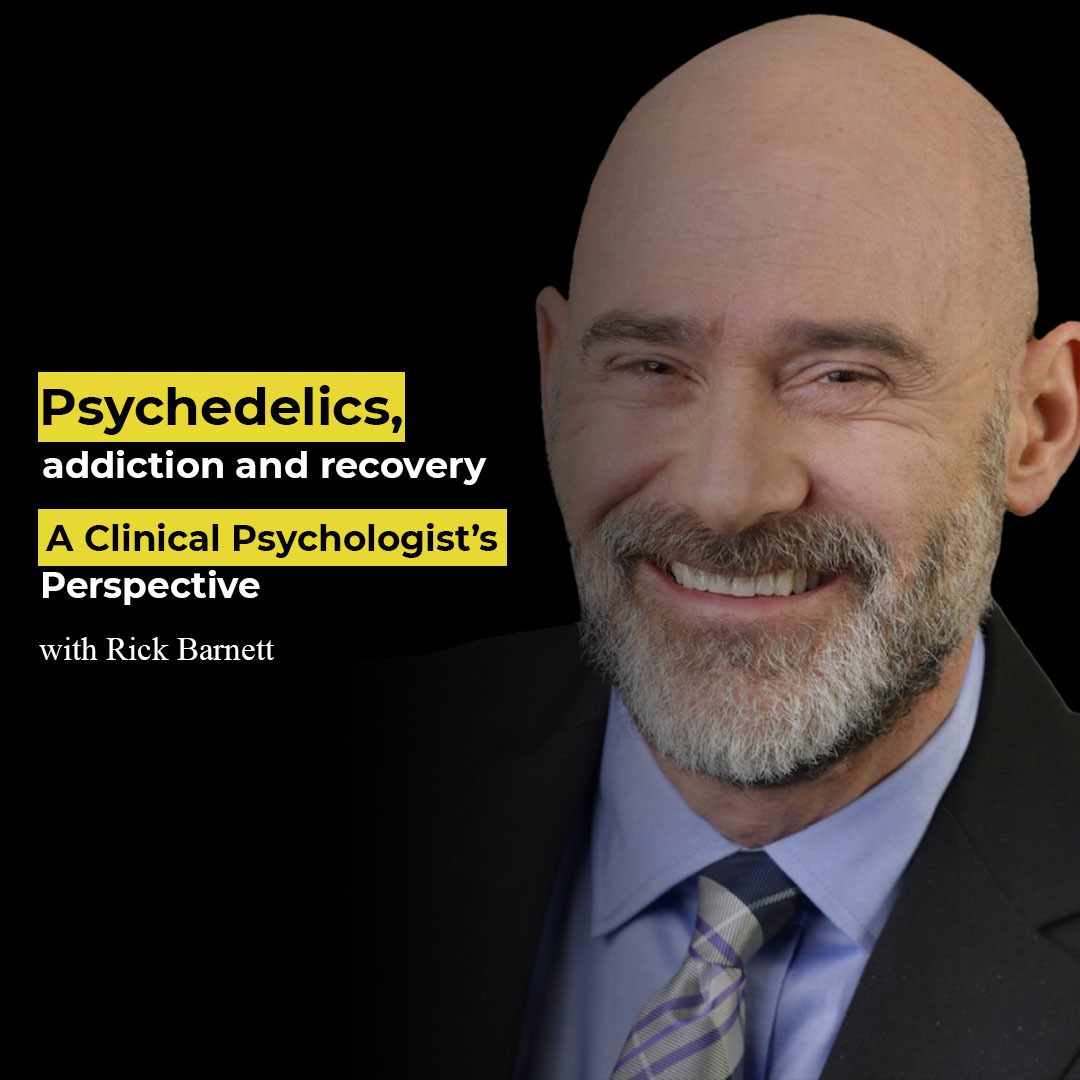
In this episode of Ayahuasca Podcast, host Sam Believ (founder of http://www.lawayra.com) has a conversation with , a clinical psychologist, licensed alcohol and drug counselor, and co-founder of the Psychedelic Society of Vermont. With decades of experience in addiction, anxiety, and depression treatment, Rick bridges traditional recovery models with modern psychedelic-assisted therapy, drawing from both personal recovery and clinical practice.
We touch upon topics of:
- Rick’s early addiction and path into recovery (00:50–05:30)
- Addiction, youth, and the challenge of getting sober early (03:50–06:00)
- Replacing addiction with meaning, purpose, and spirituality (07:48–11:00)
- Psychedelics, sobriety, and common fears around relapse (12:14–16:05)
- Therapy vs retreat models and why multiple paths can work (17:02–19:30)
- Integration, spiritual bypassing, and real long-term change (21:08–26:00)
- AA, community, and where recovery models succeed or fail (33:05–36:40)
- How psychedelics disrupt addictive patterns and cravings (37:46–40:37)
If you would like to attend one of our Ayahuasca retreats go to http://www.lawayra.com
Find more about Rick Barnett at vermontpsychedelic.org, on LinkedIn and Instagram at @DrRickBarnett, and through the Solquinox conference in Vermont.
Transcript
Sam Believ: You’re listening to ayahuasca podcast.com.
Rick Barnett: What do psychedelics do? We know that they are interrupters, they’re disruptors of patterns that are habitual patterns. Our ego, our personality, our behaviors, our beliefs, our very entrenched, and when we take a psychedelic, whether. Ayahuasca or even nons, psychedelic psychedelics like Ketamine, MDMA, basically they’re all disruptors.
They disrupt habits, patterns, beliefs, all that stuff. And I think the mechanism there for depression, for anxiety, for trauma, for OCD, for alcohol or other drug addictions, gambling like psychedelics, disrupt, and get in there and fundamentally. Tweak something deep inside of us. Like you said earlier, you’ve had people come down for your Ayahuasca retreat and, or maybe they had an alcohol problem before and they, you get a call from them a week or two later and they’re like, yeah, I just stopped drinking.
It’s just not appealing to me anymore. We can’t really account for why that is, but obviously something changed deep inside them. This is once a very compelling. Force this craving, this need insatiable desire to fill the void by using a substance or engaging in a, an addictive behavior. And that somehow that mysteriously dissipates it, it goes away.
It’s like something gets in there and says, actually. You don’t need that anymore. You’re okay. You are enough. You know we are the medicine and you have a community of people and you have this new outlook on life that really helps you see that. Now, do some people relapse afterwards? Yes. It’s not cure all.
Sam Believ: Hi guys, and welcome to Ayahuasca podcast. As always, we do the whole assembly of today. I’m interviewing Dr. Rick Barnett a clinical psychologist and licensed alcohol and drug counselor with decades of experience helping people achieve and maintain freedom from addiction, anxiety, and depression. Dr.
Burnett is a leading voice at intersection of psychology and substance use. Disorder treatment, and he specializes in psychedelic assisted therapy, having completed extensive training and modalities involving in MDMA, psilocybin and Ketamine. As the co-founder of Psychedelic Society of Vermont, he advocates for balanced, innovative approach to recovery that blends harm reduction with traditional abstinence-based methods.
This episode is sponsored by Laira Ayahuasca Retreat. At Laira, we combine affordability, accessibility, and authenticity. Ra, connect, heal, grow. Guys, I’m looking forward to hosting you. Rick, welcome to the show. Thank you, Sam. Happy to be here. Rick I really your story is very unique. You you yourself dealt with addiction and you yourself you started very early, like you were already an addict when you were at 10, which is impressive in itself.
So not only. Having this, but then recovering and now helping other people walk us through that journey.
Rick Barnett: Yeah, I wouldn’t say I was fully addicted when I was 10 years old, but I believe that at the age of 10 when I first used tobacco and that really was a foundational event in my life.
I, I’ve heard of people using other drugs as young as, 8, 9, 10, 11 years old. Due to various circumstances, but in my case, yeah I started using tobacco when I was 10 years old. And then alcohol by the age of 11, cannabis age 12. By the time I was 13, I was getting arrested for underage drinking at high school parties.
By the time I was 15 I’d used cocaine, M-D-M-A-L-S-D mushrooms, and for the preceding five years until the age I was 20. All of that just accelerated, intensified in terms of amounts and frequency and got me into a lot of trouble. And I think psychedelics as being a part of that, journey both opened my mind to another view of reality, but also was involved in, unhealthy experiences really dangerous experiences. So it’s a paradoxical situation in my case to to be, thrust into using a lot of alcohol and drugs at a young age. And then to come out the other side relatively early as well.
The age of 20. Really, I’m sorry about the background here. The the age of 20 really starting to get to the other side of that and enter into recovery. But I really do credit my use of LSD at the age of 15 with having given me the. Open-mindedness and perspective that enabled me to be receptive to the message of recovery when I was 20 years old.
I think without that I might have just rejected treatment and recovery pathways altogether. So it’s a ironic situation there.
Sam Believ: In a way, psychedelics are being lumped in together with all the other drugs in this drug category, but it can be a blessing in the case. In your case, it was a blessing because.
You just took this other drug, but it turned out to be a medicine for you in this occasion. Because of your youth with this process what do you think is different in recovery for someone studying that early? Obviously your brain is still very young and malleable.
Do you reckon it it’s, it makes it easier to recover or on, on the contrary.
Rick Barnett: That’s a great question. I found that when I was 20 years old and looking at the the life I had lived up to that point, and looking at the pathway in front of me, I felt it was extremely difficult at the age of 20 to extract myself from a lifestyle, a social situation, an age.
An age group where, partying, college that whole culture was just rampant. And I think it. It is very difficult, I think for people who are young and who get, into these experiences, addiction type experiences really early on, it’s very difficult to pull yourself out of that and find a something that’s appealing about being sober.
It can be very difficult at that age ’cause everybody, your in your age group is partying and having a good time, and all of a sudden I was like, okay, I can’t do that anymore. So what do I do with myself that’s different than somebody maybe in their forties or fifties who you look around and there’s a lot of people in their forties and fifties who actually aren’t drinking or using drugs as much as they did when they were younger.
So I wouldn’t say that it’s any easier because in that case you’ve got even more decades of. Unhealthy use of alcohol or substances. So trying, in later years trying to get into a path of recovery can be very difficult as well. So it’s hard to say. I know for me it was very challenging.
There’s a lot of other young people who were trying to get sober at the same time. I was getting sober and they didn’t make it. Several people have died and it’s it’s very difficult at that age to pull yourself out of that culture,
Sam Believ: yeah. Thank you for sharing, Rick. I actually I’m gonna share a story that I never shared before when I was about 17 years old and I was in, in my first year of it’s basically college, but it’s a college.
You start early. It’s like profession college. I was starting to become marine mechanical engineer. So I was I was kinda, it was kinda last years of school, but combined with already some college curriculum and, I always liked computer games, but I was I always had a good relationship with them and I could still study, but then World of Warcraft came out.
I don’t know if you ever heard about this. Yeah. But it was this online game that was extremely addictive. And in just one month, all of my grade, I went from being the best student in class. All my grades fell. I was almost expelled. Like I, I just completely stopped going to school. I got so addicted to it, so I don’t know where, but I got this.
Strength and energy to quit. And it was the hardest thing I’ve ever done in my life. Because as you described, not only you’re removing the object of your addiction, but you’re also losing all of your friends because that’s always spoke about that. Like I was, there wasn’t much drinking. Some people played and drank at the same time, but there wasn’t much drinking.
I, I was always cautious with drinking ’cause my dad’s an alcoholic. But this one slipped through and for a few weeks. I was just burn, burn, like, how do you call it? White knuckling it. I was going to say bare knuckling it. So yeah, I was white knuckling it and I just I managed to pull out of it, and then I tried to pull some of my friends out of it and they didn’t.
And as you describe, it didn’t kill them, but some of them spent. Eight to 10 years playing. And they basically lost their youth. Yeah. They didn’t have a girlfriend. Their studies were ruined, their careers were ruined. But as I was trying to help them, they actually hated me. So I was early on that path of annoying people by giving them advice.
But, so that’s an imp an important part of addiction. Not just removing that. Substance or behavior you’re addicted to, but also you gotta put something in its place. Is there something you can talk about in that direction?
Rick Barnett: I think that’s in part why my use of psychedelics helped me so much in those early years early days and weeks and months of finding this new path of sobriety or recovery is that, I was intrigued by the spiritual side of things.
I was intrigued by. Things that are less materialistic and more, spiritual in nature, not religious. And there’s a whole movement, the spiritual not religious movement. And that gets into sort of new age stuff. And I’m not necessarily talking about that, but my own experience with LSD and then what was the meaning and purpose of my life at that point?
Transitioning from this lifestyle of, hedonistic illegal, all kinds of craziness into a new. A new realm of being spiritual concepts, psychological concepts, health promoting concepts. All that stuff was really appealing to me, and that’s what I think.
Took the place of finding the meaning and purpose in partying, which was really enjoyable for me. I loved the life that I lived, I loved the craziness of it all. I loved the social life, the everything and I knew that it was killing me. So I knew, early on that was not a path I could.
Continue to travel if I wanted to live a longer life. Basically it’s like the 180 degrees opposite of, instead of, pursuing partying and that whole lifestyle, I had to pursue something as meaningful if not more meaningful to counterbalance that, that destructive side. I was fortunate to be, to have had the, to have the personality or mindset or experiences that enabled me to find literature. Finding the program of and the material and the Alcoholics Anonymous, the spiritual side of things. Very interesting. Not from a godlike perspective, but just psychologically speaking and other books like.
The power of the subconscious mind, the road less traveled. Things like the power of positive thinking, all these classic self-help books back in the day that basically paved the way for me to become a psychologist. As I continued in my recovery and pursued my, my academic my academic pursuits.
Yeah, that’s pretty much what replaced it. It’s hard to say at first. It’s easy to say I’m a thrill seeker. I like, sensation seeking, I like the adrenaline junkie kind of stuff. You think you could just replace it with high risk activities that aren’t alcohol and drug use, but that’s a little bit of a too simplistic, it had to go deeper than that for me.
So that’s pretty much the path that I chose and that sort of was able to stick for me that, that worked for me. I don’t know if it works for everybody that worked for me.
Sam Believ: So you psychedelics helped you and you were able to replace drugs with psychedelics and find that more spiritual side of things and what not quite.
Rick Barnett: What about Not immediately, Sam, just to be clear, I didn’t go from getting sober at 20 years old to using psychedelics for spiritual development at that age. I didn’t come back to psychedelics until, six or seven years ago. Pretty much.
Sam Believ: Okay. Okay. So yeah, it was a process. But let’s say obviously I see it a lot in, in, in our work.
People come, let’s say they’re addicted to alcohol or drugs. They work with ayahuasca. Something shifts in them, and the addiction almost magically goes away. It’s very interesting because some people come for other reasons. And they go back home and they report to us later that they just stopped drinking because they just don’t want to anymore.
So obviously I come from the perspective knowing that traditional use of psychedelic or therapeutic use of psychedelics can be very helpful in addiction. But what about those people that are addicted to alcohol? So they quit it and they white knuckle it, and now they avoid anything that can be seen as quote unquote drug.
What would you tell those people that prevent this potentially very healing modality because they’re afraid that they’re gonna get addicted. Like people ask me like, oh, aren’t you gonna get addicted to ayahuasca? Or some, something like that. Like what? Any comments on that?
Rick Barnett: Yeah, that’s a very common, that’s a common concern amongst people who, I would even say myself, like I couldn’t imagine.
In those early years of my sobriety and my recovery, if someone had said, here, try some ayahuasca. This will help you on your spiritual path. I would’ve been like. Oh no. I’ve been there, done that. Used all the LSD, used all the mushrooms, used all the M-D-M-A-I could think of that I thought was helping me on the spiritual path, but it was doing nothing but destroying my life.
So I would’ve been that kind of person who said no, I can’t. I can’t alter my consciousness in any way. But now, many years into recovery and I am somebody who believes regardless of your. The stage that somebody’s at, let’s say someone’s in active addiction, they’re in early recovery, an abstinence-based recovery.
They’re in, maybe they’ve got a year or five years without using any alcohol or drugs, or maybe they’ve been sober with any al without any mind altering substances for 20 years. I would say to them now, I would say, don’t dis disregard this. Pathway altogether. Just hold on a second.
Where we are now as as the research has been coming out over the last 10 plus years, even though ayahuasca and psilocybin and peyote has been around for centuries, millennia it’s more recently where at least in Western society, we’re developing a model where this isn’t just haphazard. Recreational, crazy use of Iowa, let’s go use ayahuasca and see what it does.
Or let’s go take some LSD and go to a concert or eat some mushrooms and, hang out by a campfire and shoot the shit. It’s really it’s really a situation I’m sure. What you have in your retreat the retreats that I’ve been part of legally and in settings where these.
Substances, molecules, sacraments, whatever you wanna call them, compounds. Drugs are being taken. And in such a way that there’s a lot of thoughtfulness that goes into it. So if you’re in any phase of recovery, if you’re, if someone’s curious about ayahuasca, five M-E-O-D-M-T, psilocybin, MDMA, ketamine, any of these substances, as long as you’re being thoughtful about it, you’re doing your research, you have trusted people who you’re listening to who may be preparing you for an experience that are creating a safe environment for you to have the experience.
That are providing follow-up care for you after the experience. That’s very different than oh, you’re gonna get addicted to ayahuasca, or now you’re gonna ruin your sobriety because you’ve now used the mind altering substances and you know you have to start from scratch. It’s a very different paradigm that doesn’t get talked about enough.
And I think it’s really a shame when there’s people out there who are saying, oh no, you can’t use psychedelics. You’re sober and that’s gonna destroy your life, that’s gonna destroy your sobriety. That it’s not true as long as someone is. Very thoughtful. If they’re considering having a psychedelic experience as part of their addiction recovery process, as part of their sobriety journey it’s not only possible.
It’s, and I think for a lot of people it can be extremely beneficial.
Sam Believ: Yeah. Yeah. Definitely don’t mean for people that have been sober for 10 years to go and, buy some street drugs, potentially laced with like street psychedelics, potentially laced with something and then get addicted. Again, I’m talking about like people who are still struggling and yes, engaging with either a therapeutic approach or a traditional approach in a very intentional container.
What is the role of therapy in this in the work with psychedelics? Obviously psychedelic therapy. How the two compliment each other
Rick Barnett: it’s a very important question and it’s very much debated in the field right now as I’m participating in all kinds of different discussions with different people and different, with different backgrounds.
And, given that I’m a psychologist, I’ve been trained in the Western medical model, clearly I have an appreciation for therapy for a medical. System that provides the kind of supports and safeguards and ethics and standards that are important for safety and, to help people with whatever they’re dealing with.
However, it’s not the only way to do it. So therapy, psychedelic assisted therapy is one model. What we think of when we hear psychedelic assisted therapy. We’re thinking of like a licensed therapist or licensed healthcare provider who would be providing preparation, dosing administration and integration services in the context of a clinic, an office, a research setting, a hospital, whatever that is, and that’s only one.
Model, and you know this well because you run a retreat and that’s, a retreat is not psychedelic assisted psychotherapy. And the retreat model is a very good model for some people. The psychotherapy assisted, psychedelic experiences is a good model for some people. An experience.
With trusted friends who have ex, who have extensive experience with a certain compound who can provide a safe environment that isn’t a retreat center, but isn’t also a therapy office. That can be a model as well. There’s multiple models, all have their strengths and potential weaknesses. Psych, psychedelic assisted therapy has its downsides as well.
Retreat centers can have their downsides as well, and doing it with friends in a, in a. Somewhat thoughtful or recreational way can be positive, but also can be negative. So there isn’t a one size fits all approach. I just want to be clear. When I’m talking to you or other people, I’m not advocating exclusively for one model.
In fact I’m quite, I critical of the medical model. Even though I’m a, classically trained, psychologist and work within the Western medical system, I can be very critical of it. I believe that there’s. There’s lots of ways to do it safely, ethically, effectively, and it’s not once one approach isn’t for everybody.
Sam Believ: Yeah. Maybe there is still more models to be discovered that, that are maybe combining the benefits of both. We in the retreat model, we basically in a clinic. Model you, you ground yourself in, in, in psychological knowledge and in the retreat model you ground yourself in indigenous knowledge and just tradition And bo both get legitimacy from the, from those two different sources.
But we do try to meddle a bit with a more modern things like for example. We work with brain mapping and brain training with QUG brain maps. We try to provide group therapy style integration, word circles, and also provide people with an integration course and then also when they go back home for those who choose to we pair them up with the integration coaches slash therapists.
Unfortunately, not as many people want it as, as it would, as it should be. So it’s like there’s this interesting thing where people don’t seem to like integration that much because it’s not as sexy as a psychedelic experience. So let’s talk about integration. I know it’s a topic you like to talk about a lot.
Rick Barnett: Yeah, mark Al’s book, I don’t know if you know that book that came out a couple years ago called the Psychedelic Integration Spanish guy.
Sam Believ: Yeah. I’ve interviewed Mark a few episodes ago. It didn’t come out yet, but he is, he knows a lot about integration.
Rick Barnett: Yeah. Yeah. I would definitely defer to him.
That book is fantastic. Psychedelic integration, big shout out to to Mark. I’ve never met him before. Thought about inviting him to Vermont for our conference, but, it’s such a big topic for me. I know it’s not as sexy as the psychedelic experience itself. Everybody puts so much hype and expectation into the psychedelic experience itself, and certainly that can be a catalyst for change, right?
That’s that’s what it’s all about. So there’s no getting around that piece of it. However. People’s egos come back online and they’re, they go back to their lifestyle and change doesn’t always happen automatically and sometimes we need to do things. To nurture, to nourish, to cultivate, to practice whatever downloads or experiences we had as part of the psychedelic journey itself, or the preparing for it, what are we doing on a daily basis that could be nudging ourselves towards.
The kind of changes we wanna see in our life. And that’s just life, that’s just life. We wanna live our lives in such a way that we’re trying to practice new daily disciplines or reengage with previous disciplines that may have gotten. Stale over time or stagnant like a meditation practice or a yoga practice or certain readings or writings that we’ve done.
We can go back to these practices with a new, with new eyes and new. New perspectives, or we can start these activities with new eyes and new perspectives to see if they can help produce the changes long term that we want to see. And I think that’s what integration is all about for me.
It’s like trying to continue to live into some of the, the deeper experiences that are, that get generated from these, from the psychedelic the acute psychedelic experience itself. And it’s not always easy. And it doesn’t mean that, there’s a phrase, and I know you know it, it’s called once you get the message, hang up the phone.
I don’t know who’s attributed to that who we attributed to that quote, but once you get the message, hang up the phone, which is like. Once you’ve had a psychedelic experience that’s profound. You don’t need to have any more psychedelic experiences. You need to go out and do the work. But that’s not always true.
People can have a powerful psychedelic experience and learn something from it and make some changes, and maybe they want to go back and they want have another psychedelic experience, maybe with a different molecule, a different compound. And that’s okay as long as it doesn’t, transition into something that’s just, this kind of addictive craving seeking, spiritual bypassing or like this yeah. This compulsive use. But I think there’s integration itself has a way of helping us pace our our progress in the changes that we wanna make. And so it’s a complicated and very broad topic, but I do think it’s extremely important if.
All phases of psychedelic experiences are important. I think the preparation phase is super important. Even the pre-preparation phase. You know what, I don’t know what your experience was, but the first time you ever heard about ayahuasca or got a glimpse of what that might be like, there’s something in your soul, in your spirit that got activated and curious.
That’s not even preparation, that’s just some pre-preparation intuition thing that comes to you. That’s just as important as the preparation, which is just as important as the psychedelic experience, which is just as important as integration. So it’s a whole circle that we just continue to roll through and, and learn along the way until we die.
Sam Believ: This episode is sponsored by Lara ias retreat. Most of Lara, if you’ve been listening to this podcast for a while, some of you might have already been to Lara before. For those who don’t know us yet, we started Lara four years ago at la. We combine authenticity, accessibility, and affordability.
Lore is currently highest rated Iowas retreat in South America with more than 705 star views and an average rating of five stars. If you come to lure, you’ll experience powerful, authentic ceremonies led by our indigenous shaman, Fernando, in a. Very beautiful venue. Just one hour south of Meine Columbia.
We’re surrounded by nature and have comforts like hot water wifi at LA Wire. Our team has guided more than 2,500 people through this life-changing transformation of Ayahuasca experience. At the same time, we keep it very affordable. So whether you’re coming for healing, clarity, or a deeper connection to yourself.
LA Wire is the best choice. If it is your first time drinking Ayahuasca, you’ll love our three and a half hour preparation course and integration support. All of that is included in price as well as pick up from Metagene Accommodation in Ayahuasca. Visit la wire.com to book your retreat or learn more.
LA Wire Connect. Heal. Grow L-A-W-A-Y-R a.com. Yeah, it’s the process of seeds germinating, the seed was planted and then for me it took about three or four years. I had a good question for you, but for some reason it’s gimme a second.
Yeah, no I wanted to share this. It is it’s interesting with ayahuasca that. If some people abuse psychedelics, why they do it too often with that ask. You can’t really do it because if it gives you a clear homework and then you don’t do it and you come back eventually it’ll be like, okay, what’s going on here?
It didn’t do homework, and it’ll give you a bad trip. So it’s like a strict grandmother spirit. So it’s an interesting part of it. How is integration different for people that are dealing with addiction specifically?
Rick Barnett: I think when it comes to addiction and somebody who’s on a path towards living a healthy lifestyle, going from active addiction to transitioning into something that is more like a sober lifestyle.
And what I mean by sober is not necessarily a total abstinence, but just sober as in something like taking life seriously. Levelheadedness clarity of thought. The gravity of our lives and the purpose and meaning of our lives. Being sober minded doesn’t necessarily mean abstinence based, and in that context, I think that when it comes to psychedelic integration or integration from psychedelic experiences, we want to be developing and integrating our own understanding of what.
A healthy lifestyle would look like. Psychedelics can provide these profound experiences and then they’re done. And yet we still have the intention or desire to change or be healthy or live a healthy lifestyle. So trying to develop our own understanding for ourselves of what a healthy recovery or sobriety.
Lifestyle would look like involves, ongoing, connection to community members, ongoing internal work, whether it’s with a therapist or meditation or journaling. Harnessing within us the desire for freedom. One of the things that I like to talk about. Is that the opposite of addiction is not only connection, but really the opposite of addiction is connection to health and healthy people and healthy behaviors as well as freedom.
The addiction itself is slavery. Addiction itself is being addicted to something is meaning. You’re being dictated to by this behavior, by this substance. And the opposite of that is really freedom. And we achieve freedom, I think by. Really connecting with ourselves, with spirit, with other people who are traveling the same path.
So integration really involves those three, three elements, connecting to others, connecting to spirit, and connecting to ourselves in new ways that that develop our sense of freedom in inside ourselves and in the world.
Sam Believ: Why? Why do people. Why do some people get addicted to things and others don’t?
What is that addictive personality? What are the underlying psychological patterns that cause them to in people?
Rick Barnett: It’s co it’s a complicated question and there’s no real answer to that. Addiction is very diverse. You have people who are extroverts and introverts who develop addiction.
You have people who are shy, depressed, quiet who develop addiction. You have people who have a lot of anxiety or OCD. That develop addiction. You have people who have trauma and trauma’s, a big buzzword and a lot of attention towards trauma these days. But not everybody who’s had traumatic experiences in their life go on to develop addiction.
So we can’t just say all addiction comes from trauma has been popularized. Recently, so it’s such a diverse subject. They’ve researchers and clinicians have tried to identify like an addictive personality disorder for years, and because there’s so many different variables that play into why somebody goes on to develop a real addiction, that it’s just impossible just to just define a, an addictive personality disorder. There are certainly personality traits or tendencies or biological dispositions that might be risk factors for developing addiction. If you have a father and a grandfather who has alcoholism, you’re that much more likely to develop alcoholism.
If you grew up in an environment where there’s addiction around you, you’re that much more likely to develop an addiction, but it isn’t a guarantee. So it’s really. It’s really hard to say. It’s just different for everybody. I know my story’s different than a lot of people’s stories because I didn’t have any major traumas when I was a kid, and yet here I was going on to develop an addiction very early in life and, for all by all accounts, my childhood was.
Pretty privileged. So that’s a strange thing when you think of people who develop addiction as oh, people who are, impoverished or homeless or have, been physically or sexually abused. And certainly that is true, but that’s just, it doesn’t explain at all. So it’s a very, it’s very complicated question and it’s very difficult to say who goes on to develop an addiction, and then also how can we predict if someone will be able to achieve.
Recovery, long-term recovery, that’s also very difficult to to predict.
Sam Believ: So if someone’s listening to this episode and they are addicted to, let’s say, alcohol, that’s the most common one. Somebody’s listening and they’re addicted. What should they do? What is the good path?
Rick Barnett: First of all, ask for help.
That’s the hardest, that’s the hardest thing for people to do, to ask for help and reach out. And it, asking for help is a form of surrender. Not surrender. Surrender, like you’re just giving up everything and just being, taken over by some agency or organization or group of people and they’re just gonna brainwash you to, to do whatever.
But really just deciding internally, I need help. I can’t do this alone to ask for help. Please. I think everybody who’s listening, if you feel like you have a problem with alcohol or you know you’re an alcoholic ask for help. Help is available. And there’s a lot of pathways that you’ll be, suggested to follow and.
You have to determine with loved ones, with your support system even if you don’t have loved ones or a support system, trying to lean into your intuition and see which path might be right for you. That might be a psychedelic experience if you have access to it in a healthy and, safe and effective way.
It may be going to a treatment center, it may be seeing a therapist. It may be, going off to a desert island and, detoxing on your own or from alcohol. I wouldn’t recommend that because it’s dangerous if you stop cold Turkey and you’re drinking a lot. But there’s a lot of different pathways and I do believe that psychedelics provide a new pathway for some people who may not have considered it.
Sam Believ: One of the pathways obviously is aa. I like to say there’s a missing a, there’s one more a they need, which is ayahuasca, but obviously I’m very biased. What do you think about aa good aspects of it and maybe some drawbacks.
Rick Barnett: Yeah, I’m partial to aa.
It’s how I got sober. And so I have a lot strong affinity and affection for the that program, but I know it’s also not for everybody. And I think the strengths of the AA model as it exists, like in vivo, in natural settings, not through necessarily court mandated AA or. Legally mandated AA or aa that’s shoved down your throat at a treatment center.
But as it exists in communities, AA is free. It’s widely accessible. A lot of people in there have been through it. They can relate, they’re supportive. So you have this sort of instant built-in community if you’re willing to be open to, sitting in a room with strangers, which is very difficult for people, and listening to the message there.
A lot of people find it quite uplifting and is it inspirational and motivating and supportive to find the kind of change that they want. And like I said, it’s free, it’s widely available, it’s all over the world, and it contains a lot of psychological and spiritual principles, which I think are essential as components of a healthy recovery process.
The drawbacks, unfortunately, is that. AA itself gets mixed up with, like I said before, court mandated treatment, which makes people resent AA meetings. People are exposed to AA through certain organizations that. Are a bit dogmatic and hardcore when it comes to taking some of the principles in AA to extremes, which is was never meant to be done.
So people can get, rightfully I guess pretty caught up on concepts of turning your will and life over to the care of a higher power and the word God. And this idea of hitting bottom and total surrender and, we Americans in particular, we are this sort of fiercely independent people with, have this strong philosophy around self will and independence and we can do things on our own.
And there’s something about AA for some of those people that really just turns them off, which is, I think, unfortunate, but understandable. So there are drawbacks for some people, whether it’s the way in which they find AA or some of the people they encounter in AA that are very dogmatic. Some people in AA would just flat out say, if you use.
A psychedelic drug, you’re no longer sober. You have to start over and count days all over again. And I think that’s just really unfortunate. That’s just misinformed in today’s day and age. But but I’m a, in general, I’m a big fan of that model. The model is like a community-based model.
If you think about the psychedelic world, think about the retreat that you run, all the people that you’ve met through your experience with. Second, there’s a community out there that is there are safe and effective and ethical. People in the psychedelic community that are really supportive and can help us.
We help each other on this path. Same thing in aa, but there’s also bad actors, right? There’s bad actors in the psychedelic space. Just like there’s dogmatic and, old school people in aa. But the community piece of it is really important.
Sam Believ: Yeah, no community is extremely important.
It’s a big part of the healing that people achieve. Even here with Ayahuasca, like I would say it’s, it almost feels sometimes equally as powerful as Ayahuasca itself. And with ai, it’s interesting that the dogma is interesting because the, one of the founders, or I believe the original founder, bill Wilson he got very curious about LSD and he was actually seeing a lot of potential in it.
It’s just that, that happens sometimes dogma. I guess there’s positive things about dogma as well but yeah. For those who do choose to work with psychedelics in their recovery what do you think is the mechanism, like how do psychedelics make it easier or maybe better or faster?
Like what is the benefits of that path specifically and. What’s the mechanism in your opinion?
Rick Barnett: Again, I think it goes back to any stage of active addiction or early, mid, or late stage recovery process. What do psychedelics do? We know that they are interrupters, they’re disruptors of patterns, right?
That are our habitual patterns, our ego, our personality, our behaviors, our beliefs. Are very entrenched and when we take a psychedelic, whether it’s ayahuasca or even nons, psychedelic psychedelics like Ketamine, MDMA, basically they’re all disruptors. They disrupt habits, patterns, beliefs, all that stuff and I think the mechanism there for.
Depression for anxiety, for trauma, for OCD, for alcohol or other drug addictions. Gambling like psychedelics, disrupt and get in there and fundamentally tweak something deep inside of us. Like you said earlier, you’ve had people come down for your Ayahuasca retreat and. Maybe they had an alcohol problem before and they, you get a call from them a week or two later and they’re like, yeah, I just stopped drinking.
It’s just not appealing to me anymore. We can’t really account for why that is, but obviously something changed deep inside them. This is once a very compelling force, this craving, this need to this. Insatiable desire to, to fill the void by using a substance or engaging in a, an addictive behavior, and that somehow that mysteriously dissipates it, it goes away.
It’s like something gets in there and says, actually, you don’t need that anymore. You’re okay. You are enough. We are the medicine and you have a community of people and you have this new outlook on life that really. Helps you see that? Now, do some people relapse afterwards? Yes.
It’s not a cure all. I had a person I know went down to Mexico had just gotten off methadone and was still struggling with their addiction, but they went to do Ibogaine in Mexico. And about a month after they got back from that experience, they overdosed and died. So it’s not a cure all.
It’s not. And I don’t know why that is. This person had a good community, good supports but it was very sad and tragic. And that is just, again, it’s not, it’s meant as a tool. It is a disruptor. It’s a massive interrupter, whether it’s depression, addiction, anxiety, that’s the mechanism that, that, that is at play, but how that actually unfolds after the psychedelic experience, there’s.
There’s got to be other things in place to help, maintain that, that change.
Sam Believ: Yeah. No, no matter how much we’d like it to be, but there are no magic pills. It’s it’s, there’s always gonna be a lot of work. Some things definitely help but you still need to do the work. Like I’m personally right now going through a lot of things like both in my relationship and in work, and I’m.
Really struggling. And I come to Ayahuasca and it lifts me up. And then it says okay, now do this and you have to do the work. I have to actually sit with my staff. It doesn’t just fix everything immediately, even though it’s priceless. When you’re in a really low place to have this, push and to feel better even for get your, get yourself some breathing space. And regarding addiction and specifically alcohol. I, it, I have a episode number nine with a guy named Damon, which describes his experience coming here and then coming here with his wife, just out of curiosity and then coming back and a few months later realizing he stopped drinking and he just doesn’t want to.
So for those who are interested, you can check it out. It’s episode number nine. So you said that you’re intrigued also by spiritual side of things. I’ve had an episode a few episodes ago. I had a conversation with Simon ruffle from Aya Sciences and he’s, he works with VO shamans and he was describing to them the clinical model of use of psychedelics.
And the shaman was saying like who’s there? And in the, in a clinical setting, who is, who’s the shaman, who is like doing the spiritual side of work? And when he explained that there, there is no person like this, there the shaman was like, oh, like this is reckless. What do you think about, should therapists that work with psychedelics be trained a little bit in shamanism or what do you, what are your opinion about the spiritual side of psychedelic.
Rick Barnett: Work? I think it works both ways. I do believe that the better therapists in the psychedelic space are those therapists who have had some kinds of spiritual experiences, maybe non-denominational ideas about spirituality, that they’ve looked into it, they’ve studied it, they’ve practiced different things, whether it’s mindfulness or yoga or chakras or, other Sufism, Taoism, those kinds of things. And I think that’s really Im important. So that would be the, I wouldn’t say Shamonic, but that would be the ideal therapist situation that would allow for the spiritual. Side of psychedelic therapy to be, made more front and center.
There’s a researcher formerly out of Johns Hopkins, I think you might know him, Matthew Johnson. And Matthew Johnson has written extensively, done a lot of research, written a lot of articles on psychedelic, compounds and different conditions. And he pointed out one time is that, the opposite is also true.
Psychedelics are highly suggestible, putting somebody in a vulnerable state and they’re under the influence of a substance that makes them very suggestible to meaning and beliefs. And there’s this idea that he presented do you want to be, do you want to be somehow your, you, let’s say you have a Buddha statue in your ceremony space or whatever I icon, religious iconography you have or you’re feeding people about spirituality before their psychedelic experience.
That can be. Co seen as coercive, or you’re suggesting something that you’re trying to guide people into something that they may or may not naturally discover on their own. So I think it can work both ways that you have to be mindful of the suggestibility and the vulnerability of the patient.
And if you’re prompting them and preparing them for all kinds of religious or spiritual, ideas or whatever. That could be harmful. What if they don’t have any real, do they feel like they failed if they didn’t have any, big spiritual moment or whatever. And so I think it works both ways.
I think it’s really important to have a well-rounded sense of what spirituality is, to have had some experiences with it as a therapist so that you can help people with different. Models or frameworks that they can help them understand their experience, that’s really vital. But also not to be too suggestive or to be promoting one, one spiritual path over another, that can be really dangerous.
Sam Believ: Yeah. My philosophy is that the spiritual knowledge should be coming from the plant or substance itself not from whatever people say. Like for example, here at LoRa, we. We guide people on like psychedelic navigation, like how to go through the experience, but we don’t tell them specifically what to believe in.
And even the shamanic tradition itself, like it’s not really a religion, it’s more of a, it’s just how they do things. What I’m implying is spiritual protection as in is there someone that can feel and maybe protect or hold the space, but not in not like in an empty way of saying it, but like what Shaman does, as in.
Protecting the person from the bad energies, I guess coming in, I, I don’t know if there’s any notion of it in in the clinical model or I mean at least smudge the space or something like that. Is anything being done or is just completely like. Cut and dry and like white walls and,
Rick Barnett: yeah, I, I think even the way I was trained as a psychologist, I was trained in a sort of classic psychoanalytic sense where I was advised by and trained that if I was to set up my office, it would only be two chairs. Really be really thoughtful about what you put on the walls.
Any personal pictures that you might have up, even if you put your diploma up on the wall, what are you conveying to the patient who’s coming into your office if you have too much stuff going on. And, the flip side of that is that, someone comes into a very sterile. White walls, empty space that can be intimidating in and of itself.
There’s just nothing familiar to, for them to relate to or whatever. There’s gotta be a balance. I love what you said about just allowing the medicine, the plant, to generate its own. Spiritual framework for somebody based on their own internal experience their intergenerational lineage that might come up during a psychedelic experience or their early childhood or, some part of their life.
Something crystallizes for them that has a spiritual quality to it. And that’s, helped along by the psychedelic experience itself. That’s great, but that doesn’t, you don’t need to. You don’t need to have Buddhist statues and Palo Santo and chanting going on in order to help somebody do that.
But sometimes having that stuff is really nice. Some people find that very comforting or helpful to, to create the kind of safe environment. Some people might find it foreign and unsettling to have smoke blown in your face or be smudged or whatever. They don’t like certain scents or certain chants or sounds.
It might bring up something that’s very. Upsetting to them. So I think there’s a way to, get to know people, understand what might work best for them without being too prescriptive, but also not being too bland, too too sterile.
Sam Believ: Maybe as the field progresses, there will be medical devices that form as the same function.
They’d be like in meeting a certain frequency. That scares the bad spirits away, whatever. I’m still very new to my own shaman journey, so I don’t really understand it too well. So it’s more of a hypothetical question and yeah. Tell us about the stories, the success stories you’ve seen with people.
With addiction working with psychedelic assisted psychotherapy?
Rick Barnett: Yeah, not unlike your experience there, there seems to be a pattern in my work and not for everybody, but there are plenty of examples where one or multiple psychedelic experiences seem to shift something inside someone that makes their.
Addictive behavior or substance of choice, less appealing. The craving almost disappears suddenly. I’ve seen that with ketamine. I’ve seen it with psilocybin. I’ve definitely seen it with five M-E-O-D-M-T or also known as bufo. That something enables that, that shift so that the addictive behavior either completely gets eradicated, eliminated, or.
Or really the intensity and the frequency of use or engaging in the unhealthy behavior goes way down. So I’ve seen it with alcohol. I’ve seen it with other drug use. I’ve seen it with food addiction. There’s a lot of. There’s a lot of examples of that, and the research also bears that out.
The more and more research is coming out on psychedelics for addictive behaviors, and I really do think they’re a promising new tool. And I wish they would get approved and integrated into practice more quickly. The, the model that we have for approving new drugs is bogged down in bureaucracy and red tape, and you have to prove all kinds of stuff.
Plus psychedelics have still have so much stigma associated with them, and people still have so many outdated ideas about what they are and how they can, how they affect people. And that’s a real, it’s a real hurdle. We need to have more conversations like this so that people understand that this isn’t just.
This, this party recreational, like spiritual bypassing, new age bullshit. It’s actually, millennia old. History and technology that if done in, in the, in a healthy way is very transformative. It’s been that way for so long and there’s no reason why modern society can’t get their act together to to create the models that, you know can really help people.
I wish it would happen a little bit quicker, but.
Sam Believ: Beautifully said, Rick. I totally agree with you. Let’s hope this future is coming. Thank you for this episode. Thank you for all the knowledge. Tell us more about you, where people can find your work or maybe somebody wants to. Work with you or go to your conference?
Tell us more.
Rick Barnett: Yeah, I’m definitely searchable on the internet, so if you look up Rick Barnett, Dr. Rick Barnett on the internet, you’ll see some resources to find me. I’m very active on LinkedIn and at Dr. Rick Barnett and also on Instagram and Twitter X at Dr. Rick Barnett, all one word. D-R-R-I-C-K-B-A-R-N-E-T-T.
You can always, those are all open. You can direct message me on there. And every year we put on a conference here in Vermont, we get some really great people to come to Vermont. A very small conference, not the big Colorado Maps conference, but a very small. Group of like 150 people come to Vermont every year either on the solstice, summer solstice, or the fall equinox.
It’s called Sequinox. So you can Google, S-O-U-L-Q-U-I-N-O-X. Sequinox is a conference that we put on every year. We got Rachel Yehuda coming this year in June, so people can find out information on that by going I, so I co-founded the Psychedelic Society of Vermont, and so there is a. A website called Vermont psychedelic.org where people can find information on that.
So yeah, I’m definitely reachable. And I’m always happy to try to educate people and to try to be helpful where I can. And I really appreciate coming on your podcast.
Sam Believ: Thank you, Rick. It was a pleasure. Guys, you’ve been listening to Ayahuasca podcast. As always, we the host, Sam, believe, and I’ll see you in the next episode.
I hope you enjoyed this episode. If you’d like to support us and psychedelic renaissance at large, please follow us and leave us a like wherever it is you’re listening, share this episode with someone who will benefit from this information. Nothing in this podcast is intended as medical advice, and it is for educational and entertainment purposes only.
This episode is sponsored by Laira Ayahuasca Retreat. At Laira, we combine affordability, accessibility, and authenticity. Laira connect, heal, grow. Guys, I’m looking forward to hosting you.