
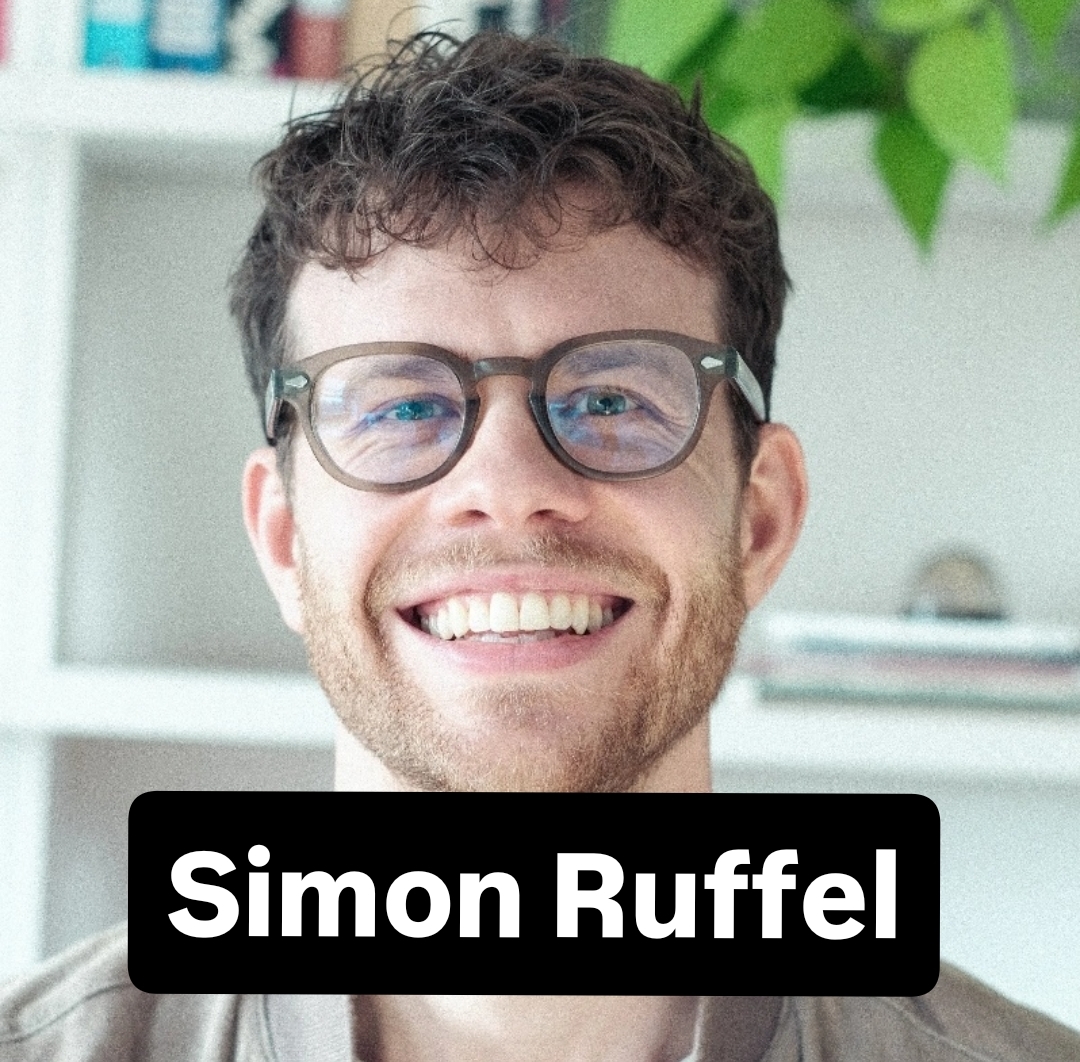
In this episode of Ayahuasca Podcast, host Sam Believ (founder of http://www.lawayra.com) has a conversation with Dr. Simon Ruffell — psychiatrist, researcher, and co-founder of Onaya Sciences. Simon is known for bridging Western psychiatry and traditional Amazonian plant medicine, completing a PhD on the therapeutic effects of ayahuasca and training in Shipibo curanderismo in Peru.
We touch upon topics of:
- (00:47) Simon’s journey from psychiatry to the Amazon
- (08:33) How ayahuasca heals: neuroplasticity, epigenetics & spirit work
- (13:18) Indigenous perspectives on balance and illness
- (16:11) Designing research with shamans & translating indigenous knowledge
- (22:11) Safety concerns in Western psychedelic use without shamans
- (31:05) 80% PTSD remission and other research findings
- (35:23) Synchronicities and destiny on the healing path
- (44:18) Ego traps: rushing to become a shaman
- (50:36) Rethinking psychedelic education and training models
- (58:52) The story and spirit of Agua Florida & evolving traditions
If you would like to attend one of our Ayahuasca retreats go to http://www.lawayra.com.
Find more about Dr. Simon Ruffell and Onaya Sciences at http://www.onaya.science and on Instagram @drsimonruffell.
Transcript
Dr. Simon Ruffell: You’re listening to ayahuasca podcast.com. Sometimes you get people who engage in indigenous practices and they flip and they go into a new way of understanding. They go into a new way of understanding the world, and then they hold onto that so strongly and they reject the whole of Western science and they think, oh no, that’s Western medicine.
It doesn’t have the answers. It’s not true. I think the answer is that you can hold both at once. Knowledge is plural. It doesn’t have to be that if you engage in. Indigenous knowledge that Western knowledge is incorrect. It really doesn’t. I think you can have an understanding of both and you can hold both as true.
And that’s really where like true understanding and true progress comes when you have that understanding that knowledge is plural. And we’re seeing that across the board with all of our published research over the last 10 years. So we’ve seen significant and sustained improvements in depression and anxiety, improvements in self-compassion, decreases in global distress.
We’ve seen decreases in how neurotic participants are increases in how agreeable they are, increases in how mindful they are. All of these different areas. We’ve seen that across the board. But again, knowing at least some of the process behind the way that Ayahuasca works, I do also feel like there’s more that we can be showing here.
This is really just looking at the ayahuasca process through a keyhole, but it works to demonstrate how ayahuasca might be beneficial to some people and to explain that in a way the Westerners can understand.
Sam Believ: Hi guys, and welcome to our podcast. As always, we do the host, Sam, believe. Today I’m having a conversation with Simon Ruffle. Dr. Simon Ruffle is a psychiatrist, researcher and co-founder of Anaya Sciences. He’s known for his pioneering work on ayahuasca and mental health, combining Western psychiatry with traditional Amazonian plant medicine.
He completed his PhD studying the therapeutic effects of ayahuasca and has worked closely with indigenous healers in Peru. This episode is sponsored by Lara Ayahuasca Retreat. At Laira, we combine affordability, accessibility, and authenticity. Laira, connect, heal, grow. Guys, I’m looking forward to hosting you.
Simon, welcome to the show. Thanks
Dr. Simon Ruffell: so much, Sam. It’s a pleasure to
Sam Believ: be here. Simon tell us your story. First of all, your story going into the mental health field, and then finding psychedelics in it.
Dr. Simon Ruffell: Yeah, for sure. So I started off studying medicine in in the uk mainly because I was really interested in psychiatry.
So I was always fascinated with the human mind. I always found it incredibly interesting. I always found people really interesting, specifically what happens when, quote unquote, their brain seems to go wrong, when their mind goes wrong. What is that? What explanations do we have? For that, for mental illness.
Why does that happen? And so I ended up going to medical school and I spent six years studying medicine, studying a load of stuff that I wasn’t actually that interested in order to get to psychiatry. And I got through medical school, got to psychiatry, and I loved it. I absolutely loved it.
I loved everything about it. I loved the patients that I was seeing. I found it super interesting. I loved helping people. I loved the theory behind it, studying it. The only thing that I didn’t love, which was big issues, that a lot of the patients that we were treating didn’t seem to get significantly better.
And that’s a major issue in psychiatry. It’s not just me who thinks this. There are many psychiatrists who now say the psychiatry is in crisis. It’s become a palliative specialty. We don’t use the word cure. We just try keep people in remission from mental health problems. And I spent a few years working in psychiatry with this on my mind, and then I decided to take a bit of a break from medicine and I decided to go and work with different cultures around the world to try and find other ways to treating mental health problems.
And eventually I ended up, I guess I, I would say through a stroke of fate or luck, depending on the way that you think of it. With somebody who was training to be a ero in Guatemala, and he was actually on holiday, he was actually taking a break from his work in Peru and he was based at a center in the Peruvian, Amazon where he was training.
And so I started speaking to him about medicine. He was telling me all of these things. He was telling me how he seemingly with ease was treating many of the conditions that I’d been really struggling to treat in my own patients back home. So he was talking about treating anxiety, treating depression, treating PTSD in ways that I’d never heard anyone talking about it in terms of curing it, in terms of removing the root cause of it and what’s more, he seemed to be saying that the way that he was doing it wasn’t just with Ayahuasca, but it was using ayahuasca as a tool to connect with spirits.
And it was the spirits. Of ayahuasca or the spirits that you could access through ayahuasca that were actually treating the patients as well as other medicines that were being used as well. So I was obviously fascinated by this. I couldn’t quite believe that this man was just saying these things out loud.
Not only that he believed them and that they were quite far out for me as a western medical doctor, as a western psychiatrist, but that he seemed to be saying that there were communities within the Amazon rainforest that you could speak to, that you could go to, that you could form a relationship with, and that they could teach you how to do this in your lifetime.
Which for me was just fascinating. I was just had to know more about this. And so I ended up going down to Peru with this man. I did an ayahuasca an ayahuasca retreat, which was, it was amazing. Like it was absolutely amazing. But I didn’t I didn’t start immediately believing in spirits. I didn’t start immediately thinking that this was the way that Ayahuasca was working.
But I did think that we should be researching this and I wanted to explore it more. So I started looking all of the research that had been done into ayahuasca previously, and I found that there was some research looking at ayahuasca. There was research looking at ayahuasca churches throughout Brazil.
There was anthropological research looking at ayahuasca and the Amazon rainforest, but there was very little empirical scientific research looking at ayahuasca. So I started looking at the effects of ayahuasca on personality. We then got more funding after that, started looking at the effects of ayahuasca on common mental health conditions and epigenetic change.
And it wasn’t after going back and forward to the Amazon rainforest for a good four years. Trying to fit everything that I was experiencing when I was drinking ayahuasca with the maestros that I was working with into a Western scientific box, that my perception of health and wellbeing and really the nature of reality took a significant shift into the Shabo way of understanding.
And I started training in with the Shabo in 2019. I’ve been doing that pretty seriously since then.
Sam Believ: Thank you for sharing your story. Fascinating. It’s yeah, I find myself in somewhat of a similar position where you’re forced to create a new worldview. It’s I don’t completely accept neither the Western or Amazonia worldview.
I think there’s there must be a truth somewhere in the middle and I’m still trying to form it. And it’s a sort of interesting thing that people rarely. Have to do, generally you just,
Dr. Simon Ruffell: you’re just born into a world here. Just to pick up on that as well, I think this is something that’s really on my mind at the moment, is this, truth quote unquote truth.
What is truth? And I find that people, at least in my experience, and people who are trained in Western science or people who are just from a western background, hold onto that belief so strongly. And then sometimes you get people who engage in indigenous practices and they flip and they go into a new way of understanding.
They go into a new way of understanding the world and then they hold onto that so strongly and they reject the whole of Western science and they think, oh no, that’s, Western medicine doesn’t have the answers. It’s not true. I think the answer is that you can hold both at once. Knowledge is plural. It doesn’t have to be that if you engage in indigenous knowledge that Western knowledge is incorrect.
It really doesn’t. I think you can. You can have an understanding of both and you can hold both as true. And that’s really where like true understanding and true progress comes when you have that understanding that knowledge is plural.
Sam Believ: Yeah. Holding opposing truths or, paradoxical kind of information requires a certain level of maturity.
So it, it is definitely possible, but it’s not easy. And but people sorta like extremes, if you go on YouTube, it’s there’s carnivore diets, there’s vegan diets there’s no popular people that are gonna talk to you about what about we just do it this, something in the middle where it’s actually good for everyone, but it’s just not sexy enough.
It’s not interesting. So there’s also this part of it, it’s like you, you gotta choose your extreme. So what is your. What is your current worldview like? What are you lending on? Especially from the point of view of then how does the ayahuasca healing works? When I first came into Ayahuasca and I’m not a doctor, but I’m an engineer by trade, and then when I discovered Ayahuasca, I was like, okay, I’m gonna drink this and it’s gonna increase my neuroplasticity and it’s gonna remove my depression in some whatever way.
I didn’t understand it. And of course I think about it differently now, but what is your worldview or customer vision or, especially in like, how does I, how does Ayahuasca heal people? I
Dr. Simon Ruffell: think in the way that you just said. For sure. And also in the way that the indigenous cord that I work with also say, so I fully believe that Ayahuasca induces neuroplasticity, that the DMT within ayahuasca bias, the serotonin receptors in our brain, and it works in many other ways. Our current research is showing that it could be working epigenetically, so it could be changing the expression of our genes which is really exciting. So we’re specifically looking at whether it can reverse the expression of genes that have been changed as a result of trauma and a result of stress.
And it seems that Ayahuasca potentially could be doing that. We have original data that’s showing that we’re looking at the effects of ayahuasca on the gut microbiome. It shows that ayahuasca could be having an impact on the gut microbiome. All of these things are the way that Ayahuasca works. 100%. That is how Ayahuasca works.
But at the same time, I fully believe that Ayahuasca also works through opening you up to the spirit world through removing energetic blockages, through restoring balance in your energetic field. And there’s something that the Shaba called, and it does this through. And through vibration, through sound, through healing, and through spirits, it’s, they’re both 100% true.
I don’t think that having a belief in one of these means there’s, you can’t have a belief in the other one. They’re both as important in my opinion and in my experience,
Sam Believ: I’m getting an analogy coming to my brain a very engineering one. But it’s you have a car, you have a car, right? And you have a motor, and you have your fuel system.
You also have your electrical system but also you have the, the cooling system and it’s arguing no it’s the cooling system that needs to work in order for the car to work. And it’s no, you don’t get it. It’s the fuel system. So it’s the spiritual level, the physical level, the mental level, and probably even few more other levels in between.
That’s how I start to view it now, but also the priority, not being the physical, but it’s like the spiritual that kind of defines the physical and not the other way around or maybe also the other way around, but like, how would you like prioritize those three? Or do you even agree with that sort of
Dr. Simon Ruffell: model?
Yeah, totally. If we’re going back to the analogy of a car saying, no, it’s the cooling system, no, it’s the whatever system. It makes me think what systems are we not aware of? In, in science we’re still exploring how is could ioas could work from a neurobiological perspective. And the Shapiro have an excellent understanding of how ASCA works from a spiritual perspective.
What other perspectives are there? What other ways is Ayahuasca working that neither of us aware of? I’m sure there’s, I’m sure there’s a whole load of information that we don’t know about right now, which is super interesting to consider.
Sam Believ: We’re almost, in a way and I really like that understanding of ayahuasca being extremely advanced piece of technology.
And we’re thinking, oh, it’s ancient, so it means, it’s like, it’s just simple, but it’s so advanced that it’s there’s this, I don’t know this, the name of this movie with monkeys find Some Object or something like that. And they’re like, that’s us, kinda like western people that ask what is it like poking it?
It’s a person in some tribe and contact the tribe finding an MacBook, and trying to understand how to use it. And in that case, I think indigenous people they’re more advanced and we just have to accept it. But from a scientific point of view, and you’re a scientist and you do studies, which is really cool, but like, how do we.
How do we even get to study spirits? Like w will Western science, or at least our scientific method ever be able to prove anything without being laughed at?
Dr. Simon Ruffell: That is such a good question, and that’s something that I spend a lot of time thinking about. Before we get to that question, I just want to, just to pick up on something that you mentioned previously about how Iowa works, ayahuasca works biologically, how it works spiritually, and those different levels of healing.
And one, one thing that the SHA taught me, which I have found really interesting, just to give more of a, an understanding of how healing and how illness works from an indigenous point of view, was that there are three different levels when it comes to healing. Three different colors, basic levels, and it’s all about balance.
And should people call eros, sometimes they talk about healing, but in my experience, they more talk about balance, about whether you’re in harmony with what your yourself, your environment, other people, your ancestry, all of those kinds of things. And so when we think about healing and balance from a Shapiro point of view, should people start off by saying, okay, so if you are out of balance initially, it will manifest spiritually.
You’ll be out of balance spiritually. And this is really this higher level that many people in the west probably wouldn’t be able to pick up on. They probably wouldn’t be able to notice it unless you’ve done some training or you might notice it, but you won’t really understand what it’s. And if you don’t address that, if you don’t address being out of balance spiritually, then it’ll begin to manifest psychologically.
You begin to get anxiety, you begin to get depression. You begin to get out of balance there psychologically. And then if you don’t address that, then it’ll come to the final level, the third level, which is physically you begin to develop all of these kinds of physical symptoms. So again, indigenous healing is already what we would call integrative medicine before, they’ve even tried to think about preventative medicine.
So there’s already this complexity to the way that indigenous peoples are approaching healing and wellness. The with just getting to when it comes to Western medicine. Now, when it comes to scientific investigations, this has been a really interesting journey that, that I’ve been on and that we now I, which is the organization that I run, have been on over the last decade.
And it maps our journey a as an organization and our spiritual beliefs. And many of the other people who work at ON have started training in called Isma as well, which is fantastic. So they’re dual trained in Western science and indigenous medicines. And we started off our slogan at on is to try and bridge the gap between western medicine and indigenous knowledge, but what does that actually mean?
Like what does that actually look like in practice? And so we started off by setting up something called the Indigenous Advisory Board, which is the Accordant das that we work with in the Cordata. And some indigenous peoples from Australia as well are also on that advisory board. And so we design studies together.
We come up with the concepts for studies. We speak about what it is that we want to investigate and then we try and put that into academic terms. We then interpret the results together. So we do the research and we get the findings, and then we ask, we speak to the indigenous peoples that we work with to find out how they would interpret those findings.
And then we then disseminate that information to communities that we work with. So usually involves translating everything into Spanish, putting into layman’s terms, and trying to get out there into this the shabo communities that we’re working with. And so in practice, what that’s looked like is various different things.
Like we spoke to Don Rooke who’s one of the maestros that I apprentice under. And he said that he wanted to look at the communication and the relationship between humans and plants. And so we immediately thought how on earth do you do that? From a scientific point of view, how on earth do you look at that communication?
So we were thinking, okay, the relationship, how could we translate the relationship between humans and plants into western science? And we came up with an idea to look at this concept called nature relatedness, which is how, what how closely somebody feels that they are part of nature, whether they feel like one with nature, whether they feel like there’s any distance between them and nature, whether they feel that if they harm nature, they harm themselves, those kinds of things.
So that was one way that we tried to translate what Rono was saying into western science. He then said that he wanted to look at the impact of different IDOs on participants. So he wanted to see how a healing I actually helps somebody as opposed to a protection I, and we immediately thought oh my goodness.
Like how on earth do we do this? How on earth do we look at that from a scientific point of view? And so what we ended up doing was something called EEG Hyper scanning, which is when you get multiple E EEG caps and you put them on participants all at the same time. We did that in ceremonies, and we then timestamped rono singing his OTs and then translated all of that into English so that we could see when he was singing about protection versus when he was singing about healing.
And then we timestamped the changes in people’s brainwaves so that we could correlate singing about protection and brainwaves to singing about healing and brainwaves to see if there was any difference. And so after that, we were thinking like, oh, great. Okay. This is, we’re pretty, I think we’ve done pretty well here.
That was almost an impossible task that Rono gave us, but I think we’ve managed to translate it. And then when we spoke to Rono afterwards, he just said, yeah Simon, you may have these caps on people in ceremony so that you can think at their brain waves. But actually I have caps on each of you in the ceremonies in the spirit world, and I’m picking up on everything that you can’t pick up on, and my caps are far superior to yours.
And it got me thinking are we actually looking at what Rono wanted to look at? We’re looking at brainwaves. Can we pick up on the technology of iCards? Do we have that kind of technology? Another example is when we were looking at epigenetic change, we were looking at the way that ayahuasca changes the expression of different genes.
And there’s some evidence that could be passed down through different generations. So for example, there are some early studies looking at survivors of the Holocaust, and it shows that their children are more susceptible to stress. When I explained to Rono, yeah, we’re looking at epigenetics. So we’re seeing whether or not IO acid can change the expression of genes.
And then, who knows, maybe that could be passed down through generations. He was like yeah, of course it does. Of course it does. And I was like what do you mean? Of course it does. And he said, we’ve known that for hundreds of years. We just call it cleaning ancestral lines. I was like, ah, okay.
So there are these other ways that you can interpret the results that we are getting in our science. But what’s most in my mind at the moment is that despite our best efforts over the last 10 years to try and do this, we’re still trying to fit all of this research, all of these concepts into Western scientific frameworks, right?
So we’re still trying to look at IC adults from a western point of view, trying to look at them using brainwaves, trying to look at cleaning ancestral lines, using epigenetics. And there’s nothing inherently wrong with that, but it’s still. Putting Western science in a dominant position. So what I’m interested in now is how do we take it back one step further?
How do we begin to create almost a new form of science that doesn’t do that’s co really co-creative from the beginning with indigenous healers? What does that look like? What kind of questions are we asking? How do we analyze that data? Which is super, super exciting and we need to really consider, do we have the technology that’s required to look at these concepts?
Do we have the scientific technology to look at what indigenous peoples refer to as entities to look at what they refer to as ics and the healing powers of vibration? The answer to that is no. Maybe science isn’t advanced enough to look at these kinds of things. So when we think about bridging that gap and beginning to investigate spirits.
Entities and concepts like that, we need to think very carefully about what science looks like. And that’s really where I’m beginning to focus my energy and my attention now.
Sam Believ: Yeah. So for now, let’s say we don’t really understand scientifically or from the western point of view, we don’t understand the entities and the spirit world yet.
There’s like in, in a, in an ancestral model, and that’s the model we practice here at Loar as well. You have a shaman, you have the medicine, you have the set and setting like maloca, you have the fire, you have the group and the healing happens within all of those sort of nodules together.
It’s like a complex thing. But now. Because, Western inside and denies the importance of shaman and they replace it with a psychologist or a psychiatrist. So you generally would sit there with a blindfold, some kind of psychedelic, and you’re, you would be opening up yourself to all those things, but likes psychologist or psychiatrist doesn’t have any idea about spirits or how to protect you or, or any chance or any me medicine, music or any lotions or any smoke and stuff, the tools that, that indigenous people use.
So what is, what are the risks and what is the safety aspects that were missing in, in sort are modern. Take on psychedelics.
Dr. Simon Ruffell: Yeah. Thanks Sam. This is such an important question and it’s one that I’m amazed that more people aren’t talking about. It comes up from time to time, but it is not in the common discourse in the, the psychedelic renaissance.
And so lemme tell you about a conversation I had with Donno, which I think sheds some light on this. A little while ago I was speaking to Ron and I said we’re doing these studies in the west, I’m sure you’re aware where we are looking at psychedelics in hospital-based settings.
And he initially was, oh, that’s great. That’s fantastic. That’s great that you’re taking an interest, in our medicines. And there are some studies that they’re looking at ayahuasca as well in hospital-based settings. And he was like that. That’s brilliant. Yeah. Great. So tell me more about them.
So I said, we have this set up, like you described, we have a patient, they have a blindfold, they take a psychedelic, and there’s a psychologist there, a psychiatrist, and they’re in the hospital room for a few hours. And he was like great. Yeah. But who’s there to to be the cordero?
Who what cord daal do you have? I was like, we don’t really have corderos, we have like psychiatrists. He was like, oh, okay. But. What would you do if somebody has a demonic attachment? What would you need to do if somebody requires an exorcism? I say I mean we don’t really use those kind of terms.
That doesn’t really fit into this paradigm. Wouldn’t really say that. We’d more just speak to the patients, like as a psychologist or as a psychiatrist. And he was like, okay, but what do you do if someone has like an energetic blockage and the energy won’t flow and you have to remove that blockage?
Like how do you do that? How do you get rid of it? I said again, we don’t really use those concepts, we just talk to the patient about what it was that they were going through. And he said that’s in, that’s incredibly dangerous. So you have no guidance. Like you have nobody who is skilled at working with this energy.
You have nobody who is there to remove an exorcism, to remove a negative entity if you require that. And then the analogy that he gave to me was that’s a little bit like going to an airport and just walking straight out onto the runway. And then when you get to the runway, you just get on a random plane and you don’t check which plane it is.
And you could get on a plane that takes you to iBio, which is great. Or you could get on a plane that takes you to Gaza. You end up in the middle of a war zone. And if you don’t have somebody there to work with the energies, that’s incredibly dangerous, not just for the participants. Who’s completely open, but also for the therapist as well, because all the energy from the participant could be coming into the therapist.
And this is a conversation that’s incredibly difficult to raise within Western psychiatry and western psychology and the psychedelic renaissance, if you want to call it that, because people don’t understand. They assume that it’s just not true. And this is something that I think is a huge risk as a result of the arrogance of the West thinking that these concepts, the indigenous peoples talk about.
Entities spirits, they must be some kind of metaphor or there must be some kind of theology. They don’t really mean that there’s actually some kind of entity. They don’t really mean that there’s actually a spirit that’s engaging with this person who’s stuck on them that’s causing the depression. And they do, like in my experience of training with the Shabo, they literally mean that those things literally exist.
And if you don’t engage with them as if they’re real or if you don’t, at least acknowledge that these people who’ve been working with psychedelics for hundreds, if not thousands of years, fully believe this and that’s the basis of their treatment, then I think that’s really risky and really.
Naive and stupid. It is stupid just to ignore the experts in the area that you’re trying to get into, because as Western people, we are new to this as science, we are new to this. We need to be learning from these people who’ve been working with psychedelics. We’re far longer than we have.
Sam Believ: This episode is sponsored by Lara ias retreat. Most of Lara, if you’ve been listening to this podcast for a while, some of you might have already been to Lara before. For those who don’t know us yet, we started Lara with my wife four years ago at Lara. We combined authenticity, accessibility, and affordability.
LA is currently highest rated Iowas retreat in South America with more than 635 star reviews and an average rating of five stars. If you come to lare, you’ll experience powerful, authentic ceremonies led by our indigenous shaman. Fernando, in a. Very beautiful venue. Just one hour south of Meine Columbia.
We’re surrounded by nature and have comforts like hot water wifi at la. Our team has guided more than 2000 people through this life-changing transformation of ayahuasca experience. At the same time, we keep it very affordable. At the moment, we have retreats starting at as low as $645. So whether you’re coming for healing, clarity, or a deeper connection to yourself, the wire is the best choice.
If it is your first time drinking Ayahuasca, you’ll love our three and a half hour preparation course and integration support. All of that is included in price as well as pick up from Metagene accommodation in Ayahuasca. There are no hidden fees. Visit lara.com to book your retreat or learn more. Lara Connect, heal.
Grow L-A-W-A-Y-R a.com. It’s like getting a computer, connecting it to internet. And you say, you don’t believe viruses exists. You just don’t believe it. It doesn’t mean that they will not do what the viruses do, and the problem is that, it’s, I’ve never drank with sha people.
We work with the Inga tradition here in in Colombia. But it’s very similar, all the aspects are similar. The, there are some smaller differences with like, when and how they sing Ikaros and whether the amount of light in the ceremony, but from what I gathered. But the concept and the cosmovision is the same.
But the problem is like when the Western people take those medicines. Then they use them inappropriately and somebody gets hurt. Like you mentioned your Don Rono saying, what if the, what if he has a demonic attachment? But what if a person goes so deep that their soul leaves their body and it needs help to be brought back?
The psychologist doesn’t know how to do it, so it’s then they can die and then they will blame Ayahuasca. They’ll not blame the, it’s oh, here you go. You have you know what would be a good analogy, but you have a hammer and you can, it comes with instructions. You use it to put the nails into boards, you build the house, but here you go and take the hammer and you kick your punch yourself in the head and you kill yourself.
And it’s this hammer is very bad. So it’s once again not about the hammer. And I’ve seen stories like this where people, they come to the retreat and they do ayahuasca and then they do combo, and they died of hypo hyponatremia as in overly hydrating themself. And they still blame it on ayahuasca.
So it’s it’s not unfair because Ayahuasca is such a. Buzzword. People just want to attach everything to it, be just because they don’t know what the hell they’re doing with it.
Dr. Simon Ruffell: Totally. I wrote about this in my PhD, so there’s been a bunch of ayahuasca related deaths. There’s been a bunch of deaths being put down to ayahuasca.
But when you investigate each of those deaths further and also not just deaths related to people developing psychosis, there’s always something else there. So in terms of psychosis is okay, ayahuasca induced psychosis, but then you look at the case more deeply and it’s always was mixed with cannabis had a family history of psychosis underlying uncontrolled heart condition, which led there’s always something, there’s something which goes against the rules and regulations of how it should be used.
So yeah, I totally agree with you on that.
Sam Believ: Yeah, so it’s, it is just a very powerful tool and we have to be careful with it. It’s if you have a scalpel, you’re not just gonna just swivel it everywhere. And it needs to be understood as well by, by Western society. So on the more, let’s switch to more positive notes.
So you were frustrated. You were frustrated with how, Western model didn’t really work for many conditions and people just kept coming back. What have you observed, what have you studied with indigenous modalities, obviously ayahuasca and other aspects of indigenous healing and how have results have been?
Do you have any studies like showing 80% remission and such symptom, or do you have any cool numbers you wanna share with us?
Dr. Simon Ruffell: Yeah, totally. We have 10 years worth of research which I’ll send to you so I can be linked to in the show notes. It is, it’s interesting with the scientific research that we do, because I think it’s very valid.
I think sciences a fantastic tool that we can used to investigate, spiritual things like ayahuasca, but I think there’s also a ceiling level into what we can. To, to what we can interpret from those experiences. So for example, in terms of cool numbers, yeah, we’ve got loads of, we’re currently in the process of looking at military veterans with PTSD, who are going to the Amazon Rainforest.
They’ve had PTSD for years. Many of them feel that they’ve been failed by the Western medical system. We’re looking at them in terms of EEG, epigenetics, gut microbiome, cognitive tasks and changes in their psychometry. And at the moment, this is unpublished data, so do take it with a a grain of salt.
But at the moment, we’re getting roughly an 80% plus remission rate in our criteria for PTSD and participants and six month follow up. So that means six months of taking ayahuasca, according to our measures, around 80% of our participants are no longer meeting our criteria for PTSD Now. That’s amazing.
That’s an absolutely fantastic finding. It’s far better than the treatments that we have, by quite a long way actually that we have already. I’m also interested in what else is happening with them that we can’t pick up on, that we don’t have scales to pick up on. So the remission from PTSD is a symptom of something else that’s going on with them, right?
There’s something that’s happened, there’s a shift that’s happened. Now, whether that is a removal of negative energy. Whether that’s coming back into balance with themselves and their community, whether that’s literally some form of exorcism according to the shabo. I’m not sure, and our science won’t pick that up, but we can present these kind of numbers, which are, really, really excellent.
And we’re seeing that across the board with all of our published research over the last 10 years. So we’ve seen significant and sustained improvements in depression and anxiety, improvements in self-compassion decreases in global distress. We’ve seen decreases in how neurotic participants are increases in how agreeable they are, increases in how mindful they are.
All of these different areas we’ve seen that across the board, but again. Knowing at least some of the process behind the way that Ayahuasca works. I do also feel like there’s more that we can be showing here. This is really just looking at the ayahuasca process through a keyhole, but it works to demonstrate how ayahuasca might be beneficial to some people and to explain that in a way the Westerners can understand.
Sam Believ: Yeah. So I definitely have a, I kinda already know the answer, right? ’cause we host about 700 people every year and I’ve seen all kinds of very impressive transformation. But we do still like, science and some people still doubt us. So I’m glad you’re doing the science and we’re also exploring doing some science and even with you guys, I’m talking to some of Anaya members to, ’cause we’re doing this AYA retreat for UFC fighters and if we can find some money.
Then we can probably do some science as well.
Dr. Simon Ruffell: Amazing how much of my life has been determined by that one sentence. If we can find some money, we can do some science. So if anyone listening to this has any links to funding, please do hit either myself or Sam up. That’d be greatly appreciated.
Sam Believ: Yeah, it’s there’s so many cool things you could do in life if you didn’t have to constantly try and get money, but the, those are the rules of the game. So yeah, guys if anyone’s like a crypto billionaire secretly send us some money for it to do some good science, but if not, it’s fine as well.
There’s other ways to support us, at least leave a like, and follow and subscribe and follow Simon on Instagram or whatever. We’ll leave some links in description, but let’s talk about. Other aspect of the invisible world of entities, gods angels, all that sort of strangeness, quantum physics stuff.
But like synchronicities, right? You probably would’ve not been able to predict, six, seven years ago that you’ll be studying ayahuasca. And the way you met your shaman, I believe was pretty synchronistic as well. Something very similar happened to me. I never even started an ayahuasca retreat.
It just started itself. It’s a totally different story, but I see it over and over again when I interview people that they seem to be like plucked out of different walks of life and just brought on this path as in being like recruited. It’s all your time has come like we need to do this.
Anything you wanna talk about that and what do we under, what do we understand and what do we don’t understand about? Like how does it work? What is their destiny astrology what’s your take on it?
Dr. Simon Ruffell: My, my take is dramatically changed over the last the, in the last 10 years for, in 2015 when I first ended up in the Peruvian, Amazon and I met the the man who had become my or my maestro.
Yeah. I thought it was just a chance encounter. I thought, oh, that was lucky. That was very fortunate that happened to me, this man. And then he showed me, ayahuasca, showed me all this stuff, and I started researching it and we started getting funding. And similar to what you said, like I never.
I never set out to make a research organization. I never set out to any of this. I never set out to research ayahuasca. I never set out to train in shamanism. It just happened, it just unfolded. But over the years and studying with the Shabo, you get taught. To listen to those synchronicities.
You get taught to pay attention to them. And you also get taught how to differentiate what’s the synchronicity and what is forming a link between something that’s not there. And I think that is a really tricky and important distinction to make, especially for people who aren’t from an indigenous background who are starting to engage with these kind of practices.
Because this is another thing that I see the whole time is with people from a western backgrounds. Either they completely ignore synchronicities and just think that it’s just like chance. I very much include myself in that camp, at least in 2015. And on the other side, you can begin to slip into everything to synchronicity, oh my God, this was supposed to happen.
I was supposed to me, this was supposed to happen. And that really isn’t helpful, that kind of magical thinking. And that begins to delete into a distortion from reality. Which, in Western psychiatry would be diagnosed as psychosis. I totally think that synchronicities are important, extremely important, and they should be listened to, but a degree of discretion is needed in order to stop yourself from going off the deep end.
And unfortunately, that quite a lot within the medicine world and within people who are drinking ayahuasca.
Sam Believ: Yeah. So then how do how do you distinguish between synchronicity and wishful thinking or magical thinking? Is do you have any tools? And I can share mine as well afterwards.
Dr. Simon Ruffell: Yeah, absolutely. I think. In general, having support systems around you that you can bounce ideas off so you can see if things make sense, so that if you are beginning to act a bit strangely, people can, they can tell you about that. They can reflect it back to you, is really important. Also, just because you are, now open synchronicities doesn’t mean that all logic goes out the window.
So if there’s something that really makes no sense, and so for example, okay you make a leap that whatever, I had this podcast with Sam, he asked me to do this podcast. Now I must ask Sam to marry me. And it’s wait, that’s completely nonsensical. There’s no reason as to why that would happen.
If it goes against logic, you can still use logic to explore that. For me personally, and the way that I was taught is it happens with time, right? So with time you learn to differentiate what’s just you, what’s just wishful thinking, and what can actually be a synchronicity or a message from spirit or a message from the plants.
I think in order to do that, you also have to really know yourself. So you need to know what your pitfalls are, and you need to know what your ego would want to happen. So it is all very well thinking, oh, this is like a message from the plants. The plants are telling me that I need to become rich and famous.
Oh great. It’s okay, could that actually be you rather than a message from the plants? And then also when it comes to communicating with spirit as well, ’cause I hold synchronicity within that bracket of communicating with spirits, is it in keeping with what you know of the spirits that you work with?
Which usually though it depends which spirits you work with, but like in my experience, they’re usually extremely kind, extremely humble, for the greater good. Not without a sense of humor, but if it’s something that could be more human, it’s worth looking at that. So I really feel that it’s a case of getting to know yourself and practice over the years.
And there should be talk about this as well when it comes to visions within ayahuasca ceremonies. One of the things that you learn very early on when it comes to training and corner, that is well. Is how to identify in ceremony. What is your own projection and what is the message from spirit? What is your projection of what you would like to happen or your fears, and what is a message from spirit?
And I just feel it just comes down to knowing yourself more than anything else.
Sam Believ: First of all, I’m a little offended that you’re not gonna propose to me.
Dr. Simon Ruffell: There’s still 20 minutes of the podcast, Sam, so you play your cards right.
Sam Believ: And then but yeah I agree with that. And I also think that what helps me personally with synchronicities is like you need to start, you need to notice a pattern.
If it’s just a one thing oh, one me one message. It’s it could be yes or no, but if it’s two or three coming from different people, then it can be like, okay, there’s something there. I need to explore it. Kinda be open to it, but also don’t take any input as like a final one.
For example, something opportunity recently a guy came to me and after ceremony is ayahuasca told me you should plant more fruit trees at the property. And then I was like, okay, that’s cool. And then a week later, a girl came to me and she gave me a donation to plant more fruit trees. I was like, okay I see it, actually after this call, mass administrator’s gonna come take some money to bring some seeds and we’re gonna plant some fruit trees and some saplings.
I get it. But if it would just be one and it’s okay, you can plausible deniability. It’s kinda it’s kinda an interpreting game where you need to like. There is not like a yes or no. There’s 50 shades of maybe. And also I notice it a lot with people stepping on the healing path or spiritual path where they drink the medicine and it tells them, you have a potential to be a healer, by the way.
And then because of the ego interpretations oh my God, I’m magical. I’m special, I’m better than everyone else. They then try and find some medicine on black market and become a shaman after a few months. And I’m like it’s not entirely incorrect, but it’s don’t that’s where you mentioned time is very important.
It’s it doesn’t mean tomorrow. It might mean 10 years from now. Most likely with the ingers, it’s don’t confuse the invitation letter to university with the diploma. It’s you, it’s a, it’s an invitation, so explore it, ask around, and then as long as you’re open, then another synchronously will happen and take your summer, and then another happen.
You just have to be patient. The patience seems to be, that’s the word we use the most in preparation. When the new group comes, it’s patience. Patience, because everyone wants everything immediately. And I think it’s also part of the issue with the Western society where, you feel sick, you go to the doctor, it gives you a pill, your pain goes away.
So ego is a big part of it, but what are your thoughts and have you observed may maybe many stories of people like, I’m a shaina or, maybe even I’ve had people that, they saw something about. A specific religious figure, and they’re like, oh my God, I’m the reincarnation of this.
I’m like let’s let’s not jump to conclusions. It’s the, it’s the ego. Oh yeah. And and any thoughts on that?
Dr. Simon Ruffell: Yeah, totally. It’s something that you see all the time, right? And I think this is one of the issues with going between paradigms, between going between the western and the indigenous paradigm.
And so I think it’s very easy as well that there’s something quite, like alluring and quite attractive to this world, according that is like you said, yourself, like magic, oh, I have like magical powers, or I have a degree of power that can bring people in.
And it’s not like western medicine where. If you do six years and you pass your exam here given a certificate and it says formally, you are a medical doctor, and then you go and you keep training and you get different pieces of paper different that show how advanced you are. There can be no real way of knowing how advanced a accordant data is without sitting with them, really.
You can get that vibe from talking to them or whatever, but it’s largely word of mouth. It’s largely reputation. And so I think there’s something that can really play into people’s ego when they hear, oh yeah, you have potential to be according, ah, you’re like, ah, you notice that I’m special.
Finally, someone’s actually noticed that I’m special. One of the issues that I have with people who do this, who go to the jungle a couple of times and they start saving medicine, is it’s a little bit like doing work experience. You have the potential to be a western medical doctor.
You go and do work experience in a hospital for a week or so, doesn’t make you a doctor. That’s just to give you a taste of what it is to become a doctor, which takes another five years or arguably the rest of your life. And so I think. As we begin to integrate indigenous knowledge into Western science more, as we begin to see more people who are bridging these paradigms and walking between these paradigms, that’s when we need better support structures.
That’s when we need better systems. We need people to be more informed. Because if you were in an indigenous community and you drank ayahuasca a few times and then you started to serve everyone else in the community would be like, what the hell are you doing? Stop that. And they’d take you down a few pegs.
They’d keep you safe. Whereas in Western culture, we don’t really have that. So if someone goes to the jungle a couple of times and then comes back to London and says, I’m a cordero. I serve ayahuasca, most people won’t be any the wiser. And they’ll just think, okay, fine. Yeah, maybe I can sit with that person.
Maybe it’s safe. So I think that, we need our therapists to be informed. We need people drinking ayahuasca to be informed. We need people to be more educated to stop this from happening. ’cause it’s super dangerous and insulting I think.
Sam Believ: Yeah. There’s also a problem with shamanism specifically where most of it is invisible.
It’s because it’s a spiritual process. Like you can see a shaman sitting down with his eye, clo eyes closed, and you can assume he’s sleeping or something like that. Or, they’re doing stuff that is not necessarily visible. So people assume Shamon is just this guy that gives you the cup and then sits there, maybe sing some songs and oh, that’s easy.
I can do that. It’s but kinda not realizing how complex it is and it would take you a few years of drinking medicine just to even realize how complex it is. So there’s this I keep forgetting there’s this then Denning Kruger effects or something like that where you. Truly knowledgeable at first till you realize how not knowledgeable you are, to then actually get the knowledge gradually.
Dr. Simon Ruffell: Absolutely. But don’t you see that loads of ayahuasca, because I’ve seen that with so many people where you see people who have drunk ayahuasca twice and they’re like, oh my God, I have all the answers. I know everything. And then people who have drunk ayahuasca 10 times and they’re like, oh my God, I know absolutely nothing.
And then people who have drunk ayahuasca 50 times and they’re like, I know. Like a tiny amount. And I’m on the beginning of, getting my knowledge of, and so I do think that you go through this process of realizing that there are, there are answers here and then, oh my God, I dunno, anything.
And then you begin to be humbled and you keep going. And the path of cor to Ismail, like they call it the path of suffering. They say it’s the path of no ego and you’ll just constantly just have your ass handed to you repeatedly. And I think that’s also kind of part of the path, part of the training.
Sam Believ: You said in the beginning you said when you went to medical school you had to like, learn a lot of unnecessary stuff before you, you could start working with psychiatry and that’s, that was your interest. In the end of it. My, my previous head of facilitation who was with us for a bit more than a year, he went back to medical school to study him for about 13 years just to get to the point where he could serve the medicine legally in us.
So it’s and he, so not serving medicine, but let’s say giving Ketamine someone in the clinic. So it’s like work that he was already doing here. Now, I mean we have shaman serving the medicine, but we have facilitation team helping with people and like sitting with them and honestly lifting a lot of weight from Shaman.
It’s like the work he was already doing here now he would need to study for so such a long time. To then be able to do it again. Like what do you think about sort our educational model and how, and whether it’s appropriate or inappropriate in this new emerging field of psychedelics?
Dr. Simon Ruffell: I think that the education model that we have for western medicine is entirely appropriate.
So in order to train as a western medical doctor, it should take you five years minimum. And then you should have to do additional training on top of that in order to, train in your specialty. And then at the end of that, then you are a, consultant is what we call it in the uk.
You’re a consultant, psychiatrist or whatever, and then you could run a team of other psychiatrists and you can make decisions by yourselves. I think that, in my experience in indigenous medicine, it actually follows a very similar path in that it’s, after five or so years, you’re probably good enough to start holding ceremonies by yourself.
After that, the con, the training continues. Maybe after another kind of 10, 15 years, you might be a kind of a master shaman and you can be training other people. For example, the thing that concerns me is that. What seems to be happening with psychedelics is that people who have trained in psychiatry, so they’ve done medical school, then they’ve done another 10 or so years, so as postgraduate training in psychiatry suddenly are assumed to be able to work with psilocybin.
It’s whoa. Okay. That’s completely different. Or they do a small course which trains them, supposedly trains them to work with psilocybin. And actually what they get trained in is a bit of the history of psilocybin and how it works in the brain. Something about prep, something about integration and what to do during a dosing session, and that could be done in a couple of weeks.
And legally those people are able to work with psychedelics. Now, for me, that’s super concerning because in order to work with the psychedelic, that’s the thing that should take you 15 years to train it like it does in indigenous medicine. It is not just something that you can bolt onto somebody who’s trained in psychiatry that is.
That isn’t the right person running the ceremonies, in my opinion. It’s not to say that they don’t have something to do in that, it’s not to say that they can be very beneficial within that setup. I believe that they can, but I do feel that you need somebody who knows how to work with those energies in that setting.
So what I am advocating for, what I would really like to see, and unfortunately is beginning to see, we’re just seeing the beginnings of this in Australia, are indigenous peoples in a dyad with psychologists and psychiatrists. And then that’s when you dose people within a Western medical setting so that you’re getting the benefits of having somebody who knows how to work with these energies and the benefits of psychiatry and psychology.
But I don’t think it’s enough just to have a psychiatrist who isn’t trained in that dosing. People alone.
Sam Believ: Yeah. And also I’m not really necessarily let’s say you’re shaman they probably don’t have a. Entire knowledge of like anatomy or, all of the small things you need to learn to become a medical doctor first before you get there.
So there’s also like a lot of unnecessary things, and maybe there could be like a refined program where there’s more focus on like practical work with facilitating and actually being in ceremony and drinking the medicine. And I think it could probably I could see that instead of 13 years there and then 10 years there, maybe it could be like basically we need to work out like a new modality or new balanced education system when it comes to this whole thing.
Because neither is perfect. And I, I don’t know if you have any ideas about it or what are your thoughts on forming. Forming new learning paradigms like by combining the best of both traditions, like respectfully or is that even possible?
Dr. Simon Ruffell: I think it is absolutely possible, and I strongly believe that this is the future.
So again, if we have any secret billionaire crypto currency people, please do consider reaching out to Sam and I for this. ’cause I’m about to pitch him an idea, which hopefully he’s gonna but I’m beginning to see these new centers, or at least the ideas, these new centers forming, right? So centers that blend scientific knowledge with indigenous knowledge.
And so they’re, these, the what’s beginning to happen, and I think there’s gonna be a lot of, trial and error with this stuff. And so we have these centers that combine research with retreats with clinic, so you have all of it together. And this is largely a response to many indigenous people.
So for example, Banky, who’s the head of the, has been like, cool, like crying out for this thing. It’s great that you guys have an interest in our medicines, but don’t do this without us. So I think that these training schools, these hubs, these areas where knowledge is being cultivated and stored can happen.
They can occur where it’s blending these worlds and it is starting to happen now, but it has to be this new form of science that I was talking about where is science and indigenous knowledge on completely equal footing? And then you train people in both of them together because. In my experience, in order for Western people to get, the most outta psychedelics and to get them, to engage with it safely and effectively.
It can’t be used in the same way that indigenous people work with psychedelics. There needs to be more support around it because we don’t have that kind of community structure. So I think that these new hubs, these new research center retreat clinics could be a really fantastic way to train people in this way that really bridges worlds.
Sam Believ: Yeah, I think that’s where we’re heading for sure. ’cause we’re start like, so sometime this year we’re gonna start doing some science and I’m, I’ve created a couple connections at Maps and also talking to Wayang your colleague and also we have our volunteering program where. People come and they help facilitate in the ceremony and they inevitably learn both from shaman and for example, right now, one of our integration coaches who is a therapist, he works with us mostly remotely, but he comes and he trains us workshops and that’s kinda western approach.
But and the knowledge starts to accumulate, we’re having a Passover between one head of facilitation to new ones, and as they’re doing it, we’re collecting the knowledge and it kinda is already, our volunteering training program has become so complete that it’s almost better than some of them facilitation training courses out there for which people charge a lot of money.
And we at least for now, do it for free. But definitely something is brewing. And the whole maps situation. Have you ever been to maps?
Dr. Simon Ruffell: Been to Matt. I was in the conference.
Yeah. I’ve been a few times.
Sam Believ: So I it was synchronistic as well. I never planned it.
Basically people that came here, Matt and Ashley, they love Lara and they live in Denver. They said like, when maps is happening, you should come. And then they’re like, let’s organize a booth. And they helped me organize everything. And it’s just it’s a very difficult thing to do. And they help with this.
So it’s I guess it was meant to happen. And through maps, now science is coming into the wire. So Synchronicity. Synchronicity. Yeah. Anyways let’s just one last question before we wrap up. I have a question, I have a option of two. One is your story about the spirit of Agra Flua, and and the other is psychosis.
Which one do you wanna talk about more?
Dr. Simon Ruffell: It’s up to you. Let’s go for agro flua.
Sam Believ: Yeah, tell us that story. I think it’s very funny. Okay.
Dr. Simon Ruffell: I’m trying to remember exactly where I started with that story, how I got onto it. Yeah, what there’s many different, there’s many interesting things about Frida.
So for people who dunno, Frida is a it’s a alcoholic chemical, synthetic flower water, which is used really often by indigenous corderos for energetic cleaning. And so you put it in your mouth and you quite often spray it and they’re on yourselves, on other people and. According to the indigenous worldview everything has a spirit.
According to the shabo, it’s based on animistic worldview. Everything has a spirit. And so even agla farda has a spirit. And you can actually diet agla farda, so you can go into isolation. You can take small amounts of Agla, Freeda, you can get to know, you can form a relationship with the spirits of Frida, which is a really interesting concept.
Now Ava Farida made its way into into ceremonies, into ayahuasca ceremonies relatively recently. I think it was probably 20, 30 years ago, it started working its way into ayahuasca ceremonies. And what happened is that the indigenous corderos found in the agro farida by complete fluke.
Happens to be very good at repelling negative energy and removing negative energy. And the company that makes AGLA three doesn’t make it for ceremonies. They, it’s a room deodorizer and it’s mass produced in London, and they were almost going bust. They were almost out of business. And then they found suddenly when the ayahuasca boom happened, which was in kind of the nineties going into the two thousands, and all the ayahuasca centers started opening up and loads of people started flying to the Amazon rainforest to drink ayahuasca.
Suddenly there was a massive demand for agro farda in Peru. They like, what the hell is going on? Like, why in the Amazon rainforest is ala Frida suddenly? It’s certainly so popular. And so they ended up actually figuring out that it was, because it was being used in ceremony and setting up a factory in in Peru so they can mass produce it for these ceremonies.
And it’s funny, it’s this funny story about the use of Aglo Freeda, but it also shows something really important, which is that these traditions, they’re not static, they’re always changing, they’re always evolving, they’re in flux. And I think there’s something else that Western Pi, like Western society, the global North, seems to try and super impose onto these traditions, which is, I know we need to.
Respect these ancient ways. Don’t change it in any way. And it’s yes we do need to respect these ways, absolutely. But we also need to give them space to grow and evolve because this is what they do naturally. And you can see this within the Shabo tradition. The language slowly changes over time.
Many of the shabo incorporates their Christian beliefs, rightly or wrongly. And the jury’s out on whether that’s, whether that should be included in Shabi shamanism. But many of these concepts get incorporated into the traditions as well. So really just a reminder that, shamanism isn’t fixed according to Isal isn’t fixed.
These traditions are fluids. They’re adapting and they’re changing with time. And just to be open to that as well.
Sam Believ: Yeah, I agree with that. Here’s showing on for those of you who are watching on the video, that’s the Colombian version. It’s called cia. That’s what shamans use here.
Dr. Simon Ruffell: They say, ah, nice. I agree.
Sam Believ: I think there’s I’ve had someone bring the bottle of this. They’re somewhat similar, but it’s basically alcohol based. Let me lemme demonstrate the use of it. You spray it on your hand and then you rub it and you smell it and you can rub yourself. And I just remove all the negative ties from myself.
Easy as that. Super effective. Yeah. But it also says only superficial use and I believe it was, it’s not really also intended to
Dr. Simon Ruffell: No, this one says it too. Not for cosmetic use. Not for internal use.
Sam Believ: Yeah. And regarding blending of traditions like a lot of. A lot of indigenous knowledge now is there are some roots into like ancient European magic of that, like Spanish people were using.
And there’s some aspects of that plus Christianity. And also like for example, like Ste or Agro Flo, alcohol based stuff. It’s like alcohol was not South, south America. Alcohol was, developed and by Arabs right in Middle Ages. But even in other preparations, like there’s a thing called, which is Ur.
This is like a seeds of a grass. They grow in the jungle and they’re very fragment. They put the, those seeds, they crushed them and then they put alcohol on top and they sprayed on people also for cleanses. So if alcohol wasn’t here, it means they, they didn’t have it before. They probably had the seeds, but they probably used it differently.
So yeah, it keeps developing and keeps growing and as you said, the, your shaman, he. He goes on vacations. That’s how you met your show. And my shaman, he, he uses WhatsApp and stuff like that and it’s amazing. Like it actually makes my work much simpler being able to communicate with them and create WhatsApp groups.
So yeah we shouldn’t like create this image of something that does not exist of this. Holy saintly people that poop butterflies, and they’re just spiritual all throughout. No they’re humans and they do their thing. It’s you will not expect your doctor to be living in a cave in the mountain all the time and just meditating all the time.
Same thing goes to shamans. They, they have normal life. Yeah I think that’s, we can wrap up now. So just tell us more about Anaya Sciences once again. Crypto billionaires and other kinds of billionaires help us out. We’re gonna do some cool studies millionaires as well. Even, whoever wants to support I think that’s that’s a, it’s a cool thing to do.
Dr. Simon Ruffell: Yeah, absolutely. One of the great things about on IA is that, so we are an independent research non-for-profit organization, and we collaborate with world leading universities in, in most continents, south America, north America Europe, and Australia, and. Because we are an independent organization, we can design studies that look at things that we want to look at.
And so that’s how we manage to bridge that gap between Western science and indigenous knowledge. So if there are questions that USAP in particular want to look at, or whoever it is hopefully is listening to this, you might want to fund it. It has an interest in, we can design studies that are based around that to try and answer those questions as accurately and as holistically as possible.
So we’re an organization that’s been going in some form for 10 years. Although Nia itself has been going technically as Aya for about the last four years and we’re made up of psychiatrists, psychologists, neuroscientists called Eros Ave. Doctors Tibetan Buddhist, really holistic team. And the vast majority of the scientists, at least in the core team, also train in Shipibo as well.
So we really have that. Yeah, that dual training. We also run education programs as well. Training programs to train people to do prep and integration work from both an indigenous and a western point of view. And you can check out our websites. So on NAYA Science, that’s O-N-A-Y-A and on NAYA io are our sites.
So please do have a look and if you’re interested and wanna learn more, sign up for our email list or to just drop us an email.
Sam Believ: Thank you for sharing Simon. And yeah we are currently working on doing a retreat in February for UFC fighters and MMA fighters and we wanna study the fact that ayahuasca and like brains that have been beaten up into pulp.
And if you wanna support that, also message me somewhere and probably the money will eventually go to Alaya if we manage to make it work out. So not completely sure, but if it’s meant to happen, it will happen. Synchronicities will happen and trust the process. So thank you Simon. Thank you for coming.
Thank you for sharing. And guys, thank you for listening. Hope you enjoyed this episode, and I will see you in the next one. I hope you enjoyed this episode. If you’d like to support us and psychedelic renaissance at large, please follow us and leave us alike wherever it is you’re listening. Share this episode with someone who will benefit from this information.
Nothing in this podcast is intended as medical advice, and it is for educational and entertainment purposes only. This episode is sponsored by Lara Ayahuasca, retreat at Lara. We can buy in affordability, accessibility, and authenticity. The Wira Connect, heal, grow. Guys, I’m looking forward to hosting you.